

Ultrasonic Bubble Sensor Vendor Selection Guide for Reliable Fluid Monitoring
2026-09-24
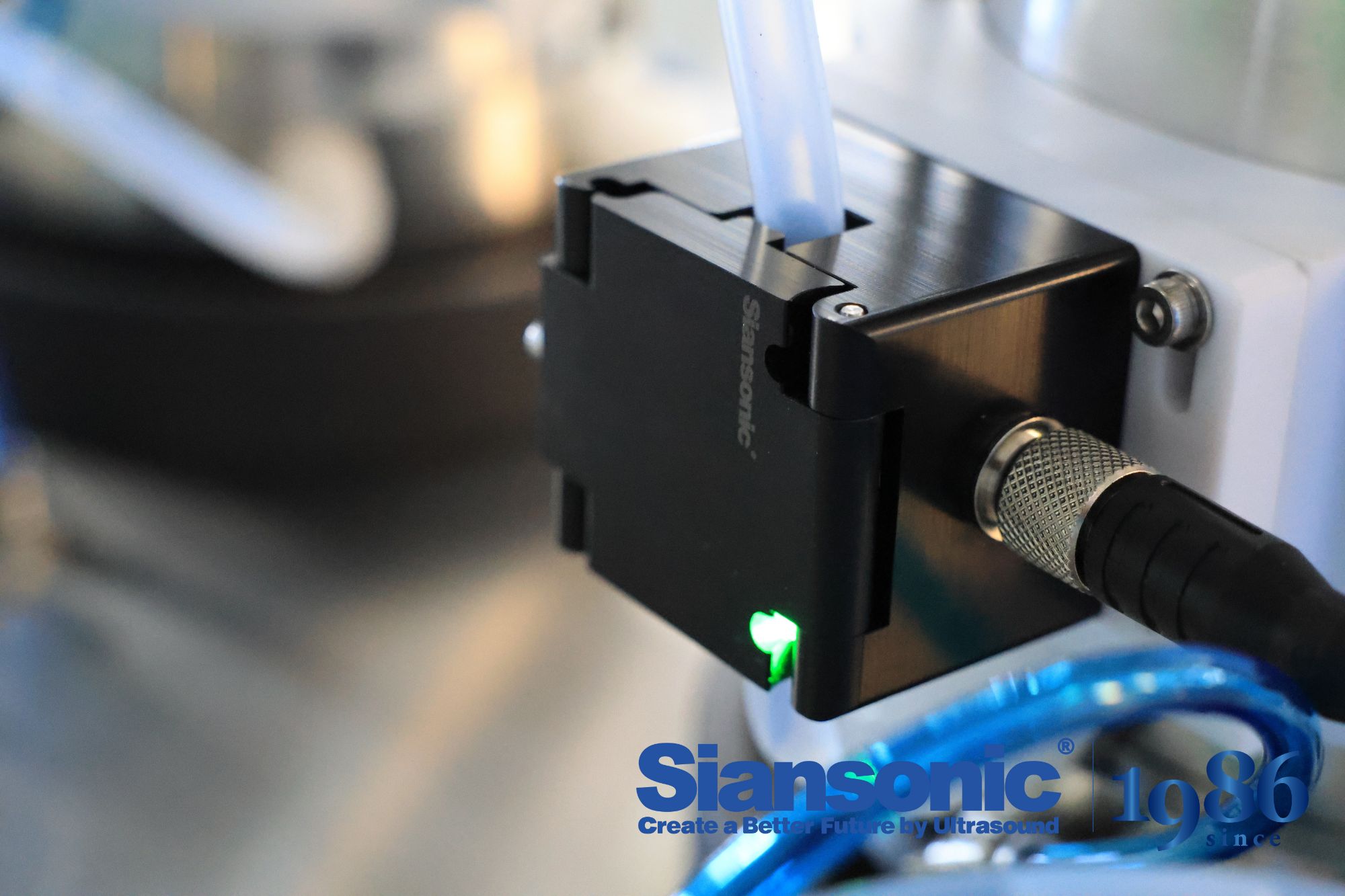
Even the most carefully designed fluidic system can be undone by something as small as a stray air bubble. In medical infusion, laboratory analysis, or industrial liquid handling, undetected bubbles don’t just compromise accuracy—they can trigger false alarms, damage sensitive components, or put patient safety at risk. That’s why the ultrasonic bubble sensor you choose, and the vendor behind it, matters more than most spec sheets suggest. This guide cuts through the noise, showing you what to look for in a supplier and why Siansonic has become a reference point for teams that refuse to leave fluid monitoring to chance.
Why a Good Ultrasonic Sensor Still Misses Bubbles in Real Fluids
A high-end ultrasonic sensor can detect a clean air bubble in a beaker of still water with near-perfect reliability. But put that same sensor on a production line running a viscous polymer melt, or into a bioreactor churning with cell culture media, and the bubble count suddenly drops. The reason is rarely a fault in the transducer itself. Real fluids are acoustically messy. Impedance mismatches between the sensor housing, coupling layer, and the liquid create standing waves that can mask the weak echo from a small bubble. Microbubbles clinging to the pipe wall or dissolved gas coming out of solution under pressure fluctuations scatter the signal in ways that laboratory calibration never anticipates.
Another overlooked factor is the bubble’s own behavior. In a static test tank, a bubble rises predictably and crosses the acoustic beam. In a flowing, non-Newtonian fluid, bubbles deform, split, or get trapped in recirculation zones behind baffles. A sensor tuned for a 2 mm spherical void will miss the same gas volume spread into a 0.3 mm cloud of microfoam, because the total backscatter is distributed across a wider frequency band. Temperature gradients further shift the speed of sound, so the range gate that worked at 20 °C may be looking at the wrong depth at 45 °C. These are not defects in the sensor’s electronics; they are the cost of measuring a moving, changing target inside an acoustically hostile environment.
Decoding Vendor Specs Beyond Frequency and Bubble Size Claims
When evaluating ultrasonic cleaning equipment, many buyers fixate on two familiar numbers: frequency in kilohertz and the vague promise of "bubble size." Yet those specs alone tell you almost nothing about how a machine actually performs in real-world cleaning. Frequency matters, sure, but cavitation energy, power density, transducer placement, and waveform modulation shape the cleaning outcome far more than a single sine-wave label. Bubble size is not a spec you can measure from a datasheet—it emerges from the interaction of frequency, pressure, temperature, and dissolved gas, and varies continuously across the tank. A vendor that touts only 40 kHz and "small bubbles" without discussing intensity or uniformity is likely hiding behind oversimplified marketing.
Look instead for quantitative details that predict performance: acoustic power output measured in watts per gallon, transducer count and spacing across the bottom or sides, and whether the generator offers sweep or pulse modes to prevent standing waves and hot spots. Ask for cavitation intensity maps or aluminum foil erosion tests under your specific load and liquid conditions—not just a clean-water demo. A machine with lower frequency but higher actual watt density may outperform a higher-frequency unit with weak, uneven cavitation. Also check the tank's degassing capability and whether the generator tracks resonant frequency automatically as temperature and load shift. These engineering details reveal how much usable cleaning energy reaches your parts, rather than how a single bubble looks in a brochure photo.
Finally, demand side-by-side test data using your own contaminants and substrate materials. A vendor that refuses to run a trial with your soil type—whether carbonized oil, polishing compound, or biological residue—is not serious about your application. The best suppliers will document cleaning time, temperature, chemistry concentration, and achieved cleanliness level under realistic conditions. If they lean on frequency and bubble-size rhetoric when you press for these specifics, treat that as a warning sign. Ultrasonic cleaning is a system problem: transducer, tank, generator, chemistry, load geometry, and process control all interact. Decoding the spec sheet means looking past the two most advertised numbers and demanding evidence of uniform, repeatable cavitation energy where it matters—at the surface of your parts.
Material Compatibility That Survives Your Worst Chemical Cocktail
Some plastics crack the moment they meet a splash of solvent. Others swell, soften, or leach additives into your process stream. The difference comes down to how well the raw polymer chains resist attack from aggressive functional groups. For harsher blends—think mixed acids, chlorinated aromatics, or hot caustic with organic carryover—standard polypropylene or PVC simply will not hold up. You need a material that treats compatibility as a design parameter, not an afterthought.
Fluoropolymers like PTFE and PFA earn their reputation by staying inert where other materials fail. They shrug off everything from concentrated nitric acid to methyl ethyl ketone, even at elevated temperatures. But true survival means more than just the base resin. Seals, gaskets, and tubing liners must all share the same resistance profile. A single weak o-ring can ruin an otherwise robust fluid path. That is why matching every wetted component to the worst-case chemical cocktail matters just as much as picking the headline material.
Real-world compatibility also demands testing under your actual conditions—temperature swings, pressure spikes, and the bizarre mixtures that happen when cleaning agents meet process residues. Paper charts and generic databases miss those interactions. When the cocktail gets ugly, the only materials worth trusting are the ones proven in the same mess you plan to pump through them.
Mounting Geometry and How It Silently Skews Bubble Counts
Most bubble counters get bolted on without a second thought to how the sensor sits relative to the flow. That's a quiet problem. A head tilted a few degrees off vertical can make bubbles slide along the inner wall instead of crossing the detection zone, so the counter sees a fraction of what's actually passing. The same goes for mounting too close to a bend or a valve—bubbles bunch up on the outside of the turn and trickle past in uneven slugs, which fools simple threshold detectors into under- or over-counting.
There's also the matter of pipe diameter transitions and dead legs right at the mounting point. If the sensor sits in a short straight run sandwiched between reducers, the velocity profile is still distorted, and small bubbles get dragged into slow-moving eddies near the wall. Because many counters only sample a narrow slice of the cross-section, those eddies can either hide bubbles entirely or hold them in the sensing region long enough to register multiple counts for one bubble. Vibration from pumps or nearby machinery adds another layer—mounting brackets that seem rigid can oscillate at frequencies that mimic bubble passage, especially with acoustic or optical pickups.
What saves a setup is deliberately characterizing the mount before trusting the numbers. Run a known bubble stream, then shift the sensor's angle, distance from elbows, and bracket stiffness while watching how the counts drift. A mount that looks clean on a drawing can still skew results by 20% or more without any obvious alarm. The geometry isn't just a mechanical afterthought; it's part of the measurement itself.
The Demo Test You Must Run Before Signing a Vendor Contract
A demo test isn’t a formality—it’s your last clear window into how a vendor’s product actually behaves under your own conditions. Before you commit to a contract, push the tool through a scenario that mirrors a real day in your operation. If it struggles with your data volume, chokes on an edge case you deal with weekly, or forces you to change your workflow to fit its limitations, better to find out now than after the ink dries.
Don’t let the vendor drive the entire demo. Ask for a sandbox or trial access, then run your own test script: import a messy file, simulate a peak-hour load, try to break a critical integration. Watch how the system recovers from errors and whether the support team responds within the promised window. A polished slide deck means nothing if the live product can’t handle the one task that matters most to your team.
Finally, involve the people who will use the tool daily. They’ll notice friction points that procurement or leadership might miss—awkward navigation, missing fields, a confusing permission model. If a vendor pushes back on this level of testing or insists on only showing curated demos, treat that resistance as a red flag. A confident vendor will want you to kick the tires hard before you sign.
Long-Term Reliability Signals Hidden in Calibration and Support Terms
When buyers compare similar instruments, they rarely look past the headline specs. Yet the way a manufacturer phrases calibration intervals and support commitments often reveals more about long-term dependability than any datasheet number. A company that confidently states “12-month calibration cycle under normal laboratory conditions” with clear definitions of what constitutes abnormal use has likely stress-tested its hardware beyond the warranty period. Vague promises like “regular calibration recommended” or “contact us for support options” shift the burden back to the customer and hint at unresolved drift or component aging the vendor would rather not quantify.
Look closely at what the terms exclude. Does the support agreement cover firmware updates for the lifetime of the product, or only until the next model launches? Are calibration procedures described in enough detail that an independent metrology lab could replicate them, or does the vendor insist on proprietary service centers with opaque turnaround times? The answers signal whether the manufacturer expects the device to remain stable over a decade or merely survive until the next sales cycle. For instance, a company that publishes drift curves per component and offers extended calibration data logs is telling you it has nothing to hide when the device sits on a shelf for two years.
Support terms often hide another layer: how quickly the vendor drops legacy models. A contractual promise of “spare parts available for ten years after end of production” is a strong indicator that the manufacturer builds for longevity rather than planned obsolescence. Conversely, if calibration requires sending the unit back every six months and the support page quietly redirects older model owners to “discontinued product FAQs,” that is a red flag wearing a service smile. In many cases, the most honest reliability statement is not a MTBF number but the small print that says exactly how long the company will stand behind its engineering.
FAQ
Focus on detection reliability across varying flow rates and viscosities, the sensor's ability to distinguish bubbles from particulates, and whether the vendor offers clear validation data for your specific fluid type.
Request bench test results using fluids similar to yours, and ask about the minimum detectable bubble size under realistic flow conditions. A vendor willing to share raw signal traces is usually a good sign.
Yes. Materials in the sensor's wetted path—like PEEK, stainless steel, or specific adhesives—can react with aggressive chemicals. Always confirm long-term exposure testing rather than just a datasheet claim.
Many modern sensors are factory calibrated and drift-free, but you should ask how the sensor behaves after temperature swings or mechanical vibration. Vendors that offer field recalibration without returning the unit save downtime.
Very. Even the best sensor can fail if mounted incorrectly or tuned poorly. Look for a supplier that asks about your tubing material, bubble size threshold, and flow range instead of just pushing a standard part.
Some can, but you need to check the sensor's response time and integration window. In low-flow conditions, a slow sensor might miss transient bubbles; in high flow, it might flag false positives due to turbulence.
Be wary of vague specifications like "high sensitivity" without numeric thresholds, lack of third-party validation, or unwillingness to provide samples for evaluation. Also, check if they have experience with medical, semiconductor, or industrial fluid systems similar to yours.
Lower upfront cost often hides expenses from false alarms, missed bubbles, or frequent replacement. Ask about mean time between failures, warranty terms, and the cost of custom connector configurations if you need them later.
Conclusion
Choosing an ultrasonic bubble sensor vendor based solely on frequency and claimed minimum bubble size is a recipe for missed detections in real process fluids. A sensor that performs flawlessly in water can fail in viscous solutions or liquids with surfactants because acoustic impedance shifts and bubbles cling to tubing walls. Mounting geometry is another silent killer: the coupling angle, tube material thickness, and even how fast a bubble passes the sensor can distort counts without any visible warning. Before committing to a vendor, run your own demo test using the actual fluid under normal pump pulses, temperature swings, and bubble clustering conditions—not just the vendor's polished video.
Material compatibility often gets overlooked until the sensor housing swells or the adhesive cracks after weeks in an aggressive chemical cocktail. Ask for immersion test data in your worst solvent blend, not just generic chemical resistance charts. Beyond specs, scrutinize calibration and support terms: does the vendor offer on-site calibration, what is the expected drift over a year, and do they share long-term field failure rates? These contractual details reveal far more about reliability than a glossy datasheet. The real differentiator is not a bigger frequency number but a vendor willing to validate performance under your exact conditions and stand behind the sensor over its entire service life.
Contact Us
Contact Person: Ivy Zhang
Email: [email protected]
Tel/WhatsApp: +86 1081502288
Website: https://www.siansonic.com/