

Triisopropanolamine Recommended List for High-Performance Applications
2026-11-16
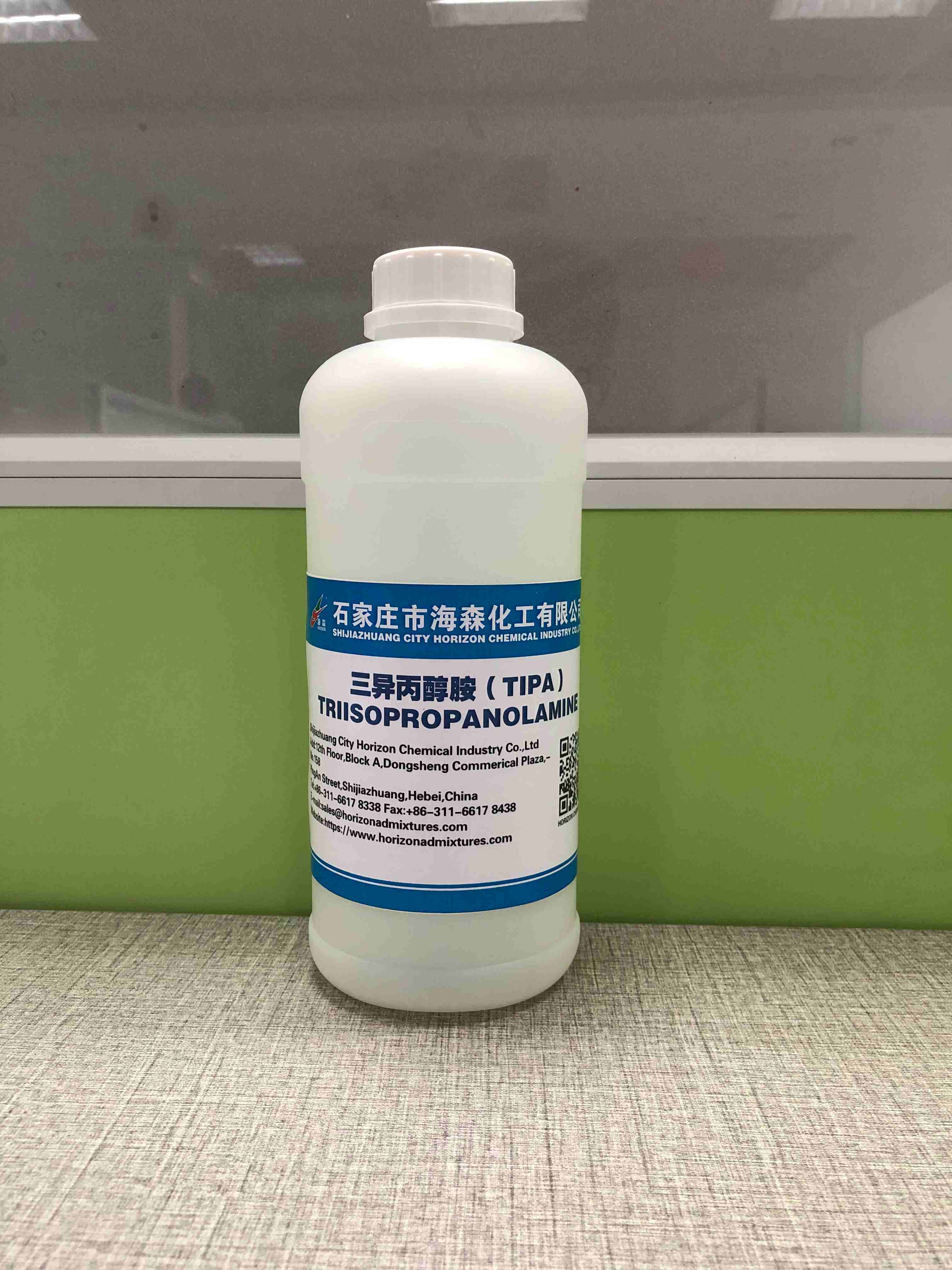
Choosing the right alkanolamine can make or break a high-performance formulation. Triisopropanolamine (TIPA) often gets overlooked, yet it quietly boosts cement strength, enhances polyurethane catalysis, and stabilizes specialty chemicals. The problem? Most 'recommended lists' recycle the same generic data, leaving formulators guessing whether TIPA actually fits their process. We decided to fix that. Working from field results and lab validations, HAISEN has compiled a practical TIPA recommendation list tailored for demanding applications. No marketing fluff—just clear use cases, dosage windows, and performance trade-offs. Curious where TIPA outperforms alternatives? The next section breaks it down.
Cement Grinding Aids That Lower Clinker Factor Without Sacrificing Strength
Grinding aids have moved beyond simple mill efficiency boosters; they now play a decisive role in replacing clinker with supplementary cementitious materials without paying a strength penalty. By reducing particle agglomeration and coating on grinding media, these additives allow limestone, fly ash, or slag to be ground finer and blended more uniformly. This finer, better-dispersed SCM fraction participates more fully in hydration, compensating for the lower clinker content.
The real trick lies in controlling the particle size distribution. A well-formulated grinding aid shifts the entire blend toward a steeper but broader curve, with the clinker fraction retaining enough coarse particles for late strength while the SCM fraction fills the gaps and accelerates early pozzolanic reactions. Some formulations also include compounds that directly activate slag or fly ash surfaces, increasing their reactivity without raising the clinker dose.
Polyurethane Catalysts with a Wider Cream Time Window
A narrow cream time window forces operators to rush mixing, pouring, and mold filling, which often leads to air entrapment or incomplete wet-out in complex geometries. Catalysts designed to stretch this early phase of the reaction give technicians valuable extra seconds without compromising the final cure speed. That extra breathing room is especially useful when handling multi-cavity molds, thick cross-sections, or manually poured parts where consistency from shot to shot matters more than raw speed.
Rather than simply slowing down the entire reaction profile, these catalysts shift the balance between initiation and gelation. The delayed onset of viscosity build keeps the liquid mixture workable longer, while the later stages of polymerization proceed at a pace that still meets demold targets. This behavior comes from tailored amine or metal complexes that remain relatively inactive during the initial mixing phase and then become fully engaged once the system reaches a specific temperature or concentration threshold. The result is a cream time that can be extended by 20 to 40 percent, yet the overall cycle time stays nearly unchanged.
In practice, a wider cream time window shows its value most clearly in applications like spray foam insulation, pour-in-place gaskets, and large structural panels. Operators gain a more forgiving process that tolerates minor delays or variations in ambient conditions without producing underfilled sections or surface defects. Manufacturers also report fewer rejected parts due to flow marks or knit lines, because the material has enough time to level and merge before the rapid cure phase kicks in. This translates directly into lower scrap rates and more predictable production schedules, even on lines with frequent mold changes or varying shot sizes.
Metalworking Fluid pH Control That Holds Up in Hard Water
Hard water minerals like calcium and magnesium quietly sabotage most pH control schemes. They react with traditional alkaline boosters, forming insoluble soaps and scale that drop out of solution, leaving the fluid acidic and your sump lined with sludge. The common fix — dumping in more pH adjuster — only accelerates the problem, because each dose triggers another round of mineral precipitation. A better approach starts with choosing an alkalinity source that resists chelation, such as certain tertiary amines or potassium-based buffers, which stay active even when calcium levels climb above 200 ppm as CaCO3.
Equally important is how you monitor and dose. Handheld test strips and manual corrections drift out of range within hours under hard water stress. Automated controllers that read pH continuously and dose small, frequent amounts of a hard-water-tolerant buffer keep the system within a narrow band without shocking the emulsion. Pair that with a pre-treatment step — either a water softener or a chelating agent designed for metalworking fluids — and you cut the calcium load before it ever hits the sump. This layered defense prevents the pH roller coaster that leads to corrosion, rancidity, and premature tool wear.
Finally, reformulate your expectations around pH setpoints. In hard water, holding pH at 8.8–9.2 often works better than chasing a higher target, because the buffer capacity of a properly chosen amine plateaus in that range. Some shops have shifted to pH-stable synthetics that incorporate sulfonate or carboxylate groups, which resist mineral binding and maintain emulsion stability even when make-up water arrives with 300 ppm hardness. The result is fewer top-ups, less foaming, and a fluid that lasts weeks longer between full changes.
Low-VOC Coating Neutralizers with Slower Evaporation Profiles
Many coating failures trace back to solvent choice, not resin quality. A neutralizer with a slower evaporation profile changes how the film forms—leveling out brush marks, extending wet edge time, and reducing solvent popping. Because it stays in the film longer, it also gives low-VOC formulations a better chance to develop hardness without trapping moisture.
Low-VOC does not have to mean fast-dry frustration. Slower-evaporating neutralizers are often built around oxygenated solvents or tailored blends that suppress VOC release while keeping the coating workable. Field work on interior trim and cabinetry shows fewer lap marks and a more uniform sheen, especially in warmer, drier conditions where conventional low-VOC products tend to flash off too quickly.
Specifying a neutralizer with a slower evaporation curve means balancing dry time, odor, and film integrity. The right product allows a two-coat day without sand-through, and it reduces the need for aggressive thinning that pushes VOC content back up. In practice, that translates to easier cleanup, fewer callbacks, and a finish that looks sprayed even when it was brushed.
High-Solids Cleaners That Avoid Harsh Amine Odor
Formulators have long wrestled with a trade-off: pushing solids higher often means leaning on amines that bring sharp, lingering odors into the workspace. Newer high-solids cleaners sidestep this by pairing low-odor neutralizing agents with carefully selected co-solvents, so you get the cleaning muscle without the air quality complaints.
The shift isn't just about swapping one additive. It involves rebalancing surfactant packages so that wetting and soil suspension hold up at reduced water content, while the amine component either disappears or is replaced with a hindered, low-volatility alternative. The result is a concentrate that stays pleasant to work with even in enclosed dip tanks or floor scrubbers.
For maintenance teams, the benefit shows up quickly: fewer headaches, less need for forced ventilation, and no lingering smell on uniforms or rags. At the same time, high solids mean less product per job and easier inventory handling, making these cleaners a practical upgrade where performance and indoor air quality both matter.
Cold Weather Concrete Admixtures for Early Strength Gain
Pouring concrete in freezing temperatures slows hydration to a crawl, leaving slabs vulnerable to frost damage and delayed finishing. Cold weather admixtures engineered for early strength gain work by accelerating cement hydration at lower temperatures, helping the mix reach critical compressive strength before ice crystals can form. These products often combine calcium chloride or nitrate-based accelerators with plasticizers and air-entraining agents, balancing rapid set times with workability and freeze-thaw resistance.
Field results show that a well-dosed cold weather admixture can cut initial setting time by half even at -5°C, allowing contractors to strip forms sooner and keep schedules on track through winter months. The real advantage comes from the shift in hydration kinetics: instead of waiting days for the slab to hit 500 psi, crews see that mark within 12 to 18 hours. This early strength threshold is the practical cutoff for protecting fresh concrete from a single freeze cycle without long-term loss in durability.
Selecting the right admixture means looking beyond the label's acceleration claims. Check the dosage range against your specific mix design, aggregate type, and ambient temperature swings. Some non-chloride accelerators perform better in sub-zero conditions without corroding embedded steel, while others are formulated for precast plants where high early strength is needed for immediate demolding. Testing a trial batch under job-site conditions remains the most reliable way to dial in the timing and avoid surprises like flash setting or reduced ultimate strength.
FAQ
TIPA improves grinding efficiency by reducing particle agglomeration and enhancing mill throughput. In high-performance applications, it also contributes to later-age strength development, which is particularly valuable for concrete exposed to aggressive environments.
Industrial-grade TIPA at 85% or 99% purity is common, but high-performance applications often call for low-water, low-impurity variants with <0.1% diisopropanolamine and minimal color bodies to avoid side reactions in sensitive polyurethane or coating systems.
Unlike triethanolamine, TIPA has a branched structure that offers better dispersing action on cement particles and stronger set retardation control at low dosages. This gives formulators more headroom when balancing early strength and slump retention.
TIPA should be kept in sealed, nitrogen-blanketed containers away from direct sunlight and moisture. Temperatures between 15°C and 30°C are ideal, as prolonged exposure above 40°C can deepen color and increase amine odor without necessarily affecting performance.
Yes, TIPA pairs effectively with glycols like diethylene glycol and with acetate salts. For high-performance cement, a blend of TIPA, DEG, and a small amount of sodium acetate often yields better Blaine surface area and pack-set resistance than TIPA alone.
Use nitrile gloves, splash goggles, and chemical-resistant aprons. TIPA is an alkaline amine that can irritate skin and eyes on contact. Provide local exhaust ventilation when heating or spraying, and keep spill kits with weak acid neutralizers nearby.
Absolutely. TIPA serves as an efficient neutralizer and dispersant in waterborne coatings, metalworking fluids, and agricultural formulations. Its low volatility and high flash point make it attractive for systems requiring alkaline pH stability under heat.
For grinding aid formulations, 0.01% to 0.05% by weight of cement is standard. In high-performance concrete admixtures that emphasize late strength, dosages up to 0.1% can be used, but mill trials should confirm compatibility with other admixtures.
Conclusion
Triisopropanolamine (TIPA) earns its place in high-performance formulations by solving stubborn processing and performance problems that simpler alkanolamines leave behind. In cement grinding, the right TIPA-based aid lowers clinker factor while preserving late-age strength, letting producers cut costs and carbon without watching compressive values slip. For polyurethane systems, TIPA derivatives stretch the cream time window enough that molders and spray applicators gain real working time without long-term cure drift. Metalworking fluid formulators lean on its buffering behavior in hard water, where pH stays stable even as calcium and magnesium load up, reducing emulsion splitting and tool staining.
Coatings and cleaners benefit from a different side of the same molecule. Low-VOC neutralizers built around TIPA exhibit slower evaporation, so pH stays locked during open time and flash rust stays controlled. High-solids industrial cleaners use TIPA to replace harsher amines, cutting the sharp odor that drives workers out of the room while still saponifying heavy soils. In cold weather concrete, TIPA-containing admixtures accelerate early strength gain without the set-time unpredictability of chloride or nitrate accelerators. Across all six categories, TIPA is not a one-size answer but a tuning tool: choose the right salt, ester, or blend, and the formulation moves closer to the performance edge competitors miss.
Contact Us
Contact Person: Sam Lee
Email: [email protected]
Tel/WhatsApp: 86-311-6617 8338
Website: https://www.horizonadmixtures.com/