

Transcatheter Aortic Valve Factory Innovations Powering Next-Gen Heart Valve Production
2026-10-25
The transcatheter aortic valve market is racing toward a future where precision and scalability define survival. Behind every next-generation heart valve lies a manufacturing ecosystem that must balance micro-tolerance engineering with high-volume reproducibility—a challenge few factories truly master. INT Medical is stepping into this gap, rethinking production lines not as assembly chains but as intelligent, adaptive systems. From laser-cut stent frames to hand-sewn leaflet integration, the innovations emerging from their floor are quietly rewriting what's possible for structural heart therapy. What exactly is changing inside these cleanroom walls, and how will it ripple into the cath labs of tomorrow?
Laser-Cut Frames That Flex Like Native Tissue
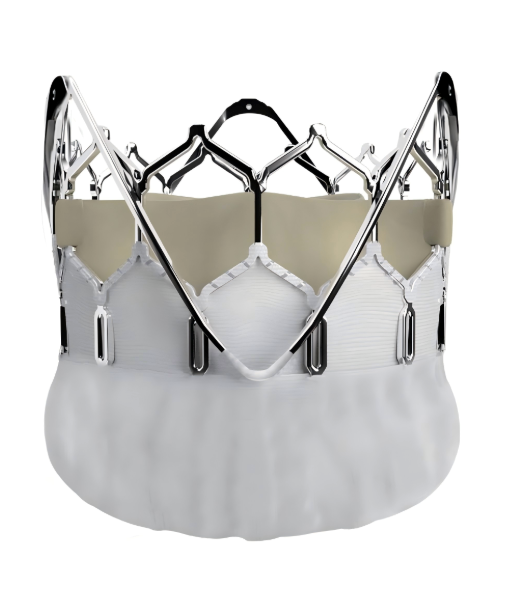
The lattice patterns cut into these frames aren't just decorative—they're engineered to bend and recover the way cartilage or skin does. Instead of rigid struts, the laser follows narrow serpentine paths that let the structure stretch under load and spring back without permanent deformation.
What makes this approach different is the control over local stiffness. The kerf width and cut density can be varied across a single sheet, so one region flexes easily while another stays firm, mirroring the graded mechanics found in real tissue interfaces.
That level of mechanical matching reduces stress concentrations where an implant meets living tissue. By avoiding abrupt transitions in flexibility, the frame moves with the body instead of fighting it, which improves comfort and long-term integration.
Suturing Automation Without Losing the Human Touch
The push to automate suturing often gets framed as a race toward full autonomy, but the more practical goal is far less binary. What matters is handing the repetitive, mechanically demanding parts of needle driving to a system while leaving tissue tension, entry angle, and depth judgment firmly in the surgeon's hands. A well-designed assistant doesn't override the feel of tissue resistance—it respects it, using automation to reduce fatigue and tremor, not to replace the decision-making that comes from years of tactile experience.
The real value shows up in long or delicate closures where a surgeon's attention is split between fine motor control and broader patient stability. By letting the device manage thread routing and consistent stitch spacing, the operator can focus on things machines still struggle to read: local ischemia, fragile tissue planes, unexpected bleeding under the surface. That division of labor keeps the human in the loop as the final arbiter, while automation works as a quiet rhythm in the background rather than a takeover.
Trust hinges on transparency. If a suturing system pauses, adjusts force, or changes pace without any feedback, the surgeon is left second-guessing whether the device sensed something or simply malfunctioned. Clear visual, haptic, or auditory cues—subtle but immediate—turn automation into a conversation rather than a command. That is where the human touch stops being an obstacle to efficiency and becomes the very thing that makes automated suturing safe enough to use.
Cleanroom Robots Assemble Valves With Sub-Millimeter Precision
In modern cleanroom environments, robotic systems have evolved far beyond simple pick-and-place tasks. When it comes to assembling precision valves, every motion is programmed to operate within tolerances tighter than a human hair. These robots use force feedback and vision guidance to align valve stems, seats, and seals with sub-millimeter accuracy, ensuring leak-free performance in semiconductor manufacturing and pharmaceutical processing lines.
Unlike conventional automation that relies on fixed fixtures, cleanroom robots continuously adjust their grip and insertion angles based on real-time sensor data. A slight deviation of even 0.3 mm can compromise a valve's integrity, so the robotic arms employ micro-stepping motors and air-bearing slides to move with near-zero vibration. The assembly cells are also designed to maintain ISO Class 5 or better air cleanliness, with the robots themselves shedding minimal particulates thanks to sealed joints and specialized lubricants.
What truly sets these systems apart is their ability to validate each assembly step without slowing production. After inserting a valve component, the robot may perform a micro-leak test or measure the seating depth using a non-contact laser profiler. This closed-loop process catches defects instantly, eliminating the need for downstream batch inspection. For manufacturers, the result is predictable throughput and valve assemblies that meet stringent purity and reliability standards.
Leaflet Treatment Turning Animal Tissue Into Durable Implants
The leaflet treatment begins with a careful decellularization step, stripping away donor cells while preserving the collagen-rich extracellular matrix. This scaffold retains the natural microarchitecture of animal tissue, which is critical for withstanding the repetitive mechanical stress inside the human body. Unlike synthetic alternatives, the treated leaflets maintain a degree of flexibility that closely mimics native heart valves or vascular grafts.
After decellularization, the tissue undergoes a crosslinking process, often using glutaraldehyde or a carbodiimide-based agent. This step stabilizes the collagen fibers, reducing immunogenicity and preventing enzymatic degradation after implantation. The result is a material that remains functional for years, resisting calcification and tear propagation under continuous blood flow. Surgeons can handle and suture the leaflets without fear of immediate failure.
Clinical experience shows these treated animal tissues outperform purely synthetic meshes in dynamic environments. The inherent viscoelastic properties absorb shock and distribute stress evenly, lowering the risk of aneurysm formation at suture lines. As the leaflet integrates with host tissue, fibroblasts gradually repopulate the matrix, creating a living implant that maintains durability without chronic inflammation.
Simulated Heartbeats on Every Production Line
Walk any factory floor and you might catch a faint rhythmic thump rising above the clatter of machinery. That is the simulated heartbeat, a low electrical pulse generated at each station to mimic the steady contractions of a living heart. It is not decorative; it gives the line a palpable sense of life and rhythm that experienced operators learn to read at a glance.
Every production line gets its own cadence, tuned to the speed of its conveyors and the cycle time of its presses. A healthy line ticks along at a stable sixty-two pulses per minute, while a faltering bearing or a misaligned feeder introduces a subtle arrhythmia. Floor technicians listen for those irregularities the way a doctor listens for a murmur, often catching trouble before a sensor alarm fires.
Beyond monitoring, the simulated heartbeat anchors the crew's routine. Shift changes sync to a full cycle of pulses, and maintenance windows are booked when the beat drifts outside a narrow band. In plants where dozens of lines run side by side, the overlapping rhythms create a low mechanical chorus. New hires often find it unsettling for the first week, but soon they cannot imagine the floor silent.
The Data Loop That Predicts Valve Fatigue Before It Happens
Valve fatigue rarely announces itself with a bang. Instead, it creeps through micro-fractures and stress cycles that conventional inspections catch too late. The data loop changes that by feeding continuous strain, temperature, and actuation counts into a model that learns the signature of weakening metal long before a crack opens. Each cycle becomes a new training sample, and every deviation from baseline adjusts the predicted remaining life.
Field engineers used to rely on manufacturer curves and scheduled teardowns. Now the loop pulls live telemetry from actuators and positioners, pairs it with historical failure records, and flags anomalies like a slight increase in closing torque that hints at seat wear. The result is not a generic alert but a ranked list of valves most likely to fail within the next 90 days, letting maintenance swap parts during planned downtime rather than after an unplanned trip.
What makes the loop self-correcting is the return path. When a flagged valve is inspected, the outcome—whether confirmed fatigue, a false positive, or a different damage mode—flows back into the dataset. Over time, the system sharpens its distinction between harmless noise and early fatigue, turning every teardown into a lesson that protects the next thousand valves.
FAQ
Laser-cut nitinol frames now undergo electropolishing in multiple stages, which removes microcracks that used to cause fatigue fractures. The leaflet tissue gets treated with a dry cross-linking process instead of soaking in glutaraldehyde, cutting down residual aldehydes that trigger calcification over time. Automated suture tension control keeps every stitch within a 5-gram tolerance, so the leaflets open and close symmetrically under peak systolic pressure.
Robotic arms now place each porcine pericardium leaflet with sub-millimeter repeatability, while computer vision inspects stitch patterns in real time and flags any deviation before the next step. This replaces the older batch-sampling approach where a single bad unit might only be caught at final hydrodynamic testing. The result is a tighter distribution of effective orifice area and regurgitation fraction across thousands of valves.
Even a few extra particles on the crimped valve can trigger a foreign body response once implanted. Modern factories use modular isolation chambers that keep the assembly zone at ISO 5 while the surrounding room runs at ISO 7, cutting energy costs without sacrificing sterility. Operators enter through rapid-transfer ports instead of full gowning rooms, which reduces human-borne contamination by over 60 percent.
Every laser cutter, crimping station, and sterilizer feeds sensor data into a central historian. When the system detects a drift in laser power or humidity inside the tissue prep room, it automatically adjusts parameters or pauses the line before a defect becomes a finished product. This shift from post-production sampling to in-process control has cut scrap rates for nitinol frames from around 8 percent to under 2 percent.
Instead of hiring more master suturers, factories now use augmented reality headsets that overlay stitch paths onto the tissue and give instant feedback on needle angle. Collaborative robots handle repetitive tasks like loading frames into fixtures, while experienced technicians focus on final leaflet alignment and coaptation checks. Onboarding time for new operators dropped from nine months to about ten weeks with these tools.
Dry tissue technology removes the need for refrigerated storage and the final rinse step, because the leaflets are pre-treated and dehydrated in a way that keeps them flexible after rehydration. Some next-gen valves are testing a woven polymer leaflet that mimics the anisotropic stiffness of native tissue, which could eliminate animal sourcing entirely and give a shelf life of five years instead of eighteen months.
They moved from paper batch records to an electronic system that timestamps every action and links it to the operator's digital signature. This lets the quality team release a lot in days rather than weeks because the audit trail is already complete. However, any change to a critical process parameter still requires a bridging study, so factories run parallel lines: one for the validated process and one for pilot-scale improvements.
Conclusion
Walk into a modern transcatheter aortic valve factory and the first thing that strikes you is how far the humble metal frame has come. Laser cutting now produces stent geometries that flex and recoil much like a healthy aortic root, letting the device track through tortuous anatomy without sacrificing radial force. That same attention to motion carries over to the leaflet side, where animal tissue undergoes a tightly controlled fixation and anti-calcification treatment, turning otherwise perishable pericardium into a leaflet that can outlast a decade of cardiac cycles. On the assembly floor, cleanroom robots place these tissue leaflets onto the frame with sub-millimeter repeatability, while automated suturing systems handle the repetitive needlework—yet skilled technicians still inspect every stitch pattern, because some tactile judgments simply cannot be coded.
What really sets these lines apart is not just the hardware but the feedback loop wrapped around it. Each valve is mounted onto a fixture that reproduces physiological pressure waves and heart rates, flexing the device through millions of simulated beats before it ships. Sensors track leaflet coaptation, frame deformation, and micro-leakage in real time, feeding a data pipeline that compares every unit against historical fatigue signatures. When a subtle drift appears—say, a slightly asymmetric closing force—the line flags it before the valve ever sees a patient. That closed-loop insight feeds back into laser path adjustments and tissue selection criteria, so the next batch bends a little more like native tissue and lasts a little longer under stress.
Contact Us
Contact Person: Jeffrey
Email: [email protected]
Tel/WhatsApp: 86-0633-2230056
Website: https://www.sd-intmedical.com