

Top Oil-Immersed Transformer Characteristics That Ensure Long-Term Reliability
2026-09-07
When a transformer fails, it rarely goes quietly. It takes down production lines, disrupts power delivery, and turns a routine maintenance budget into an emergency expense. For oil-immersed transformers, long-term reliability isn't a spec sheet buzzword—it's the result of deliberate engineering choices in insulation, cooling, sealing, and material quality. These are the characteristics that decide whether a unit will still be performing 20 or 30 years from now. At Lugao, we focus on exactly those fundamentals, not cosmetic upgrades. In this post, we'll break down the top oil-immersed transformer characteristics that ensure long-term reliability—and why cutting corners on any of them is a risk no operator should take.
What Oil Oxidation Rates Reveal About Transformer Longevity
In transformer maintenance, oil oxidation rate serves as a quiet but reliable signal. It does not just indicate chemical aging; it maps how insulation paper and windings are coping with heat, moisture and oxygen over time. A slow, steady rise often means the unit is aging normally, while a sudden spike can point to localized overheating or a failing cooling system.
What makes this metric useful is its predictive character. Oxidation produces acids and sludge, which accelerate cellulose degradation and restrict oil flow. By tracking the rate rather than a single test value, engineers can estimate remaining service life and schedule intervention before dielectric strength falls below safe limits.
Field data shows that transformers with consistently low oxidation rates tend to outlast those with frequent fluctuations, even when both pass standard dissolved gas analysis. This suggests that oxidation rate is not just a health marker but a window into operating consistency, loading patterns and maintenance quality. Paying attention to it can extend asset life in ways that routine tests alone often miss.
Hotspot Behavior Under Cyclic Loading: Beyond Nameplate Ratings
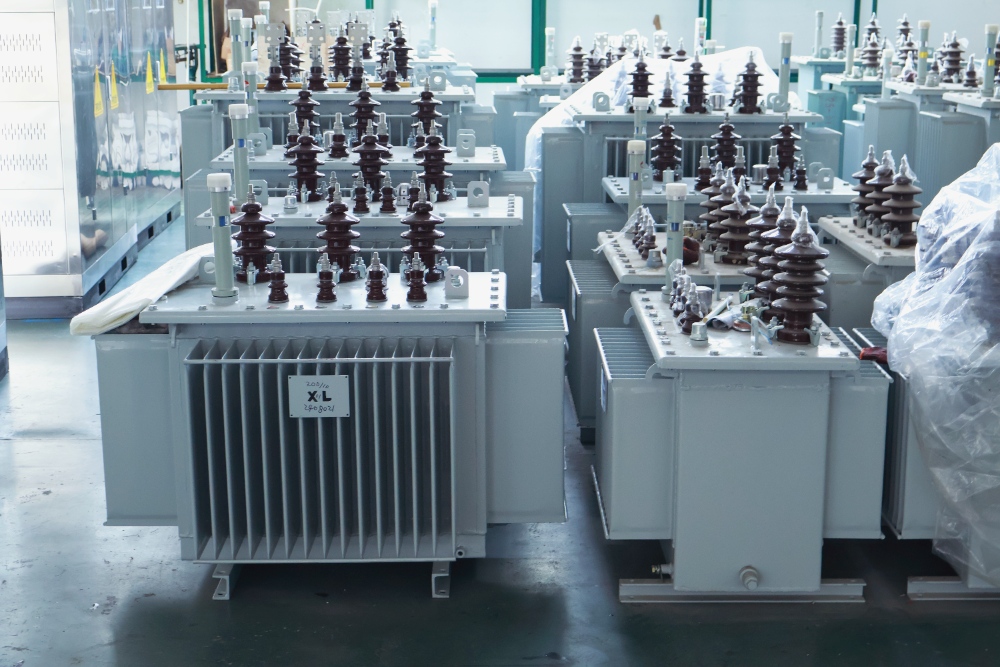
A transformer's nameplate tells a static story, but real grids never hold still. Under cyclic loading, the hotspot temperature doesn't just climb to a fixed value—it swings in a repeating thermal rhythm that can peak well above the steady-state assumption baked into traditional ratings. These peaks, even if brief, accelerate insulation aging in ways that a single worst-case number cannot capture. The result is a mismatch between the nameplate's promise and the asset's true thermal fatigue.
What makes this behavior tricky is its dependence on load shape, not just magnitude. Two identical transformers with the same average load can experience very different hotspot trajectories if one cycles sharply while the other varies smoothly. Sharp upward ramps leave little time for oil to absorb and redistribute heat, forcing the winding hotspot to overshoot. That overshoot, repeated daily, becomes the real determinant of insulation life—not the average temperature the nameplate implies.
Operators who rely only on nameplate limits often miss this nuance. Direct fiber-optic hotspot monitoring or dynamic thermal models that ingest actual load profiles reveal the true thermal envelope. By understanding how the hotspot responds to cyclic stress, utilities can safely push beyond static ratings during off-peak periods and pull back before damage accumulates—turning an apparent constraint into a managed operational flex.
Sealing Designs That Keep Moisture Out for Decades
A seal that survives a few rainstorms is easy; one that stays dry after thirty years of thermal cycling, UV exposure, and foundation settling is a different beast entirely. The most durable moisture barriers rely on compression-set-resistant elastomers like EPDM or silicone, paired with a geometry that maintains contact pressure even as the substrate shifts. Instead of relying on a single line of defense, these designs often stack a primary lip seal with a secondary labyrinth or drainage channel, so any water that sneaks past the first barrier gets redirected before it can reach vulnerable framing or insulation.
Longevity also comes down to how the seal is installed and protected. A common failure point is the joint between two gasket segments—sharp corners or butt joints can open microscopic gaps under wind-driven rain. Better designs use factory-molded corners or continuous extruded profiles with heat-welded transitions, eliminating those weak spots. Additionally, the seal's housing should shield it from direct sunlight and debris, since even the best polymer will degrade if constantly bombarded by UV and abrasive grit. Some systems incorporate a stainless steel cover or a recessed channel that keeps the sealing surface in shadow while still allowing for thermal expansion.
But the real test is time. Accelerated aging in a lab—cycling between -40°F and 180°F, blasting with salt spray, and simulating decades of compression relaxation—can predict performance, but field data from actual installations is worth more. In coastal buildings and cold-climate foundations, the seals that last are rarely the cheapest ones; they are the ones designed with a deliberate redundancy. If one sealing element relaxes or cracks, a second, softer element takes over, while a third acts as a capillary break. That layered approach, combined with materials that resist taking a permanent set, is what keeps moisture locked out for decades rather than just a warranty period.
Winding Short-Circuit Strength and Its Impact on Aging
Failures in winding insulation rarely announce themselves until the damage is already underway. A winding that survives a momentary short circuit may carry hidden weaknesses—microscopic cracks in the enamel, localized hot spots, or slight deformations in the coil geometry—that quietly accelerate thermal and electrical aging. What begins as a single event can become a slow drift toward reduced dielectric margin, especially in motors and transformers that operate near their thermal class limit. Instead of treating short-circuit strength as a pass/fail property, it is more useful to view it as a starting point for the aging trajectory.
The physical consequences of a high-current fault often show up weeks or months later. Copper conductors that shifted under magnetic forces may rub against each other during normal load cycles, wearing away insulation that was only marginally damaged at first. Inverter-fed machines face an additional layer of stress: the same winding that endured a line-start short circuit may now be exposed to repetitive voltage spikes, and the pre-existing weak spots become preferred sites for partial discharge. Field experience suggests that windings with moderate short-circuit damage can lose several years of expected service life, even when they pass routine insulation resistance tests immediately after the event.
A maintenance approach that accounts for this delayed effect pays attention to subtle changes—slight increases in winding temperature under the same load, a gradual downward trend in polarization index, or an uptick in acoustic noise from the coil region. Rather than relying solely on a one-time short-circuit test, prudent operators combine occasional high-current withstand checks with trending of dielectric loss and visual inspection of end-winding bracing. The goal is not to predict an exact failure date, but to recognize when a winding has crossed from healthy aging into an accelerated degradation path, where a relatively minor future disturbance could trigger a full turn-to-turn fault.
Dissolved Gas Signatures That Flag Trouble Early
Transformer oil tells a story long before a failure shows up on a standard test. As windings overheat, insulation breaks down, or arcing begins, the oil releases specific gases in repeatable ratios. Learning to read those early chemical whispers means the difference between a scheduled repair and a forced outage at 3 a.m.
Hydrogen and methane usually appear first, hinting at low-energy hot spots. But if acetylene starts climbing, that is a different conversation entirely—it points to arcing, often in the tap changer or a loose connection. Ethylene and ethane fill in the middle ground, marking thermal faults that have moved beyond gentle warming. The real skill is not just spotting one gas, but tracking how the whole family shifts over weeks, not years.
Field crews often rely on dissolved gas analysis as a tripwire, not a verdict. A sudden jump in carbon monoxide alongside hydrogen tells you paper insulation is involved, not just oil. Trending those values against load and ambient temperature removes a lot of false alarms. In practice, the best early warning systems pair lab results with online monitors that sample daily, so a developing fault is caught while it is still cheap to fix.
Cooling System Margins for Renewable-Duty Load Fluctuations
Cooling loops sized for steady-state thermal loads often fall short when renewable sources impose rapid power swings. A wind turbine's converter can see junction temperatures climb by tens of degrees within minutes, yet the coolant inlet temperature barely moves because of system thermal inertia. This mismatch means the margin must be evaluated at the component level, not just from average heat rejection figures. Short-duration overloads need to be absorbed by local thermal capacitance or a fast-responding flow increase, otherwise hot spots form long before the bulk coolant warms up.
Load shedding brings a different kind of stress. When generation drops suddenly, an oversized cooling loop can pull temperatures down too aggressively, creating condensation risks on busbars and cold plates. A practical margin strategy therefore includes both upper and lower thermal bounds. Variable-speed pumps and fans offer one way to stay inside these bounds, but they introduce control latency. Some newer designs pair the variable flow with a small buffer tank or phase-change material, which acts as a thermal flywheel during the first few minutes of a transient. This approach smooths the response without requiring the cooling system to react at electrical timescales.
Field data from solar-hybrid plants suggests that monitoring the rate of temperature change, rather than absolute temperature alone, gives a more useful trip or modulation signal. A rapid rise in heatsink temperature can trigger an anticipatory increase in coolant flow before the return line even warms up. Conversely, a fast drop can reduce pump speed early to avoid overcooling. Building the margin around these derivative-based triggers reduces thermal cycling stress on power modules and allows a smaller, more efficient cooling package than a purely worst-case static design would require.
FAQ
The oil does double duty: it cools the windings and suppresses arcing. Over time, moisture and oxidation degrade its dielectric strength, so keeping it dry and free of acids is non-negotiable for decades of trouble-free operation.
Even trace moisture can slash the insulation's breakdown voltage and accelerate cellulose aging. Reliable units use sealed conservator systems with silica gel breathers or nitrogen blankets to keep water out and buy years of extra service.
Ratings assume ideal cooling, but real-world load patterns create hot spots. Direct-coupled radiators, forced oil-air cooling, and winding temperature indicators let operators stay inside safe limits instead of guessing.
Gases like hydrogen, methane, and acetylene are fingerprints of faults such as overheating or partial discharge. Transformers with easily accessible oil sampling valves and consistent DGA baselines give early warning before a minor defect becomes a catastrophic failure.
Airtight, welded tanks with pressure-vacuum gauges and leak-tested gaskets stop oxygen and humidity from reaching the core and windings. Less oxygen means slower oil oxidation and fewer sludge deposits blocking cooling ducts.
Radial and axial clamping must hold windings rigid under electromagnetic forces. Transformers built with pre-compressed insulation and robust core clamping survive repeated through-faults without loosening, preventing turns from rubbing through insulation.
They are the most frequently operated moving part. A well-designed OLTC with a separate oil compartment, advanced diverter contacts, and filtered oil keeps step changes from contaminating the main tank and reduces maintenance shutdowns.
External rust can creep into welds and flanges, eventually compromising the tank's seal. High-quality zinc-rich primers and weather-resistant topcoats protect against coastal humidity and industrial pollutants, preserving structural integrity.
Conclusion
Long-term reliability in oil-immersed transformers starts with how the insulating oil ages. Oil oxidation rates are not just a chemistry footnote; they directly track the condition of paper insulation and the overall thermal history. A unit that keeps oxidation byproducts low typically has fewer sludge deposits and better heat transfer, which translates to a slower aging process. Equally important is hotspot behavior. Cyclic loading from renewable-heavy grids forces winding temperatures to swing far beyond nameplate assumptions. Transformers that manage these excursions without exceeding critical limits—through better directed flow or refined thermal models—avoid the cumulative damage that silently cuts lifespan. Sealing designs also play a decisive role. A well-engineered sealing system, using materials that resist degradation and maintain elasticity over decades, keeps atmospheric moisture from entering. Even small amounts of water accelerate both oil oxidation and paper hydrolysis, so effective seals are a quiet but essential guard against premature failure.
Mechanical ruggedness matters just as much as chemical stability. Winding short-circuit strength, built on robust clamping, proper conductor support, and controlled axial forces, prevents deformation that would otherwise create local hotspots and partial discharge sites. Aging is not only a thermal process; it is also a mechanical one. On the diagnostic side, dissolved gas signatures offer an early warning system. A slow rise in hydrogen, methane, or carbon monoxide often precedes a serious fault by months, allowing intervention before irreversible damage. Finally, cooling system margins have become critical for renewable-duty load fluctuations. Transformers connected to solar or wind plants experience rapid, sometimes unpredictable load changes. Cooling designs that include extra radiator capacity, intelligent fan controls, or directed oil flow can absorb these swings without pushing winding temperatures into harmful territory. Together, these characteristics—chemical stability, thermal resilience, mechanical integrity, and diagnostic transparency—define the modern oil-immersed transformer built for decades of reliable service.
Contact Us
Contact Person: Doreen
Email: [email protected]
Tel/WhatsApp: 8618057712366
Website: https://www.liugaopower.com/