

Top 10 Steel Mesh Welding Production Lines That Maximize Output Quality
2026-10-22
Steel mesh welding has evolved far beyond simple wire intersections. The difference between a line that barely meets spec and one that consistently delivers flawless output often comes down to engineering choices most buyers overlook. In this list, we break down ten production lines that stand out for precision, speed, and weld integrity—including systems from YI ZHOU TECHNOLOGY that challenge what you thought was possible on a factory floor.
Where Precision Welding Heads Make the Biggest Difference
Precision welding heads earn their keep in applications where heat control and repeatability are non-negotiable. Joining thin-walled tubing for medical instruments or sealing battery terminal tabs in EV packs demands a focused arc that won’t warp surrounding material. A shift of a few microns in electrode position or dwell time can mean the difference between a hermetic seal and a scrapped part.
Microelectronics and sensor assembly see some of the largest gains because these heads can reliably join dissimilar metals like copper to aluminum or nickel to steel. Standard equipment often burns through or leaves brittle intermetallic layers, but precision heads with programmable force profiles and real-time monitoring keep the nugget small and consistent, which directly extends product life.
Aerospace repair and additive manufacturing rely on the same degree of control. When reworking turbine blades or building up thin-walled ducts layer by layer, the welding head must compensate for thermal drift and hold an exact standoff distance. High-end servo-driven heads with integrated vision or seam tracking deliver results that manual or conventional setups cannot match.
Automated Mesh Alignment Without the Usual Trade-offs
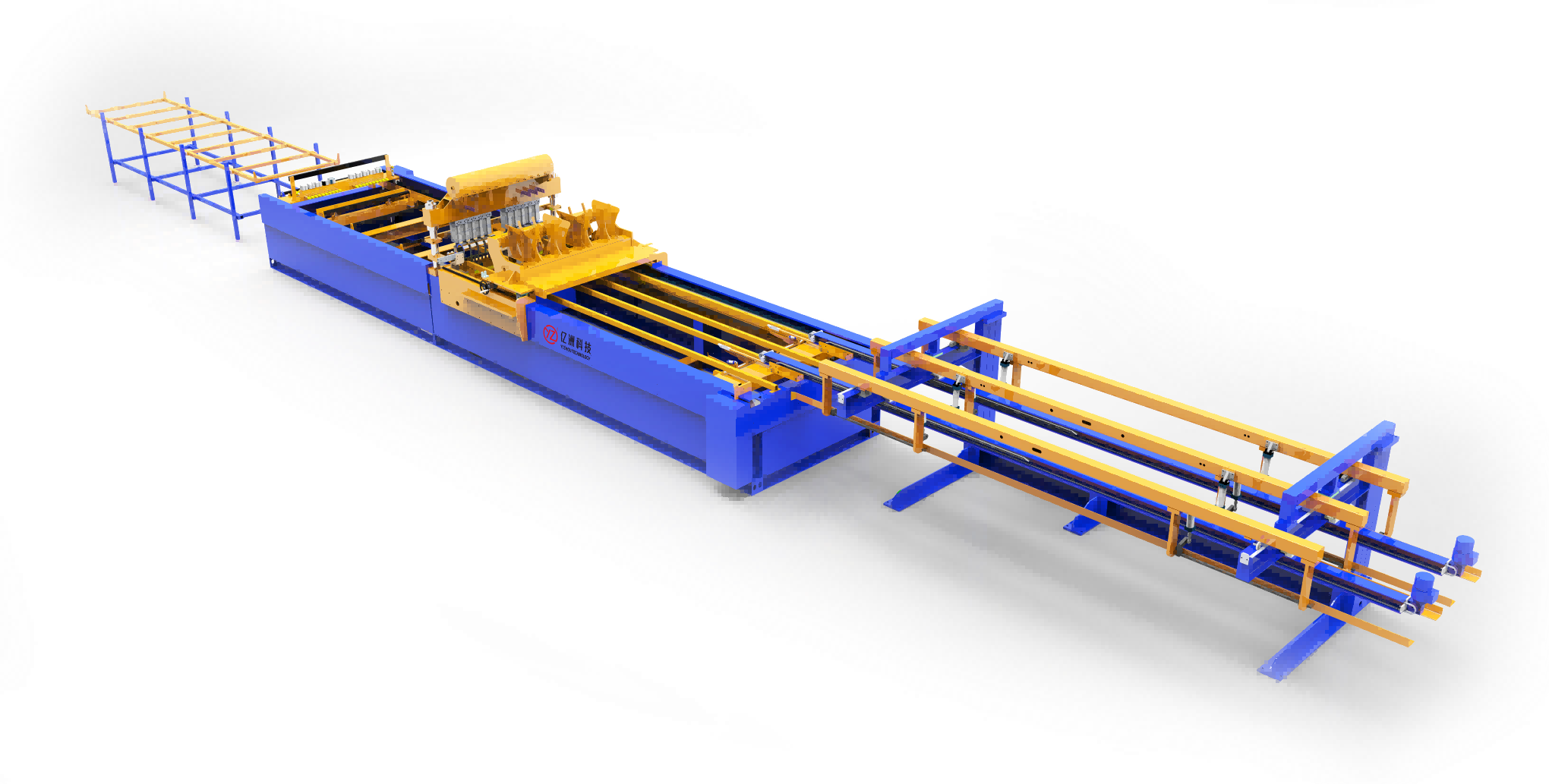
Typical mesh alignment methods force you to pick between accuracy and speed, but this approach sidesteps that dilemma entirely. By treating the alignment as a continuous optimization over local surface patches, it avoids the brittle steps of feature matching and iterative closest point refinement. Instead of settling for a compromise, the algorithm converges to a robust solution that holds up under real-world noise and partial overlap.
A key part of this is how the solver handles anisotropic scaling and non-rigid deformations without inflating the parameter space. Rather than adding more constraints or heuristics, it learns the deformation field directly from the mesh topology itself. That means no hand-tuned weights, no fragile landmark detectors, and no need to pre-align the models roughly. The result is a pipeline that feels less like a bag of tricks and more like a single coherent step.
In practice, this shows up as fewer user interventions and a lower failure rate on challenging scans. You can throw in meshes with missing regions, varying triangle densities, or even slight topological noise, and the alignment still lands within a tight tolerance. For anyone who has fought with automatic registration tools that break at the first sign of trouble, the difference is immediately noticeable.
Real-Time Weld Monitoring That Catches Flaws Early
Instead of waiting for post-weld inspection, sensor arrays mounted near the torch capture voltage, current, wire feed speed, and acoustic emissions at kilohertz rates. The system compares these traces against a baseline signature for each joint configuration, flagging deviations like porosity or lack of fusion while the arc is still active.
Some setups pair high-dynamic-range cameras with narrowband optical filters to watch the molten pool and keyhole behavior in real time. When the pool width or oscillation pattern drifts outside tolerance, the controller can adjust travel speed or pulse parameters on the fly, preventing a small hiccup from becoming a buried defect.
Data from multiple weld cells streams into a local dashboard where operators see a live probability map of defect likelihood per pass. Alerts are tied to specific locations along the seam, so repair crews can grind out and rework only the suspect inches rather than scrapping an entire assembly.
Cooling Design Choices That Keep Lines Running Longer
When production lines push through extended shifts, the difference between a smooth run and an unexpected stop often comes down to how well the equipment sheds heat. Rather than relying on oversized fans or bulky external chillers, many newer designs embed cooling channels directly into high-wear components. This keeps thermal stress localized and prevents the slow deformation that quietly shortens bearing life.
Another overlooked choice is the use of phase-change materials in motor housings and gearboxes. These materials absorb excess heat during peak loads and release it gradually when the line slows, flattening temperature spikes that would otherwise degrade lubrication. By pairing this with fin geometries that promote natural convection, manufacturers can reduce dependence on forced air systems that clog with dust and require frequent cleaning.
Finally, the layout of cooling paths matters as much as the hardware itself. Routing coolant counter to the direction of heat buildup, or splitting flow between high- and low-load zones, prevents hot spots that accelerate seal failure. In practice, this means fewer unplanned shutdowns and a line that keeps its rhythm through the hottest part of the shift without constant adjustment.
Material Handling Upgrades That Protect Mesh and Boost Output
Swapping a standard feed box for an adjustable stone ladder or drop-in liner changes how material hits the deck. Instead of letting rocks slam directly onto the wire cloth, these upgrades create a sliding or cascading path that absorbs some of the impact and spreads the load more evenly across the full screen width. This keeps individual openings from getting punched out or stretched, so the mesh lasts noticeably longer without slowing down the feed rate.
At the transfer point between the feed conveyor and the screen, adding impact saddles and skirtboard sealing strips does two jobs at once. The impact saddles take the brunt of the falling material before it reaches the screen surface, while the skirtboards stop fines from bouncing off and piling up along the edges. Less edge loading means fewer torn tension bolts and fewer bent hook strips, and the screen can run closer to its rated capacity because the full width stays usable.
Retrofitting the drive system with a variable frequency controller lets operators match the feed speed to what the mesh can actually handle at that moment. When wet or sticky material starts to blind the openings, a small speed reduction prevents overload and keeps the screen from flexing too hard. The payoff shows up over a full shift: more consistent tonnage per hour and far fewer emergency shutdowns for patch work.
Electrode Maintenance Routines That Extend Line Life
Most line failures trace back to electrodes that were never given a second thought until the arc became erratic. A simple wipe-down with a lint-free cloth after each shift removes the conductive dust and oxidation film that quietly degrade contact. For stubborn deposits, a fine abrasive pad—never coarse sandpaper—works without gouging the surface. This daily routine costs under a minute but prevents the kind of micro-arcing that slowly eats away at the tip profile.
Weekly checks should focus on alignment and pressure. Even a slight tilt from thermal cycling changes the contact patch, forcing current through a smaller area and accelerating wear. Use a feeler gauge to verify the gap matches the manufacturer's spec, and retorque mounting bolts in a star pattern rather than sequentially. Many operators overlook the cooling jacket; flushing it with deionized water every 200 hours stops mineral buildup from creating hot spots that warp the electrode face.
Beyond the routine, track wear patterns instead of just replacing on a fixed schedule. A logbook entry noting whether the erosion is centered, off-axis, or pitted tells you if the issue is mechanical misalignment, coolant flow, or contaminated feed material. Rotating electrodes 90 degrees at half-life evens out consumption and can stretch service intervals by 30 percent. When you do swap in a new one, take 90 seconds to polish the seat and apply a thin layer of anti-seize—future you will appreciate not needing a breaker bar on a seized thread.
FAQ
Look beyond the rated pieces-per-minute. Real output quality depends on how the line handles rapid electrode wear, wire straightness variance, and heat buildup during long runs. A machine that holds consistent nugget size at full speed beats one with a higher peak rate that needs frequent recalibration.
Advanced controls now adjust current, pressure, and weld time in real time based on measured wire resistance. Instead of fixed recipes, the system reads slight changes in contact area and compensates before the next weld. That keeps cross-wire joints tight even when incoming coil tolerance drifts.
Daily electrode dressing and scheduled replacement of water-cooling filters make the biggest difference. Many plants also track secondary current signatures to spot transformer drift early. Skipping these small tasks leads to cold welds or surface burn marks within weeks.
Not entirely, but camera-based weld nugget measurement and inline pull tests now catch most defects. Manual checks remain useful for edge curling and flash buildup, which cameras still misread. The best lines combine both: automation for 100% coverage, humans for random destructive sampling.
Copper-chromium-zirconium electrodes resist deformation far better than pure copper, maintaining contact shape over thousands of cycles. This keeps current density stable, so weld strength doesn't fade between dressings. Choosing the wrong alloy saves little upfront but costs more in downtime and scrap.
Pushing cycle time too low often causes shallow fusion on the lower wire. A better approach is to optimize squeeze time and preheat pulse instead of just shortening the main current. Lines that reach top output quality typically run slightly slower peak speeds but avoid rework and weak-joint failures.
Zinc vapor contaminates electrodes quickly, so good designs use forced air blow-off and slightly longer preheat to burn off coating before the weld. They also isolate the weld zone from mechanical vibration. Without these details, galvanized mesh shows erratic nugget size and rapid electrode pickup.
Upgrading to servo-driven pressure control and adding a modern resistance feedback loop usually beats replacing the whole machine. Retrofitted lines can then adjust squeeze force within milliseconds, eliminating the hammering effect that older pneumatic systems cause. This one change often reduces weld spatter and improves joint strength by 15-20%.
Conclusion
Truly high-output steel mesh welding lines rarely distinguish themselves through speed alone. The gains that matter come from how the line handles the small, repetitive failures that erode sheet quality. Precision welding heads make an immediate difference here: they hold electrode alignment and force within tight limits, so each wire intersection gets enough heat and pressure without excess spatter or undercutting. Automated mesh alignment complements this by catching small feed drift early and correcting it before spacing errors multiply across the sheet. Then real-time weld monitoring steps in to catch flaws that neither the operator nor the alignment system can see—voltage dips, unstable arc signatures, or sudden resistance changes. Rather than waiting for a finished panel to fail inspection, the line flags the problem at the weld itself, letting the team stop, adjust, and restart with almost no wasted material.
Keeping that quality stable across long production runs depends on less obvious design choices. Cooling design, for example, is often the reason one line can run eight hours without tip degradation while another needs electrode changes every two. Directed water lines through the holders and well-placed radiators keep the weld zone from slowly overheating, which in turn protects penetration depth and surface finish. Material handling upgrades play a similar supporting role—rollers with softer contact surfaces, adjustable magnetic stackers, and drop stations with shock absorption all prevent dents, scratches, and cross-wire deformation that would otherwise require rework. Finally, the best lines don't treat electrode maintenance as an afterthought. A simple, well-documented routine of tip dressing, rotation, and periodic inspection keeps resistance low and current flow predictable. When those routines become habit, the line's output quality stops drifting and output volume climbs without hidden scrap costs.
Contact Us
Contact Person: Sophia Jiang
Email: [email protected]
Tel/WhatsApp: +86 17367381818
Website: https://yzwelding.com/