

Stainless Steel Hex Nuts Company Reveals How to Choose Corrosion-Resistant Fasteners
2026-11-16
Corrosion doesn't announce itself—it works quietly until a critical fastener fails. When your project demands stainless steel hex nuts that shrug off salt spray, chemicals, or moisture, the selection process goes far beyond picking a grade. Wanluo dives into the real-world factors that separate a long-lasting fastener from a costly mistake.
What Does Corrosion-Resistant Really Mean Here?
Corrosion-resistant gets thrown around so often that it starts to sound like a guarantee. In practice, it describes a material's ability to slow down the electrochemical breakdown that occurs when metal meets moisture, salt, or stray currents. The key word is "resist" — not "defeat." A component rated as corrosion-resistant will still react over time, just far less aggressively than untreated steel or aluminum. The actual lifespan depends on coating thickness, alloy composition, and whether the protective layer stays intact after installation.
What really matters here is the environment. A fastener that shrugs off humidity in a warehouse might fail within months on a coastal pier. Salt spray, temperature swings, and even the presence of dissimilar metals can turn a "resistant" label into a premature rust stain. So when evaluating a product, look past the marketing phrase and ask what specific test standard was used — salt fog hours, cyclic corrosion, or real-world exposure data. That's the difference between a part that survives and one that merely claims to.
The 316 vs. 304 Choice Most Buyers Get Wrong
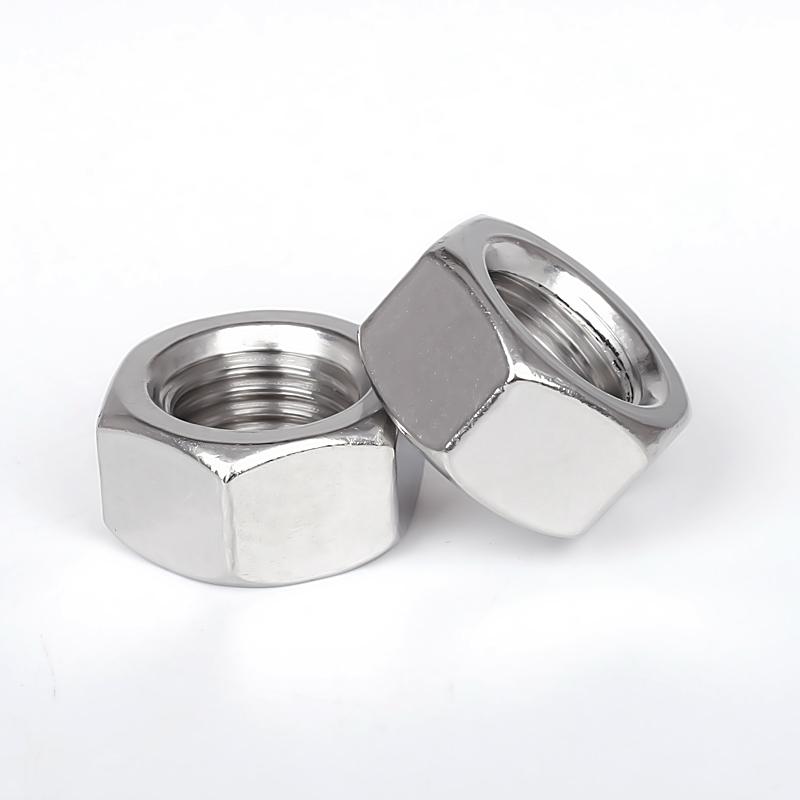
Plenty of buyers treat 316 as an automatic upgrade over 304, but that misses the point. The real difference comes down to molybdenum, which gives 316 better resistance to chlorides and salt. If your product will sit inland or handle mild acids, 304 often does the job for less money. Choosing 316 there just inflates the bill without any visible benefit.
The mistake cuts both ways. Some kitchens and coastal installations spec 304 because it looks identical on paper, then watch pitting appear within months. Others pay extra for 316 in environments where moisture is occasional and chlorides are nearly absent. Matching the alloy to the actual exposure, not the marketing, separates a smart purchase from an expensive guess.
Why a Coating Alone Won’t Save a Cheap Nut
A coating might hide surface imperfections and offer a temporary shield against rust, but it cannot compensate for the weak base metal underneath. Cheap nuts are often made from low-grade steel with inconsistent grain structure, so even the most advanced plating will crack or flake off when the fastener is torqued down. The real problem isn't the outer layer—it's that the core lacks the strength to hold threads under load without deforming.
Thread engagement is another place where coatings fall short. When the internal threads of a nut are sloppily cut or have excessive clearance, a zinc or polymer layer simply fills in the gaps without improving the mechanical fit. Under vibration or thermal cycling, the coating wears away quickly, leaving behind the same loose tolerances that caused the joint to fail in the first place. A premium coating on a poorly machined nut is like painting over a cracked foundation—it looks fine until stress is applied.
Finally, corrosion resistance depends on more than just the surface treatment. A thin coating on a cheap nut may pass a salt spray test initially, but once the plating is scratched or chipped during installation, the base metal corrodes at an accelerated rate. High-quality fasteners use alloy compositions and heat treatment that resist corrosion from within, so a minor surface breach doesn't lead to rapid degradation. In contrast, a cheap nut relies entirely on that fragile outer shell, and when it fails, nothing is left to prevent rust from spreading through the entire component.
How Much Strength Are You Willing to Trade?
Every choice that makes you stronger in one area quietly takes something from another. A heavier lift might cost you speed, and an extra set might eat into tomorrow's recovery. The real question isn't whether you can push harder, but whether the price is visible enough to weigh before you pay it.
Most people trade strength for comfort without noticing. You skip the last two reps, and you get evenings back; you stick to the machines, and your joints thank you. But over time those small bargains add up, and the person in the mirror is shaped by what you chose to keep instead of what you were willing to give away.
So before adding more load, ask what you're ready to release. Sleep, mobility, patience, a bit of ego—each one has a going rate. Strength gained in a rush often comes back as a bill you didn't expect.
Spot Crevice Corrosion Before It Spreads
Corrosion rarely announces itself with a hole. It starts as a faint rust streak bleeding from a bolted seam, a tiny blister under the paint near a gasket edge, or a dull gray paste collecting where two plates meet. Run a clean rag across the suspect area and check whether the stain comes back within a few days. If it does, you are not looking at surface grime—moisture and chloride are already working inside the crevice.
Use a strong flashlight and a small inspection mirror to scan the underside of flanges, lap joints, and fastener heads. Any place where water can wick but not evaporate is a candidate. Probe shallow pits with a plastic feeler gauge rather than a metal pick, which can scratch away the very evidence you need. Mark the border of each affected zone with a paint pen, then recheck after the next wet weather cycle. Growth of a few millimeters is enough reason to open the joint and clean out the corrosion before it spreads under sound metal.
Cheap Fasteners Often Cost More Over Time
It starts with a stripped screw head or a bracket that wobbles loose after a few weeks. Inexpensive fasteners often arrive with inconsistent threading, soft metal, or plating that flakes off before the box is even empty. The immediate savings are real, but they quietly shift costs to rework, replacement parts, and the labor hours spent fixing what should have held the first time.
Over a year, a handful of failed bolts in a production run or a deck railing that needs tightening every spring adds up fast. The real expense isn't the fastener itself; it's the callbacks, the damaged reputation, and the downtime that no one budgets for. Higher-grade fasteners may cost more on the invoice, but they hold torque, resist corrosion, and don't demand constant attention.
Paying twice for the same job never feels like a bargain. When a cheap anchor strips inside a wall or a zinc screw rusts through painted trim, the replacement cost includes the original part plus the labor to remove, patch, and reinstall. That's why experienced builders and mechanics tend to buy fasteners by performance, not by the lowest sticker price.
FAQ
Coastal air carries salt and high humidity, so grade 316 with molybdenum is a safer bet than 304. More importantly, check for crevices under the nut flange or washer interfaces—those hidden gaps trap chlorides and start pitting long before the exposed surfaces fail. A smooth, passivated finish also helps reduce nucleation points.
It's not just about chromium; molybdenum and nitrogen play a big role in resisting pitting and crevice corrosion from acidic or chloride-heavy process fluids. Duplex grades like 2205 give a good balance of strength and corrosion resistance, but you have to verify compatibility with the specific chemicals at operating temperature—laboratory immersion tests beat guesswork.
Mixing is risky because of galvanic corrosion. If the nut is more noble than the bolt, the bolt will sacrifice itself; if less noble, the nut corrodes quickly. Use insulating washers or pick the same alloy family. In a pinch, check the galvanic series and keep the potential difference small.
A rough, scratched, or embedded-iron surface will collect moisture and contaminants, creating microenvironments where rust can start. Passivation removes free iron and encourages a thinner, more uniform chromium oxide layer. Electropolishing goes further by smoothing peaks where chlorides gather. Avoid overly aggressive wire brushing that can embed carbon steel particles.
There's no universal schedule, but visual checks every six months catch early rust blush or discoloration around threads and bearing surfaces. After storms or chemical spills, inspect immediately. Use a low-power magnifier to look for pinholes or etching. Record findings with photos so you can track whether a specific lot is degrading faster than expected.
Assuming all stainless is equal is the big one. 304 works fine indoors but will pit near saltwater. Another mistake is ignoring thread engagement: partially engaged threads create narrow gaps that trap salt crystals and starve the area of oxygen, preventing the passive layer from healing. Also, assembling wet hardware can seal in chlorides.
Yes. PTFE or ceramic-based anti-seize compounds can reduce galling and seal micro-crevices, but they need to be compatible with the environment. For assembly, use low-chloride thread lockers and avoid copper-containing anti-seize if galvanic concerns exist. In aggressive settings, a thin ceramic topcoat on the hex flats can add a second barrier, though it may alter torque-tension relationships.
Thermal cycling can cause condensation and thermal expansion mismatches that open microscopic gaps between nut and bolt threads. Those gaps then hold moisture and salts, leading to crevice corrosion. Choose alloys with similar thermal expansion coefficients to the joined materials, and consider spring washers or tension control methods that maintain preload without over-tightening.
Conclusion
Most buyers assume “corrosion-resistant” means the fastener will never rust, but that is not how stainless steel works. The alloy forms a thin, self-healing chromium oxide layer that protects the surface only when oxygen is available. In stagnant seawater, inside tight crevices, or under heavy chloride deposits, that layer can break down locally. This is why the common choice between 316 and 304 matters more than many realize. Type 316 contains molybdenum, which significantly improves resistance to pitting in chloride-rich environments like coastal or chemical plants. Type 304, while cheaper, often fails prematurely in those same conditions, even though it looks identical on the shelf. A zinc or PTFE coating on a low-grade steel nut does not solve the problem either. Coatings are thin, can be scratched during installation, and wear away on load-bearing threads. Once the coating is compromised, the underlying carbon steel rusts quickly and can seize the joint. Strength is another trade-off. Some highly corrosion-resistant alloys are softer than hardened carbon steel, so specifying a higher grade without checking tensile and yield requirements can lead to bolt stretching or thread stripping under heavy load.
Crevice corrosion is often overlooked because it starts in hidden places: between the nut and flange, under a washer, or inside an imperfectly tapped hole. The narrow gap limits oxygen, and the passive layer fails, allowing acidified water to eat into the metal. Better joint design, smooth surfaces, and occasional disassembly for inspection help catch this before it spreads. The company also stresses that cheap fasteners usually end up costing more over the long run. A low-priced nut that rusts in two years may require a shutdown, broken bolt extraction, and rework that far exceeds the initial savings. On the other hand, paying extra for marine-grade 316 in a dry indoor application is also wasteful. The practical approach is to match the alloy, coating, and strength class to the actual exposure conditions, then verify performance with a small field test or a salt-spray reference before committing to a large order. That balance, not marketing claims, is what keeps a fastened joint reliable.
Contact Us
Contact Person: Shane
Email: [email protected]
Tel/WhatsApp: 8613357785029
Website: https://www.wanluohardware.com