

Spray Column Supplier Tips for High-Performance Industrial Systems
2026-08-21
Most guides on choosing a spray column supplier recycle the same spec-sheet checklist. But high-performance industrial systems rarely fail on paper—they fail in the field, where pressure drifts, seal materials degrade, and delivery timelines slip. That's why the tips below focus on what actually separates a dependable partner from a transactional vendor. Drawing on real-world commissioning and long-term operational data, Sinou highlights the supplier-side details that directly affect uptime and throughput. If you're tired of generic advice and want to future-proof your next spray column investment, this is where the practical conversation starts.
Boost Efficiency With Advanced Spray Column Designs
The real work in a spray column happens at the droplet interface, so the nozzle selection and layout often matter more than column height. Swapping a standard full-cone pattern for a flat-fan array that produces a more uniform droplet size can cut the required liquid recirculation rate by double digits. That directly lowers pump energy and reduces entrainment carryover, especially when the gas phase has a wide turndown range.
Packing choices also shape efficiency. Open, high-void-fraction packing with a textured surface encourages liquid film renewal without creating the channeling you see in smooth, tall beds. Pair that with a redesigned liquid distributor that avoids drips at the wall, and the wetting efficiency climbs enough to shorten the column by 20 to 30 percent while keeping the same removal performance.
Finally, look at the gas inlet geometry. A tangential or baffled inlet that breaks the incoming gas momentum prevents the short-circuiting that forces operators to run extra stages just to compensate. Combined with a mist eliminator sized for the actual droplet spectrum—not a generic mesh pad—the column can handle higher superficial velocities without flooding, which is often the cheapest way to increase throughput on an existing unit.
How to Match Nozzle Specs to Harsh Process Conditions
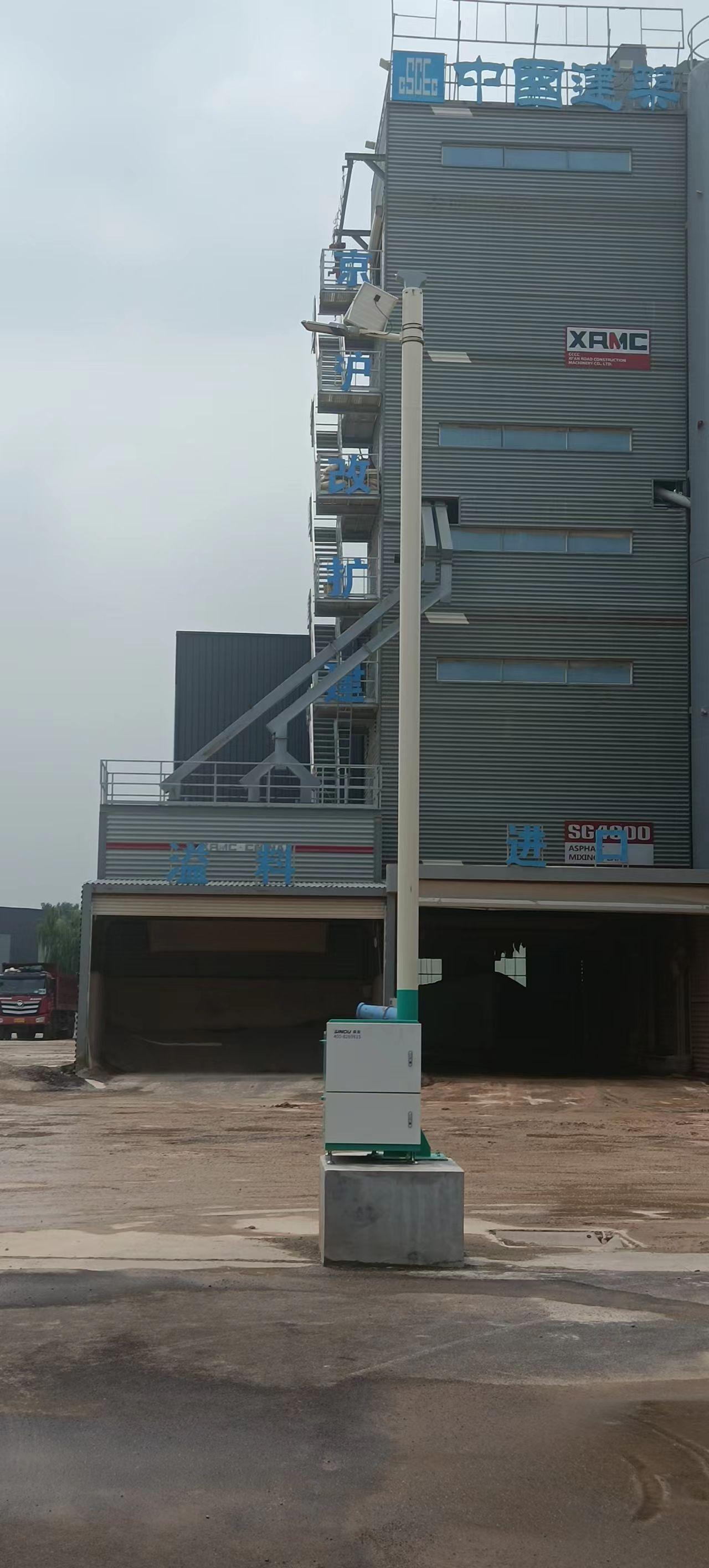
Matching nozzle specs starts with reading the actual conditions at the orifice, not just the line pressure or tank temperature. In high-temperature sprays, thermal expansion changes internal clearances, so a stainless nozzle rated for 800°F may still gall or seize if it only sees that temperature in a short burst and then cools rapidly. Check whether the process runs steady-state or cycles, because repeated thermal shock often wears out a nozzle faster than continuous exposure to the peak temperature.
Chemical exposure and particulate load drive material and geometry choices. In acidic or caustic streams, even trace chlorides can pit 316 stainless, so you may need Hastelloy, silicon carbide, or PTFE-lined bodies. For slurries or liquids with suspended solids, a narrow orifice with a tight swirl chamber will plug quickly; look for larger free passage, hardened inserts, or a design that creates a fan pattern without small internal gaps. Also pay attention to impingement angle and fluid velocity because erosion rate scales sharply with particle speed.
Pressure drop and flow capacity must be matched across the entire operating range, not just at one design point. A nozzle that gives correct droplet size at 60 psi may drift badly when feed pressure dips to 30 psi during filter changes. Map the minimum and maximum pressure, then pick a nozzle whose spray angle and coverage stay acceptable in that band. Finally, verify actual wear life with a short field trial under worst-case conditions rather than relying only on lab data or manufacturer curves. Real process upsets often reveal failures that spec sheets don't cover.
Cut Maintenance Costs Using Resistant Lining Materials
Maintenance budgets often bleed out through repeated patching of worn liners. Switching to a genuinely resistant lining—whether it's high-alumina ceramic in a transfer chute or a polyurethane sheet in a slurry pipe—changes the cost equation. Instead of scheduling welders every few months, you schedule a liner inspection once a year. The upfront price is higher, but downtime and labor savings usually cover it within the first twelve months.
The key is matching the liner to the exact abuse it will face. A rubber lining works well for wet, fine-particle abrasion but will tear under sharp, heavy impact; a cast basalt liner handles sliding abrasion beautifully yet cracks under thermal shock. Many plants overspend because they buy a "wear-resistant" product without checking the failure mode of the previous liner. Taking an hour to test a sample under real flow conditions prevents a costly mismatch.
Don't overlook installation details either. Even the toughest ceramic tile will fail early if the adhesive bed is uneven or the joints aren't sealed against chemical attack. But once the right material is in place and properly installed, the reduction in emergency call-outs is dramatic. Maintenance shifts become predictable, parts inventory shrinks, and the total cost of ownership drops far below what repeated cheap fixes ever achieved.
Why Custom Column Sizing Beats Off-the-Shelf Options
Off-the-shelf columns often force compromises. You end up shimming gaps, cutting down oversized parts, or accepting poor load distribution. Custom sizing eliminates those workarounds from the start.
With custom columns, the cross-section, length, and end fixity match your exact load case and connection geometry. That means less dead weight, cleaner detailing, and fewer field adjustments. It also opens up options like variable wall thickness or integrated base plates that standard catalogs rarely include.
The upfront cost difference is smaller than people assume once you factor in modification labor and wasted material. Fabricators can produce custom columns quickly, especially with digital templates, so lead times are no longer a real drawback.
Integrating Smart Sensors for Real-Time Flow Control
Real-time flow control often falls short when it relies on static setpoints and periodic manual checks. Integrating smart sensors changes that by feeding live measurements of flow rate, pressure, and sometimes temperature directly into the control loop. These sensors aren't just more accurate—they handle signal conditioning at the edge, which means the controller receives clean, time-stamped data without additional filtering hardware. In practice, a magnetic flow meter paired with a pressure transducer can detect a downstream valve closing within milliseconds, allowing the pump or control valve to react before the system drifts far from target.
The integration path matters as much as the sensors themselves. Most modern smart sensors communicate over IO-Link, Modbus TCP, or OPC UA, so wiring and protocol conversion become part of the design rather than an afterthought. A common approach is to run a lightweight adaptive loop directly on a PLC or industrial PC, where the flow error drives a model predictive or gain-scheduled controller. Unlike a fixed PID tuned for one operating point, this setup recalculates the valve position based on current flow dynamics, reducing overshoot during load changes. For example, in a chemical dosing line, switching from a conventional flow transmitter to a Coriolis smart sensor with onboard diagnostics cut response time by roughly 40 percent without any change to the valve actuator.
What often gets overlooked is how sensor health affects control quality. Smart sensors can report their own drift, fouling, or intermittent signal loss, and that information should be folded into the control strategy. If a flow sensor starts to degrade, the loop can temporarily fall back to a model-based estimate or widen the deadband to avoid hunting. Retrofitting an existing system usually means mapping sensor data into the current SCADA or DCS tags, then gradually handing over authority from the old loop to the new one. The key is to treat the sensors as active participants in control—not just inputs—so the system keeps tuning itself as conditions change.
Proven Strategies for Scaling Up Without Performance Loss
Most teams hit a wall when traffic spikes, not because their code is bad but because every new feature adds another synchronous call into the same bottleneck. A simple fix that often gets overlooked is to move anything that doesn't need an immediate response—like sending welcome emails or updating recommendation feeds—into a background queue. This keeps the main request path light and predictable, so the user never waits on work they can't see.
Another quiet performance killer is the shared database that grows into a single point of failure. Instead of throwing more hardware at it, separate read-heavy traffic from writes. Route reporting queries and dashboards to read replicas, and reserve the primary instance for transactions that actually change data. It's a low-cost change that can double throughput almost immediately, especially when paired with well-chosen indexes and a clear staleness policy for cached views.
Finally, don't underestimate the value of measuring before you scale. Instrument the top five endpoints that make up the bulk of your traffic, then graph p95 and p99 latency alongside memory and CPU. You'll often find that one slow third-party call or an unoptimized serialization step is responsible for most of the degradation. Fix that path first, and you can handle far more load without adding a single server.
FAQ
Focus on internal liquid distribution design, not just shell diameter. A supplier who asks about your gas flow turndown range, droplet size targets, and fouling tendencies is usually more trustworthy than one quoting a standard skid before understanding the process.
Packing still influences residence time and liquid holdup, especially when you run at reduced rates. For foaming or solids-laden streams, a hybrid approach with low-pressure-drop structured packing below the spray zone can save energy without sacrificing capture efficiency.
Full-cone nozzles maintain coverage at lower liquid rates, but hollow-cone creates finer droplets for gas absorption. The better supplier will offer a nozzle manifold with isolation valves so you can switch patterns during turndown rather than forcing one nozzle type to handle every condition.
Check access for nozzle removal without breaking the flue or process line, wash-down connections above the mist eliminator, and material selection for the liquid distributor arms. Suppliers who bury nozzles behind fixed internals are handing you a future shutdown headache.
Liquid maldistribution near the wall and poor gas inlet baffling cause short-circuiting. A column can meet theoretical residence time on paper and lose 15-20% efficiency because the spray pattern collapses at the edges or the inlet gas jet disturbs the bottom spray zone.
Move beyond generic "316SS or Hastelloy" answers. Ask for hardness after passivation, expected erosion rate at your specific droplet velocity, and whether the nozzle tips are replaceable without cutting the header. In chloride service, crevice corrosion at threaded connections often kills nozzles faster than bulk chemical attack.
Request pilot or CFD data using your actual gas composition and liquid chemistry, including turndown cases. Avoid suppliers who only share single-point performance curves. A credible vendor will show efficiency contours across liquid-to-gas ratio and pressure drop, not a single optimistic number.
Not necessarily. Beyond a certain height, additional residence time yields diminishing returns while pumping cost and entrainment risk climb. The supplier should optimize the aspect ratio and nozzle staging for your target removal, not just add shell length to make the bid look conservative.
Conclusion
Achieving stable, high-output operation in industrial spray columns rarely comes from a single upgrade. The most effective suppliers start by looking at the internal flow path: advanced designs that reduce recirculation zones and improve droplet distribution can lift absorption or scrubbing efficiency without pushing more liquid through the system. Nozzle selection is equally critical. Instead of relying on generic catalog specs, successful teams match orifice size, spray angle, and material to the actual feed chemistry, temperature, and solids load. A nozzle that works in clean water trials often erodes or clogs within weeks under acidic slurry or high-chloride conditions. Pairing the right nozzle with a resistant lining, such as modified epoxy or fluoropolymer-based coatings, extends service intervals and keeps pressure drop steady. Many plants find that the combination of better internals and a tailored lining cuts unplanned downtime more than any single expensive component.
Custom column sizing is another area where off-the-shelf units fall short. A column diameter or height chosen from a standard range may force operators to run at the edge of turndown or flood capacity, which quietly erodes separation quality. Suppliers who take the time to model the specific gas-liquid ratio, packing or tray type, and expected turndown typically deliver a unit that behaves predictably during load swings. Adding smart sensors for real-time flow and pressure monitoring turns that design advantage into day-to-day control. Rather than relying on periodic manual checks, operators can spot drift in liquid distribution or nozzle plugging early and adjust before a batch fails. When scaling up from pilot to production, the same logic applies: keep the geometric and hydraulic similarities intact, verify nozzle density per cross-sectional area, and resist the temptation to simply multiply flow rates. Small mismatches in liquid holdup or droplet residence time become large penalties at higher throughput. The suppliers who manage these details help plants scale without sacrificing efficiency or maintenance budgets.
Contact Us
Contact Person: HaiYan
Email: [email protected]
Tel/WhatsApp: +86 18957325588
Website: https://www.senyoubeton.com/