

Speaker Magnet Manufacturer: How to Choose the Right Partner for High-Performance Audio
2026-08-27
Every high-performance speaker starts with an invisible decision—the magnet. It shapes force, damping, and thermal behavior long before the first note hits. Yet too many audio brands still source magnets like a commodity, and that’s where designs quietly fail. A speaker magnet manufacturer isn’t just a supplier; they’re the partner who decides whether your driver stays punchy at full power or fades after an hour on stage. In this guide, we cover what actually matters when evaluating magnet partners—material grade, flux consistency, coating quality, and the ability to scale without drift. If you want drivers that measure as good as they sound, start with the right foundation. That’s why forward-thinking teams work with DAWA—for magnet solutions built around high-performance audio, not off-the-shelf compromises.
Why Magnet Material Sets the Ceiling for Speaker Performance
Magnet material is rarely the first thing listeners think about when evaluating a speaker, but it quietly dictates how far every other design choice can go. The magnetic field strength in the voice coil gap sets a hard limit on the force available to move the diaphragm. No matter how clever the cone geometry or how stiff the surround, if the magnet cannot generate enough flux density, the driver simply cannot accelerate the moving mass quickly enough for tight transients or high output. It is like an engine with a fixed displacement: you can optimize the intake and exhaust, but ultimate power still hinges on that core constraint.
The physics gets more unforgiving as you push toward high fidelity. Ferrite magnets are cheap and stable, but their lower energy product means the motor structure must be huge and heavy to achieve comparable gap flux. Neodymium offers far greater coercivity in a compact package, yet it brings its own headaches such as thermal demagnetization at lower temperatures and sharp flux losses if overheated. Alnico sits in between with a wonderfully musical midrange character, but its low coercivity makes it prone to partial demagnetization under strong dynamic peaks unless carefully designed. Each material imposes a different ceiling not just on loudness, but on how cleanly the driver tracks complex signals before the motor becomes the dominant source of distortion.
Beyond raw strength, the magnetic circuit's behavior under load separates competent drivers from truly revealing ones. As the voice coil moves within the gap, the flux density should remain consistent, but real magnets have fringe fields, edge saturation, and temperature-dependent behavior that introduce nonlinearities. A driver with a marginal magnet may measure flat at low power yet compress and smear transients when pushed. Upgrading to a better magnet material does not automatically guarantee better sound, but it removes the most fundamental bottleneck. Until the magnetic foundation is strong enough, every subsequent refinement in suspension, cone, or crossover is just working around a ceiling that should have been raised from the start.
From Prototype to Production: Evaluating Process Capability
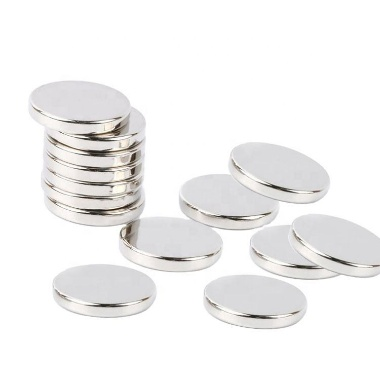
Transitioning from a prototype to full-scale production exposes gaps that benchtop builds rarely reveal. A process that works when an engineer hand-assembles five units often falters when operators, tooling, and time constraints enter the picture. Evaluating process capability at this stage means moving beyond whether a single part meets spec and asking whether the process can repeatedly hit target values under normal manufacturing variation.
Common early indicators include Cp and Cpk, but these numbers only become meaningful once the measurement system itself is stable. Collecting data from pilot runs, then comparing short-term capability against long-term performance, helps separate assignable causes from inherent variation. If the prototype process relied on frequent adjustments or rework, those hidden dependencies will surface as low capability indices and unpredictable output.
The goal is not to force a prototype process into production, but to understand where it must be redesigned for repeatability. Tightening tolerances on a drawing rarely solves a fundamentally unstable process. Instead, teams should focus on eliminating setup variation, standardizing operator methods, and verifying that critical inputs remain centered over time. A process proven capable at low volumes with representative conditions offers a far stronger foundation for scaling than one that only works under ideal circumstances.
Custom Magnetic Circuit Design for Tight Spaces and High Power
Fitting a magnetic circuit into a cramped enclosure while pushing substantial power demands a departure from off-the-shelf geometries. The core geometry often needs to be reshaped so that flux paths stay short and cross-sections remain adequate, otherwise localized saturation sets in long before the intended operating point. Thermal constraints compound the problem, as tightly packed windings and cores leave little room for heat dissipation, forcing designers to treat magnetic and thermal performance as one coupled challenge.
One practical route is to iterate on the pole shape and yoke thickness using finite element analysis, targeting the smallest envelope that still keeps flux density below the knee of the chosen material. High-energy magnets such as neodymium-iron-boron are frequently specified, but their temperature coefficients must be checked against worst-case load conditions. Sometimes a hybrid core—combining laminated steel for alternating flux and a soft magnetic composite for complex 3D shapes—can reclaim space that a conventional stacked lamination would waste.
The payoff appears most clearly in applications like surgical power tools, compact servo actuators, and airborne converters, where every cubic centimeter counts. A well-tailored circuit not only raises power density but also evens out field distribution, reducing stray losses and audible noise. Rather than forcing a standard core into an unsuitable housing, custom magnetic design aligns the flux path with the available space, making high power achievable without enlarging the footprint.
Quality Consistency: Which Test Data Actually Matters
Quality consistency hinges on data that mirrors the messy, edge-of-spec scenarios real production systems encounter. Standard happy-path datasets give you false confidence because every machine learning model can ace a clean table. The test data that actually matters clusters around the boundaries where input distributions shift, rare categories appear, and numerical values drift into tails no one bothered to label. If your evaluation set never forces a single ambiguous decision, you are not measuring consistency—you are measuring agreement with a sanitized fantasy.
Equally important is temporal coherence. The same model can score perfectly on data from last quarter and fall apart on this month’s stream because upstream logging changed a field name or a third-party API started returning nulls where it used to return zero. So the data that matters is not just hard examples; it is hard examples drawn from the exact operational windows you claim to support. Build your consistency pack from failures captured in production, retries, user-reported edge cases, and records that broke previous pipelines—not from random splits of a curated benchmark.
Finally, ignore volume as a proxy for quality. Ten thousand near-duplicate rows add computation but not evidence. A carefully selected set of a few hundred high-leverage cases—each one tied to a known regression or a fragile integration point—will expose inconsistency faster than any oversized holdout set. When your test data makes engineers uncomfortable because it contains malformed JSON, duplicate primary keys, and timezone-jumping timestamps, that is when consistency claims start meaning something.
Supply Chain Transparency and Delivery Reliability as Hidden Risks
Most procurement teams track on-time delivery percentages and call it supply chain transparency. The reality is far messier. A supplier can hit every shipping window yet still conceal fragile sub-tier dependencies, single-source raw material bottlenecks, or quality shortcuts buried three levels down. Those blind spots rarely show up in a scorecard until a factory line stops, and by then the cost is measured in lost revenue, not late fees.
Delivery reliability data tends to reward the suppliers who are best at gaming the metric, not necessarily the ones who are structurally sound. A vendor might ship partial orders early to boost their on-time rate, then backfill the rest weeks later without triggering an alert. Meanwhile, the buyer's inventory buffer masks the variability, creating a false sense of stability that collapses precisely when demand spikes or a regional disruption hits.
The hidden risk is that transparency and reliability are treated as compliance checkboxes instead of dynamic capabilities. Companies rarely map their full supplier network beyond tier one, and even fewer stress-test delivery promises against realistic scenarios like port closures or raw material shortages. The ones that avoid surprises do something counterintuitive: they deliberately look for uncomfortable information, share it across functions, and reward suppliers for admitting uncertainty early rather than hiding it behind perfect-looking KPIs.
Long-Term Technical Support and Willingness to Co-Develop
Long-term technical support isn't a checkbox on a contract—it's a living partnership shaped by shared goals and honest conversation. We approach every collaboration with the understanding that software evolves, environments shift, and new challenges surface months or years after launch. That's why our support model moves beyond break-fix responses and into proactive maintenance, performance reviews, and incremental improvements that keep your system aligned with real-world use.
Co-development amplifies this commitment. Instead of handing off a final build and stepping away, we embed our engineers alongside your internal teams, aligning on code standards, documentation habits, and release cadence. This shared ownership means knowledge doesn't leave when a sprint ends—it compounds through every review, refactor, and feature push. We prioritize transparent roadmaps and joint backlog grooming so that both sides understand not just what is being built, but why, and how it will be sustained.
Crucially, willingness to co-develop is measured in actions, not promises. We schedule regular architecture deep-dives, offer paired programming sessions, and rotate support specialists to avoid single points of failure. By treating long-term technical health as a first-class deliverable, we help teams avoid the costly cycle of re-platforming and instead build systems that age gracefully through continuous, collaborative stewardship.
FAQ
Look beyond generic certifications. A capable partner will speak fluently about voice coil gap flux density, magnetic circuit linearity, and how different grades of neodymium shift the tonal balance. Ask for a breakdown of how they control demagnetization under high-temperature load—this is where many average suppliers fall short.
At minimum, they should offer sintered neodymium-iron-boron (NdFeB) in grades from N35 to N52, with high-coercivity options like N42SH or N48H for thermal stability. Ferrite and alnico are still relevant for certain driver topologies, so a well-rounded partner won't push you into one material just because it is cheaper to produce.
For precision drivers, dimensional tolerance should be within ±0.05 mm on critical surfaces, and magnetic flux density should be verified per batch, not just per lot. A trustworthy manufacturer will share actual measurement data—hysteresisgraph traces or Helmholtz coil results—rather than only nominal values.
It is more important than it looks. Speaker magnets often live in humid or thermally stressed environments. A proper multi-layer coating—nickel-copper-nickel or epoxy—prevents oxidation that silently degrades field strength. Ask for salt spray test results and cross-cut adhesion tests to verify durability.
Yes, and this is where the right partner separates itself. They should offer in-house wire EDM or multi-axis grinding for complex geometries, plus the ability to fixture radial or multi-pole magnetization. If they rely entirely on standard blocks and discs, expect design compromises.
Check how they handle process control documentation—PPAP or similar first article reporting—and whether they can provide full material traceability back to the raw alloy batch. Also ask about their capacity for consistent supply: a one-off prototype is easy, but repeating tolerances across thousands of units is the real test.
A strong partner will run magnetic simulations using FEA software and give you flux density plots before cutting tooling. They should be able to suggest geometry tweaks that improve BL symmetry or reduce flux leakage. If they cannot discuss the magnetic circuit beyond 'send us a drawing,' consider that a red flag.
It depends on the complexity. Simple blocks or discs with standard magnetization might ship in 3-4 weeks, while multi-pole rings or segmented arrays with custom coatings can take 8-12 weeks including tooling. Be cautious of promises that are dramatically faster—they often mean skipped quality steps.
Conclusion
Selecting a speaker magnet manufacturer goes far beyond comparing datasheets. The raw magnet material—whether ferrite, neodymium, or specialized grades—determines how much magnetic flux can be sustained in the voice coil gap, effectively setting the ceiling for output, distortion, and thermal behavior. Yet a strong material spec means little without process discipline from prototype to volume production. Early samples often hide issues like inconsistent pressing density, uneven coating, or tolerance drift that only emerge at scale. A capable partner will walk you through their tooling and sintering controls, and if your design must fit a shallow enclosure or handle high continuous power, they should offer custom magnetic circuit work—adjusting geometry, pole shapes, or adding shielding—rather than forcing an off-the-shelf part. This kind of collaborative engineering early on prevents costly redesigns later.
Beyond the magnet itself, consistent quality depends on which test data the manufacturer actually collects and shares. Flux density, coercivity, and irreversible loss at operating temperature are more meaningful than a generic certificate. Ask for lot-level data and how outliers are handled, because a single weak batch can ruin a production run. Supply chain transparency also matters more than many realize: rare-earth pricing, secondary sourcing, and shipping delays can quietly derail a project if your supplier hides downstream dependencies. Finally, look for a manufacturer that treats the relationship as ongoing co-development. When they respond to your next driver revision with simulation support or material alternatives instead of a fresh quote, you have found a partner who can keep your audio products competitive over multiple generations.
Contact Us
Contact Person: Kelvin Lo
Email: [email protected]
Tel/WhatsApp: 0769-88561131
Website: https://dawamagnetic.com/