

Open Air Cooler Company Explains How Evaporative Cooling Works for Large Outdoor Spaces
2026-11-16
Picture this: a sweltering summer afternoon, a packed outdoor concert, and yet the air feels pleasantly cool. How is that possible? The answer is evaporative cooling, and ART is here to explain the science that makes large outdoor spaces comfortable even in extreme heat.
How Evaporative Cooling Actually Works When You're Outside
Step outside on a dry, breezy day and your sweat does more than just make you feel damp—it's pulling heat straight off your skin. As each bead of moisture turns to vapor, it steals energy from your body's surface. That's why a stiff wind can feel almost chilly even when the thermometer reads 90°F. The air isn't cooler; your skin is simply losing heat faster than your body can produce it.
But humidity changes everything. When the air is already saturated, sweat has nowhere to go. It just pools and drips, offering almost zero relief. That's the real reason a swamp cooler works wonders in Arizona but turns into a useless fan in Florida. The same principle applies to a wet bandana around your neck or a spray bottle misting your arms—they only help if the surrounding air is thirsty enough to absorb that moisture.
What most people miss is the microscopic tug-of-war happening right at the boundary layer of your skin. Water molecules don't evaporate one at a time; they escape in clusters, pulling the fastest-moving heat particles with them. So a gentle breeze matters as much as low humidity—it constantly replaces the thin, moisture-laden air hugging your body with drier air that can accept more vapor. Without that airflow, even desert heat becomes oppressive because you're effectively steaming in your own little bubble.
The Role of Water and Airflow in Cooling Large Open Areas
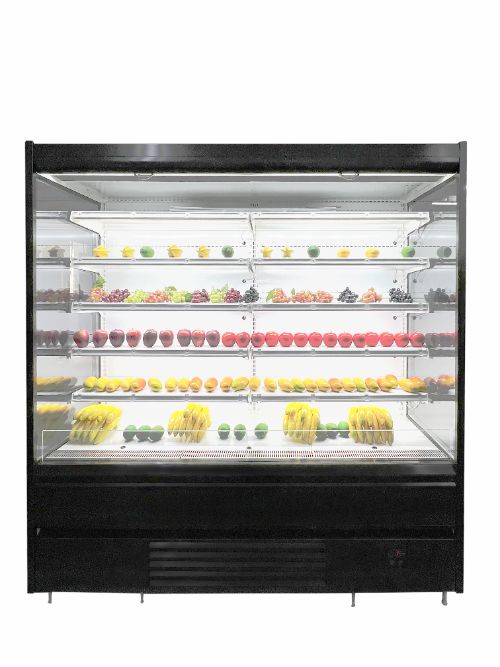
In vast, unpartitioned spaces—think exhibition halls, covered markets, or atriums—temperature control rarely succeeds through mechanical cooling alone. Water earns its keep by absorbing heat as it changes phase. A shallow pool, a run of misting nozzles, or a wetted porous screen can pull several degrees out of the air without adding the sharp chill of refrigerated systems. The effect is subtle but continuous, and it works best when the evaporated moisture is carried away before the air saturates.
Airflow decides whether that cooler air reaches people or simply pools near the floor. Low-velocity fans or carefully placed openings create a slow drift that pushes heat upward and draws cooler air across occupied zones. In tall volumes, a stack effect does much of the work: vents near the roof let hot air escape, while inlet openings at lower levels admit air that has passed over water or shaded ground. The result is less about wind speed and more about a steady, organized exchange.
The real advantage appears when water and air are tuned together rather than treated as separate fixes. A breeze that is too strong will strip away humidity before evaporation can do its job; a water feature in still air only cools its immediate surface. Designers who place water upwind of seating areas, or who pair evaporative pads with variable-speed fans, get a system that responds to heat load without consuming much energy. In large open areas, that combination often outperforms oversized air conditioning by working with the building's natural air paths instead of against them.
Why Outdoor Spaces Feel Cooler With Evaporative Coolers Than With Fans
Outdoor heat builds up on patios, decks, and poolside areas because sunlight directly warms every surface, and the air itself holds that heat close to the ground. A standard fan simply moves this hot air around, which can feel refreshing at first but never lowers the actual temperature. In dry climates especially, moving air accelerates sweat evaporation from your skin, yet the surrounding air remains just as hot, so the relief is short-lived and often turns into a blast of uncomfortable warmth.
Evaporative coolers work on a completely different principle. They pull outdoor air through water-saturated pads, causing the water to absorb heat as it evaporates. This process actively drops the air temperature before it even reaches you, often by 10 to 20 degrees Fahrenheit depending on humidity. Because the cooler pushes out a steady stream of genuinely chilled air, it creates a microclimate around your seating area. That means your skin, furniture, and even the floor stay noticeably cooler, something a fan can never achieve.
Another overlooked advantage is how evaporative coolers handle open spaces. Fans lose their effect beyond a few feet because their airstream disperses quickly, and they cannot overcome the constant influx of hot outdoor air. An evaporative cooler, on the other hand, continuously conditions new air and can be aimed to blanket a larger zone with cooler output. This makes a practical difference during late afternoons or early evenings when you want to enjoy the outdoors without being stuck directly in front of a fan's blast zone.
Sizing and Placement: Getting the Most From an Outdoor Evaporative Cooler
Choosing the right size for an outdoor evaporative cooler isn't just about picking the biggest unit on the shelf. A cooler that's too large for your patio or workshop will dump excess moisture into the air, making the space feel clammy rather than comfortable, while an undersized unit will struggle to push air past the first few feet. Start by measuring the square footage you actually want to cool, then check the manufacturer's CFM rating—aim for roughly 20 to 40 CFM per square foot in dry climates. Keep in mind that outdoor spaces are far less enclosed than indoor rooms, so if you're cooling a partially open pergola or garage with the door up, you'll need to lean toward the higher end of that range or size up by about 25%.
Placement is where most people go wrong. An evaporative cooler works by pulling in dry outside air, passing it over water-saturated pads, and blowing the cooled air out the front. That means the unit needs a steady supply of fresh, dry air on its intake side and a clear path for the cooled air to reach you. Set the cooler in the shade whenever possible—direct sun heats the housing and water reservoir, reducing the cooling effect. Leave at least two to three feet of clearance behind the intake grille and avoid tucking the unit against a wall, fence, or dense shrubbery. If you can position it so the prevailing breeze flows into the back of the cooler, you'll get a natural boost. For patios or decks, try placing the cooler a few feet away from the seating area and angle the louvers slightly upward so the cool stream hits people at chest or face level rather than their knees.
Small adjustments can make an outsized difference. Elevating the cooler on a sturdy stand or table keeps it from pulling in dust and debris off the ground, and it helps the cooled air travel farther before mixing with warm air. If you have a hose connection, run a drain line away from the unit to prevent water from pooling around the base. In very hot afternoons, adding ice to the reservoir gives a short-term drop in outlet temperature, but don't rely on it—the real work is done by evaporation, not ice. Rotate the cooler slightly every few hours if the sun moves across your space, and when you're done for the day, empty the water and let the pads dry to prevent musty odors.
Humidity, Heat, and Airflow: The Three Factors That Decide Outdoor Cooling
On a stifling afternoon, the same temperature can feel radically different depending on what the air is doing. Humidity often gets blamed for making heat unbearable, but its role is more specific: damp air slows the evaporation of sweat, which is the body's built-in cooling system. When the air is already heavy with moisture, sweat lingers on the skin instead of pulling heat away, leaving you hot and sticky. In dry climates, the same thermometer reading might feel almost pleasant because evaporation happens quickly and silently.
Airflow changes the equation again. Even a modest breeze can strip away the thin layer of warm, saturated air that forms next to your skin, replacing it with cooler, drier air that lets evaporation pick up speed. This is why a fan can make a room feel several degrees cooler without actually lowering the temperature. Outdoors, wind direction and speed matter as much as shade or hydration, because moving air is doing the work that still, humid air simply cannot.
The interplay of these three factors explains why no single number on a weather app tells the whole story. A hot, dry, windy day can be surprisingly tolerable, while a slightly cooler but humid and stagnant day can feel oppressive. Outdoor cooling strategies, from misting systems to shade sails, tend to work by nudging one or more of these variables in your favor—reducing radiant heat, boosting evaporation, or encouraging airflow where it naturally stalls.
Common Myths About Evaporative Cooling in Large Outdoor Spaces
A widespread misconception is that evaporative cooling only works in bone-dry desert climates. While it's true that performance improves as humidity drops, modern systems—especially indirect or two-stage designs—can still deliver meaningful temperature relief in moderately humid conditions. In large outdoor settings, natural air movement helps dissipate moisture, so the perceived cooling effect often surprises people who expect nothing but clammy air.
Another myth is that sprawling outdoor venues are simply too vast to cool effectively. The goal isn't to refrigerate every cubic meter of open air, which would indeed be wasteful. Instead, targeted fans, misting lines, or strategically placed evaporative units create localized comfort zones—cool pockets where people gather, eat, or wait in line. This microclimate approach uses far less energy than trying to condition the entire space and can make a dramatic difference in how a patio, beer garden, or stadium concourse feels.
Some people worry that adding moisture to the air will make things feel sticky and unpleasant. In practice, outdoor spaces exchange air constantly, so excess humidity doesn't linger the way it might in a sealed room. Well-designed systems also modulate output based on real-time humidity, avoiding that saturated, heavy sensation. Compared to conventional compressor-based cooling, evaporative systems typically use less electricity and water than critics assume, especially when they recirculate water through closed-loop pumps.
FAQ
Because it works with the natural process of water absorbing heat as it evaporates. In a big outdoor space, conditioned air from traditional AC simply drifts away, while evaporative coolers keep introducing fresh, cooled air that doesn't need to be contained to work.
Water molecules need energy to change from liquid to vapor, and they pull that energy from the surrounding air. So the air gives up heat, and its temperature drops. That's the same reason your skin feels cool when you step out of a pool on a breezy day.
They work best when humidity is low because dry air can absorb more moisture. In very humid conditions, the cooling effect is reduced since the air is already close to saturation. For large outdoor spaces in humid regions, you might combine them with fans to get more air movement but lower temperature drop.
Open spaces have constant air exchange, so a cooler that works by pulling in outside air and pushing out cooled air fits naturally. There's no need to seal the area or recirculate air. The larger the space, the more you benefit from the constant supply of fresh, cooler air instead of trying to chill a fixed volume.
It depends on the unit size, outdoor temperature, humidity, and fan speed. A big commercial unit can use anywhere from 20 to 100+ liters per hour. That's why many models include a water supply line and automatic refill, so you don't have to keep topping up a tank manually.
The added humidity is usually not a problem outdoors because it disperses quickly. Indoors, it could cause dampness or rust over time, but in open or semi-open spaces, the air movement carries the moisture away. Still, you don't want to point the cooler directly at electronics or sensitive equipment.
Yes, many places use evaporative coolers as a primary outdoor solution and reserve traditional AC for enclosed VIP areas or kitchens. Misting fans and shade structures also pair well, since reducing direct sun lowers the perceived temperature and the evaporative cooler handles the rest.
Regular cleaning of the cooling pads, water tank, and fan blades is key. If you use hard water, mineral scale builds up and reduces efficiency. Many companies recommend draining and cleaning weekly during heavy use, plus replacing pads once or twice per season depending on air quality.
Conclusion
Open Air Cooler Company's guide to outdoor cooling starts with a simple contrast: a standard fan just pushes warm air around, while an evaporative cooler changes the air itself. It pulls outdoor air through water-saturated pads, and as that water turns to vapor, it strips heat from the air before circulating the cooled result through the space. In a large open area, this process doesn't try to seal the environment like an air conditioner would. It works with the natural movement of air, continuously refreshing the zone instead of recirculating stale air. Water and airflow do the heavy lifting here. The more surface area the pads have and the steadier the air movement, the more consistent the drop in temperature. That's also why an evaporative cooler delivers a noticeable improvement over a fan alone—fans move hot air, while evaporative units actually change its temperature.
Getting the most from an outdoor evaporative cooler means matching the unit's capacity to the square footage and placing it where the cooled air can travel without being blocked by walls, racks, or equipment. Three variables decide whether the result feels comfortable: humidity, heat, and airflow. Low to moderate humidity allows strong evaporation; extreme humidity slows it down. High heat still gets knocked back several degrees, and steady airflow prevents hot pockets from forming. A common myth is that these coolers are useless in humid climates or that they work like misting fans, but the reality is more nuanced. They perform best in dry or semi-dry conditions, yet even in higher humidity they can improve comfort when paired with open airflow. Another myth is that bigger is always better; an oversized unit can leave the air feeling damp without extra cooling. Proper sizing and placement matter more than raw power.
Contact Us
Contact Person: Ellen
Email: [email protected]
Tel/WhatsApp: +86-535-2229725
Website: https://www.artrefrigeration.com/