

OEM Milk Production Line Factory Solutions That Improve Dairy Plant Efficiency
2026-08-29
Dairy plants often lose margin to equipment that wasn’t designed for their actual workflow. When you stop patching together generic machinery and switch to an OEM milk production line built around your throughput, CIP cycles, and layout, small gains turn into measurable efficiency. That’s the approach INTOP Machinery takes—factory solutions engineered for dairy, not adapted to it. In this post, we’ll break down where most lines lose time, what to look for in an OEM partner, and how the right configuration improves yield without adding labor.
Custom Fit, Not Just Custom Badging: Building Lines Around Your Actual Floor Plan
Most 'custom' lines are just standard frames with your logo bolted on. We take a different route: the first step is unrolling your actual floor plan, marking every column, doorway, and utility drop before a single bracket gets ordered.
That means workstations land where they make sense for your space, not where a catalog says they should go. If a support beam cuts into one side, we shift the tooling layout instead of asking you to live with a cramped aisle. Conveyor runs follow the real path materials already travel, so you're not adding steps just to fit a prefab module.
The result is a line that feels like it grew out of the building, not one that was squeezed in. Install day goes faster because nothing has to be re-cut on site, and operators don't waste time walking around obstacles that could have been designed out from the start.
CIP Cycles That Finish Before the Next Shift Starts
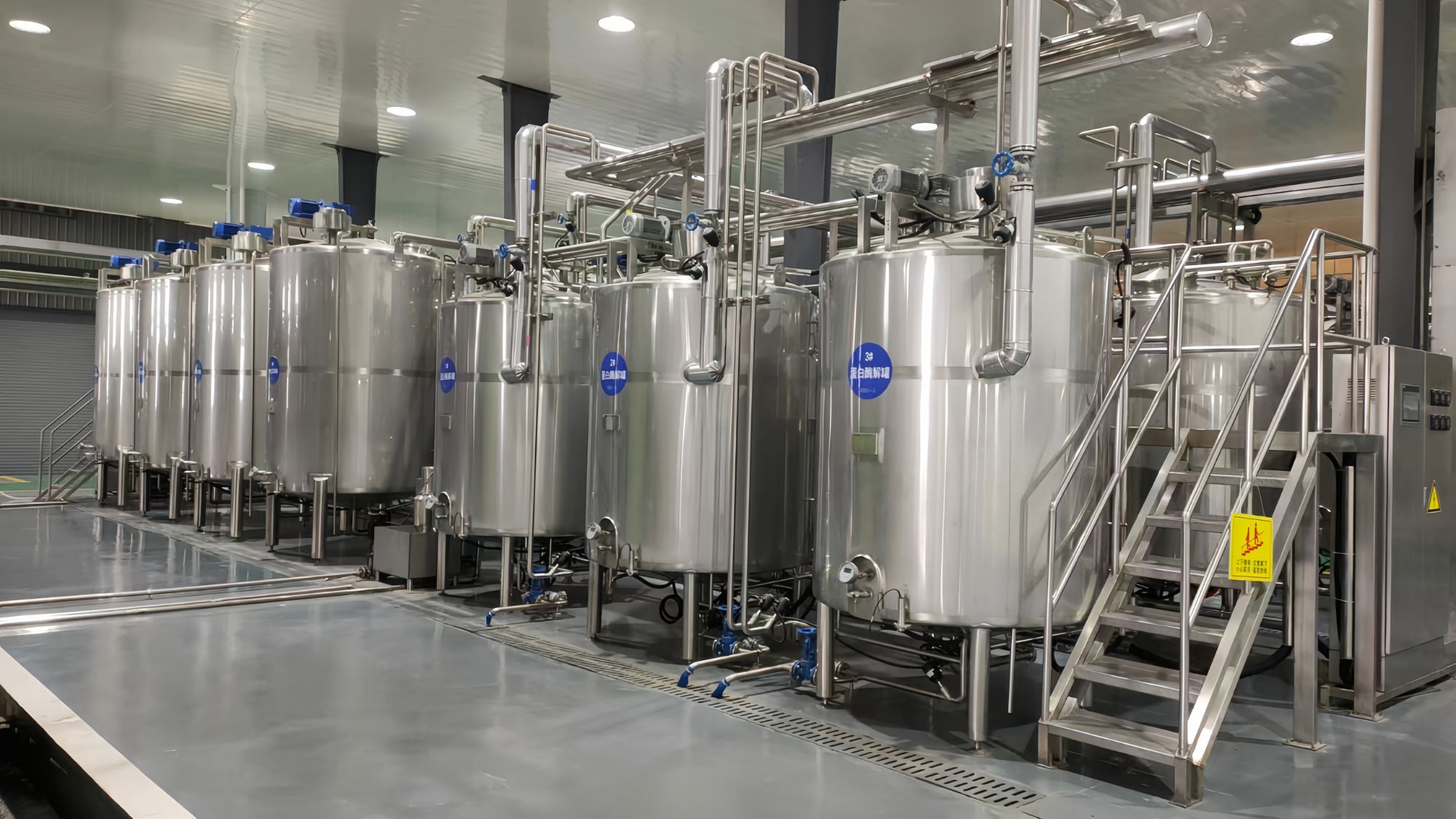
At the dairy plant, a well-timed CIP run ends just as the night crew hangs up their coats. The final rinse drains away, the lines are dry, and the morning shift walks into a room that is ready to run. No one has to wait for a wash cycle to finish or decide whether to cut it short. That is the whole point of scheduling a clean-in-place cycle to finish before the next shift starts: it removes cleaning from the production window instead of stealing minutes from it.
Getting that timing right usually comes down to how the automation is configured. Many plants now set a target completion time for the CIP skid, and the controller works backward from there. If the last batch ends early, the wash can start sooner and use a longer pre-rinse or a slower chemical circulation step. If production runs long, the system tightens the non-critical phases rather than pushing the entire cycle into the next crew's day. This kind of shift-aware scheduling keeps the cleaning team from becoming the bottleneck.
There is also a practical benefit that rarely shows up on a spec sheet: the equipment does not sit wet for hours. A cycle that ends right before handover means tanks and pipes are dry or still under slight positive pressure, which reduces the chance of microbial growth. Operators also save time because they do not have to re-verify a line that has been idle. The next shift simply starts the production steps, confident that the clean was finished, documented, and ready for their first run.
One Control Screen for Every Pump, Valve, and Filler
Running a filling line usually means hopping between three or four different panels, each with its own quirks. One screen changes that. Bring every pump, valve, and filler onto a single control surface, and the operator stops hunting for the right interface. The line becomes visible as one continuous flow instead of a collection of disconnected machines.
On that screen, a pump speed adjustment sits next to a valve position, and a filler cycle count is only one tap away. Status colors and live readings replace guesswork, while direct controls cut the delay between noticing a problem and acting on it. Setup time drops because there is no need to walk the line or open multiple programs.
The layout adapts to the way your team actually works. Put the filler on the left, the CIP valves on the right, or group pumps by product type. When a new operator starts, they learn one screen instead of five. That simplicity keeps the line moving and makes every adjustment feel immediate rather than buried.
Capturing Pasteurizer Waste Heat to Pre-Warm Incoming Milk
Dairy plants routinely send thousands of gallons of heated water and condensate down the drain after pasteurization. Instead of letting that thermal energy vanish, a growing number of processors route it through a dedicated heat exchanger to lift raw milk from cold storage temperatures up to 120–140°F before it ever reaches the main heating section. This single shift can slash the steam demand of the pasteurizer by a fifth or more, because the burner no longer has to bridge the entire gap from refrigeration temperature to the final kill step.
The most practical setup uses a plate-and-frame exchanger with separate zones for regeneration and cooling. Hot pasteurized milk leaves the holding tube and transfers energy to incoming raw milk in the regeneration section, while outgoing coolant picks up whatever heat remains. Operators keep a close eye on differential pressure across the plates—if the raw side ever drops below the pasteurized side, a pinhole leak could allow contamination. Modern units often include double-wall plates or a leak detect groove to make this failure visible before it becomes a food safety issue.
Payback comes from lower boiler fuel use and reduced load on the glycol chiller, since less heat has to be removed downstream. One mid-size plant processing 300,000 pounds per day reported a 22% drop in pasteurizer steam consumption after retrofitting a larger regeneration loop. The trade-off is more frequent cleaning; protein films build up faster when the incoming milk is pre-warmed, so CIP cycles may need to run at shorter intervals. Still, for most facilities the energy savings outweigh the extra maintenance, and the approach works well alongside variable-speed pumps that match flow to production demands.
Adding a Second Filler Without Pouring New Concrete
When an existing crack filler has settled or cracked, the temptation is often to pour a fresh slab over the problem. That’s rarely necessary. You can build up a second layer of filler directly on top of the old one, provided the original material is still firmly bonded and free of loose debris. Use a stiff wire brush or a rotary tool with a grinding attachment to roughen the surface slightly. This creates a mechanical key for the new compound.
The type of filler you choose for the second application matters more than the first. If the original was a rigid epoxy, switching to a polyurea or silicone-based sealant can give the joint extra flexibility, which helps prevent future cracking. Before applying, wipe the roughened surface with a solvent like acetone or isopropyl alcohol to remove any dust or oil. Then work the new filler deep into the existing groove with a putty knife or caulking gun, making sure it overlaps the edges by at least a quarter inch.
Give the second filler enough time to cure according to the manufacturer’s instructions before subjecting the area to foot traffic or moisture. In most cases, a properly prepped and applied second layer will bond just as well as the first, and you’ll save the cost and mess of tearing out concrete. Just remember that if the original filler is crumbling or spongy, no amount of new product on top will fix that—remove and replace it instead.
Vibration Sensors That Give You a Week’s Warning Before a Bearing Goes
A bearing rarely fails without warning—it starts to whisper through tiny changes in vibration long before any audible grind or heat spike shows up. The right vibration sensor picks up those early whispers and gives maintenance crews roughly a week to plan a replacement instead of scrambling after a breakdown.
These sensors don't just measure overall vibration levels. They track specific frequency bands and shock pulse patterns that indicate early pitting or spalling on the raceway. When the pattern shifts beyond a preset threshold, the system triggers an alert with enough lead time to schedule work during a normal shift, order parts, and avoid emergency repairs.
The practical payoff is straightforward: fewer unplanned outages, longer bearing life, and a maintenance schedule that bends around production instead of interrupting it. It's the difference between reacting to a failure and acting on a clear signal.
FAQ
It typically covers everything from raw milk receiving, pasteurization, homogenization, and standardization to filling and packaging. The equipment is designed to match your plant's capacity, layout, and product range, so you are not forced to adapt your process to off-the-shelf machinery.
They reduce downtime by using integrated controls and automated cleaning cycles. Better heat recovery in pasteurizers cuts energy use, and modular line design makes it easier to expand capacity later without a full rebuild. The result is more output per shift with fewer manual interventions.
Yes. Many lines are configured for quick changeovers between milk, flavored milk, yogurt drinks, and cream. By using standardized connections and programmable recipes, you can switch products in a fraction of the time it takes on older equipment.
Look for experience with your specific product category, local service support, and a clear record of delivered projects. Ask about their process engineering team, whether they handle installation and training, and how they manage spare parts. A good partner should be able to show real plant data from similar installations.
Automation is central to modern efficiency. Sensors and PLC systems monitor temperatures, pressures, and flow rates continuously, adjusting parameters in real time. This reduces human error, ensures consistent product quality, and allows predictive maintenance before breakdowns cause costly stops.
Absolutely. Efficient pasteurizers use regenerative heat exchange to recover up to 90% or more of thermal energy. CIP systems are designed to reuse water and cleaning solutions where possible, cutting utility bills and making the plant more sustainable without sacrificing hygiene.
It depends on the scope, but a typical skid-mounted line can be installed in a few weeks to a few months. The key is early planning: finalizing layout, utilities, and automation interfaces before equipment arrives prevents delays during commissioning.
No. Small and mid-sized dairies also benefit because OEM providers can scale the design to your throughput. A well-designed compact line can give a smaller plant the same process control and efficiency as a large factory, within a reasonable footprint.
Conclusion
A genuinely efficient dairy line starts with how the equipment fits the building, not just which logo gets bolted onto the frame. Instead of forcing a standard layout into an awkward corner, the best OEM partners map every meter of your existing floor plan and route pipework, platforms, and utility drops around the pillars, drains, and loading bays that are already there. That kind of site-specific engineering means a pasteurizer and separator can sit where your operators actually walk, not where a catalog drawing assumes they should stand. On the controls side, a single touchscreen that talks to every pump, valve, and filler removes the usual scramble between five different vendor panels. One operator can watch tank levels, divert flow, and adjust filler speed without leaving the mezzanine, which cuts both training time and the risk of miscommunication during product changeovers.
The same practical mindset shows up in utilities and maintenance. A pasteurizer throws off a huge amount of low-grade heat, and capturing that to pre-warm incoming raw milk can knock a measurable chunk off the steam bill without touching product safety. Cleaning gets faster too: a well-designed CIP circuit with properly sized return pumps and no dead legs can finish its full caustic and acid cycle before the next shift starts, so the line spends more hours making product instead of rinsing itself. When you need more capacity, a second filler can often be dropped into an existing bay using modular conveyors and quick-connect services, avoiding the cost and downtime of pouring new concrete. And rather than waiting for a bearing to seize mid-run, wireless vibration sensors on critical motors and gearboxes give you a week's notice that something is wearing, so maintenance happens during a planned window, not at 2 a.m. on a Saturday. Taken together, these are the unglamorous details that separate a line that merely runs from one that runs profitably year after year.
Contact Us
Contact Person: Laura
Email: [email protected]
Tel/WhatsApp: +86 13957758832
Website: https://www.intopmachinery.com