

OEM LED Marine Lights: A Complete Guide to Choosing the Right Illumination for Your Vessel
2026-07-17
When navigating the open seas, proper illumination is not just a luxury—it's a critical safety requirement. OEM LED marine lights have revolutionized the way vessels are equipped, offering unparalleled efficiency, durability, and performance. In this guide, we'll explore how to select the perfect lighting solution for your boat, with insights from trusted brands like LUXFIGHTER. Whether you're a seasoned captain or a first-time buyer, understanding the nuances of marine lighting will ensure your voyages are both safe and spectacular.
Beyond Brightness: What Sets Marine-Grade LEDs Apart
When you're miles offshore, lighting isn't just about seeing—it's about surviving. Marine-grade LEDs are engineered to laugh at salt spray, shrug off relentless UV rays, and ignore the vibrations that shake lesser lights to pieces. While ordinary LEDs might flicker after a season near the coast, these fixtures are built with sealed housings, corrosion-resistant alloys, and potted electronics that keep the sea where it belongs: outside.
The real difference hides in the details you might overlook. Unlike standard LEDs that can interfere with your VHF radio, marine versions pass strict electromagnetic compatibility tests, ensuring your nav lights won't drown out a mayday call. Their lenses are often designed to cut through fog with precision beam patterns that meet international navigation rules—something that brightness alone can never guarantee.
Decoding Beam Patterns for Night Navigation
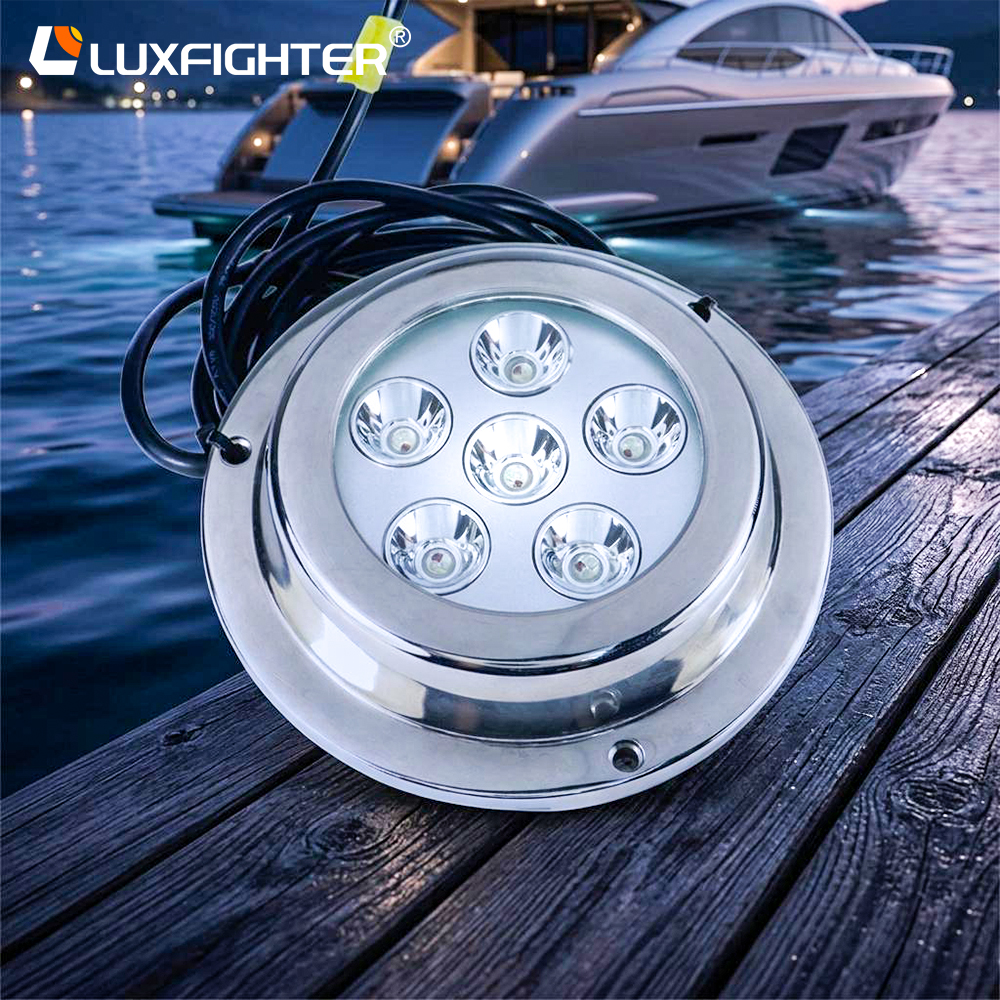
Interpreting the language of light beams after dark is less about memorizing charts and more about developing an instinct for how water, atmosphere, and terrain reshape what you see. A narrow, concentrated beam might seem ideal, but on misty nights it can blind you with reflected glare, turning the space ahead into a white wall. Wide, soft patterns often reveal more by engaging your peripheral awareness, allowing you to detect movement, shoals, or unlit obstructions that a piercing central beam would easily miss.
The key is to stop treating beam patterns as static tools and start using them as dynamic conversation partners. Tilt the light to change the angle of incidence on rippled water, and suddenly flat surfaces become dimensioned. Sweep from side to side in a measured rhythm rather than holding steady—this mimics how your eyes naturally scan, making anomalies pop. Color temperature matters too: slightly warmer tones cut through haze better, while cooler whites can overexpose foregrounds and hide the dark shapes beyond.
Practice decoding by deliberately placing yourself in challenging conditions. Anchor near a known reef and experiment with how different beam angles reveal its contours. Learn to distinguish between a wet rock's flat reflection and the deeper, hollow signature of open water. Over time, you'll stop consciously analyzing and start intuitively reading the light, blending the beam’s message with the subtle sounds and shifts that only night hours provide.
Voltage Spikes, Salt, and Survival: Durability Essentials
When electrons misbehave and the environment turns hostile, only the truly rugged survive. Voltage spikes are silent assassins—surging through circuits without warning, frying sensitive components in milliseconds. The fix isn’t just clamping; it’s about designing with headroom that scoffs at transients, using components that yawn at double their rated voltage.
Salt is the sneaky saboteur. It creeps along connectors, eats away at solder joints, and invites corrosion that quietly dismantles even the best-laid plans. Here, survival means conformal coatings that flow into every crevice, hermetic seals that laugh at humidity, and sacrificial anodes that take the hit so your circuitry doesn’t have to.
Survival isn’t a feature—it’s a mindset. It’s testing to destruction just to find the breaking point, then backing off a notch. It’s specifying mil-spec materials when commercial would do, because ‘good enough’ is an invitation to failure. In the end, durability isn’t just about enduring spikes and salt; it’s about thriving where others would dissolve.
Customization Without the Custom Price Tag
True personalization shouldn’t feel like a luxury reserved for deep pockets. Many platforms still lock flexible layouts, tailored workflows, or brand-specific styling behind premium tiers, forcing teams to either pay far more than they planned or settle for a generic, off-the-shelf experience that dilutes their identity. But the idea that you have to choose between your budget and your brand is outdated. A modern approach strips away those forced trade-offs, letting you adapt the interface, structure, and even automation rules to match how your team actually operates—without surprise fees or per-feature upsells.
What makes this practical is a shift toward modular design and user-level configuration tools that don’t require a developer’s touch. Instead of submitting a ticket and waiting weeks for a minor tweak, you can adjust dashboards, rearrange data fields, and set conditional triggers directly through an intuitive control panel. These aren’t surface-level cosmetic changes either; you can reshape core interactions—like client intake flows or project tracking stages—so the system molds itself to your process, not the other way around. And because it’s built on a single, consistent permission framework, every tweak inherits the same security rules, keeping compliance intact.
The real shift is cultural: customization stops being a sales negotiation and becomes a seamless part of the everyday workflow. When the tools adapt to the user, adoption climbs naturally, and the need for workarounds fades. Teams begin to treat the platform less like a fixed product and more like a collaborative workspace they can refine over time—adding new views, automating repetitive steps, and evolving their setup as the business grows. The result is a living environment that feels tailor-made yet costs no more than a rigid, one-size-fits-all alternative, proving that premium-fit doesn’t have to mean premium-priced.
Installation Traps That Even Pros Miss
One trap that catches even seasoned installers is assuming the environment is identical to the test lab. Subtle differences in system paths, shell configurations, or pre-existing library versions can derail an otherwise flawless deployment. A script that works perfectly on a pristine virtual machine might stumble on a real server where someone added a quirky alias or left a conflicting service running on a crucial port. The fix often isn’t in the official docs—it’s in the ten minutes you spend checking the actual environment variables and listening ports before typing that first command.
Another subtle trap lies in how permissions get quietly mangled during package extraction or file transfers. You might install everything as root, only to discover later that a daemon refuses to start because a single configuration file ended up owned by the wrong user. Even when you’ve set the main files correctly, nested subdirectories or log files generated at runtime often inherit unexpected permissions. Veteran admins learn to trust their eyes and run recursive ownership checks on the entire installation tree, because a missing read permission buried three folders deep can cause errors that vanish the moment you try to reproduce them with verbose logging enabled.
Future-Proofing Your Vessel’s Lighting System
Upgrading a vessel’s lighting setup isn’t merely about swapping bulbs—it’s a strategic move toward long-term reliability and adaptability. Modern marine lighting leans heavily on solid-state technology and modular designs that make later retrofits straightforward. By choosing fixtures with interchangeable drivers and standardized mounting patterns, you ensure the system can evolve alongside emerging efficiency standards without requiring a full overhaul. This approach keeps both installation costs and downtime minimal as regulations and technologies change.
Corrosion resistance remains a central concern on the water, and advanced materials are rewriting expectations. Look for housings crafted from marine-grade aluminium alloys or UV-stabilized polymers that also integrate nanocomposite seals to block salt ingress. These choices significantly extend service intervals, especially in harsh tropical or high-latitude environments. Pairing robust hardware with intelligent thermal management prevents premature LED lumen depreciation, so brightness and color stability endure season after season.
Beyond the hardware, connectivity is redefining what a lighting system can achieve. Open-protocol controllers and sensor-ready networks let the vessel’s illumination respond dynamically to ambient conditions, occupancy, or navigation states. This level of integration future-proofs against shifts in onboard energy management, like hybrid propulsion or increased reliance on battery banks, because the lighting can be fine-tuned to sip power precisely when and where it’s needed. Investing in a platform that supports firmware updates and wireless commissioning means the system can gain capabilities long after it’s installed, turning a once-static utility into a living asset.
FAQ
OEM stands for Original Equipment Manufacturer. In this context, it means the lights are made by a company that also produces units sold under other brand names. You're often getting the same quality without the brand markup, but it's crucial to verify specs match your needs.
LEDs draw far less power—vital on the water where energy management is everything. They last exponentially longer, withstand vibration better, and produce a cleaner, more focused beam. It's not just an upgrade; it's a reliability investment.
It hinges on where you're mounting them and what you need to illuminate. A narrow beam (say 10-30 degrees) punches far for spotting distant buoys. A wide flood (60-120 degrees) blankets your deck or cockpit. For mixed use, look for lights with interchangeable optics.
Look beyond the 'waterproof' sticker. Check for a proper IP rating—IP67 means it can handle temporary immersion, IP68 means continuous submersion to a specified depth. Also, saltwater corrosion resistance demands marine-grade materials like 316 stainless steel or anodized aluminum with a robust coating.
Many fixate on raw lumens and end up with harsh glare that kills night vision. For navigation and general cockpit lighting, color temperature and beam control matter more. Another blunder is ignoring compatibility with existing wiring and dimming systems.
Sometimes you can, but it's not always straightforward. LEDs generate heat differently, and a sealed old housing might cause overheating. Voltage sensitivity is tighter—your boat's fluctuating supply might need a constant-current driver. Always check the manufacturer's retrofit recommendations.
Very little compared to traditional bulbs, but they're not maintenance-free. Regularly wipe salt deposits off lenses to prevent etching, check seals for cracking, and ensure mounting hardware stays tight. A yearly quick clean and inspection drastically extends their life.
Reputable OEMs provide honest testing data, often with raw lumen and effective lumen figures. Look for lights that specify tested output according to standards like IALA or USCG requirements, not just a flashy max number. Third-party certification marks add credibility.
Conclusion
Choosing OEM LED marine lights goes far beyond picking the brightest option. True marine-grade fixtures are engineered from the ground up to withstand the relentless assault of salt, vibration, and voltage fluctuations that quickly destroy ordinary LEDs. Look for potted electronics, multi-layer anti-corrosion coatings, and wide-input drivers that shrug off spikes—traits often overlooked until a dark night reveals the consequences. The beam pattern is equally critical: a correctly selected spread or spot lens not only illuminates hazards but preserves your night vision, a nuance many skippers miss until they’ve temporarily blinded themselves with a poorly aimed flood.
Yet durability and optics are only half the battle. Smart customization now lets you specify everything from bezel finish to wiring length without paying boutique prices—if you partner with an OEM that truly understands modular design. Even seasoned installers can fall into traps like daisy-chaining too many lights on a single circuit or ignoring thermal management, which silently kills output over time. Future-proofing matters, too: select systems that allow firmware updates or easy swap-outs as LED efficacy improves. By demanding real marine certification, planning beam angles for your specific bridge layout, and sweating the small stuff during mounting, you transform a simple purchase into a reliable safety asset that performs year after year.
Contact Us
Contact Person: Gavin Chen
Email: [email protected]
Tel/WhatsApp: (+86)756-6831079
Website: https://www.luxfighter.com/