

LED Light Therapy Supplier for Premium Skincare Devices
2026-08-31
When it comes to premium skincare devices, finding a supplier that actually understands both light science and skin biology is rarer than you’d think. That’s where Omeina steps in—not as another catalog factory, but as a partner obsessed with wavelength precision, device ergonomics, and real clinical results. In this post, we’re pulling back the curtain on what separates a true LED light therapy supplier from the rest, and why your next product line might just depend on that difference.
Inside the Wavelengths: What Our LED Arrays Actually Do for Skin
Most people assume an LED mask is just a fancy light show, but the exact wavelengths matter more than the color you see. Red light at 630–660 nm doesn't just sit on the surface—it reaches the dermis, where fibroblasts interpret it as a signal to ramp up collagen and elastin production. Near-infrared light (800–880 nm) goes even deeper, past the dermis into subcutaneous tissue, helping with circulation and cellular repair in ways visible red light simply can't. Blue light, on the other hand, stays near the surface and works by disrupting the metabolism of acne-causing bacteria without the harshness of topical treatments.
The mechanism isn't magic, though it can feel like it after a few weeks. Mitochondria contain light-sensitive chromophores that absorb these photons and convert them into a mild metabolic boost—more ATP, less oxidative stress, and a calmer inflammatory response. That's why the same array can help with post-inflammatory redness, fine lines, and even wound healing, depending on which wavelength dominates. But here's the nuance: irradiance and exposure time determine whether you get a real effect or just a warm glow. A weak device used for five minutes won't deliver the same cellular response as a properly calibrated array with consistent output.
In practice, what you notice first is usually better texture and a slight evening of tone—not overnight, but within a month of regular use. The deeper changes, like firmer skin around the jawline or softened crow's feet, take longer because collagen remodeling is a slow biological process. And if you're using blue light for breakouts, expect a reduction in active lesions rather than a complete disappearance of every blemish. The most realistic way to think about LED therapy is as a cumulative form of skincare: the wavelengths are doing their job quietly, one session at a time.
The Customization Process Most Suppliers Won't Offer
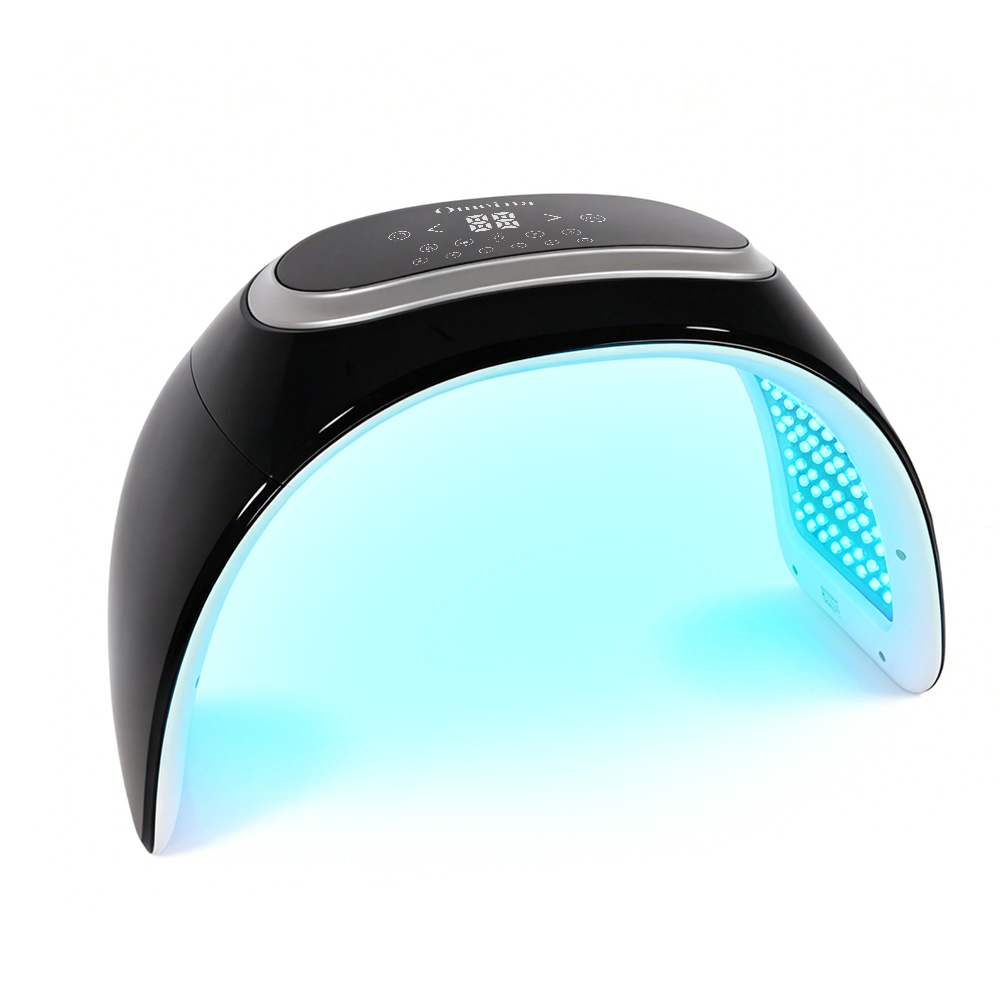
When you strip away the glossy catalogs and the polished sales pitches, most suppliers stick to a rigid menu of options. You pick a size, a color, maybe a logo placement—and that's where the conversation ends. What they won't tell you is that their production line is set up for volume, not for your specific quirks. So if your product needs a tweak that falls outside their template, you're suddenly the problem, not the partner.
The real difference shows up in the moments nobody puts on a brochure: the odd material blend that requires a rework of the mold, the unorthodox seam that demands a second look at the stress points, or the packaging that needs to survive a drop test your logistics team actually runs. Most factories will nod along until the purchase order is signed, then hit you with change fees, delays, or a flat "that's not how we do it here." A genuine customization process starts with engineering curiosity—asking why you need something a certain way, then digging into whether the current design even serves that purpose.
If you've ever been told "we can't" before anyone asked a single question about your end user, you know exactly what this gap feels like. The suppliers who truly customize don't hide behind minimum order quantities or standard operating procedures. They treat your odd request as the starting point, not an obstacle. That shift in mentality—from "what's easiest for us to build" to "what actually works for you in the field"—is rare, and it's the reason most customization processes never get past the quoting stage.
Why Our Lead Times Don't Scare Brand Founders
Long lead times usually make founders nervous, but ours tend to do the opposite. The reason is simple: we don't hide the waiting period behind vague promises. From the first sample to the final shipment, every stage is mapped out with clear dates, so you always know exactly where your order stands. That kind of transparency removes the guesswork that normally turns a production timeline into a source of stress.
We also structure our production runs so that the early part of the wait is packed with useful activity. While your bulk order is being made, you're reviewing pre-production samples, confirming packaging, and locking in final details. By the time the goods are ready to ship, you've already tackled most of the decisions that tend to cause last-minute panic. The lead time becomes a planning tool rather than a black hole.
Founders who work with us quickly realize that a predictable eight-week timeline beats a promised three-week rush that always slips. We'd rather give you a realistic date and hit it than overpromise and force you to rearrange a launch. That's why our lead times don't scare brand founders—they give them something rare in manufacturing: a schedule they can actually build a business around.
The Rigorous Testing Behind Zero-Flicker Claims
A flicker-free claim only earns its place on a spec sheet after surviving a gauntlet of real-world and laboratory conditions. Engineers don't just eyeball a monitor in a dim room and call it a day. They run high-speed photometers across the screen, capturing thousands of brightness samples per second to catch any subtle modulation that the human eye might miss. These tests happen across multiple brightness levels, from full blast down to a near-black 5% setting, because flicker often hides in the lower dimming ranges where pulse-width modulation becomes more aggressive. If a panel shows even a hint of instability under these probes, it gets sent back to the drawing board before it ever reaches a production line.
Temperature and aging play an equally brutal role in the testing cycle. Backlights behave differently when cold-soaked to freezing or heat-soaked after hours of continuous use, so the zero-flicker validation runs in thermal chambers that push components to their limits. Long-duration stress tests, sometimes lasting hundreds of hours, track whether the flicker signature drifts over time as capacitors age and LED efficiency shifts. A monitor that passes on day one but develops a subtle stutter after a month of heavy use fails the standard entirely. This is why genuine zero-flicker products carry such confidence—they've been beaten up in ways a normal user never would, and they still hold steady.
Beyond the hardware, the measurement protocol itself matters more than most people realize. Different labs use different flicker metrics, from percent flicker to flicker index to SVM, and a sloppy test can make a flickering panel look clean. The rigorous approach involves cross-checking with multiple instruments, including oscilloscope readings directly from the backlight driver and high-speed camera footage that visually confirms stable luminance. Only when all methods agree—across every brightness level, color temperature, and refresh rate—does the zero-flicker label get approved. It's a level of scrutiny that separates marketing fluff from engineering truth.
Designing Devices That Feel Premium in Hand, Not Just on Paper
A spec sheet can list the same aluminum, glass, and IP rating as a competitor, yet the moment you pick the device up, the difference is obvious. It’s not one big change—it’s a dozen small choices. The frame’s edge transitions into the back panel without a sharp seam, the glass has just enough micro-texture to feel secure without being rough, and the weight sits low in your palm instead of pulling toward the top. These details never appear in a product photo, but they define whether a phone feels solid or hollow.
Buttons and haptics matter just as much. A good power key has a short, firm travel and returns with a clean click, while a cheap one rocks or feels mushy. The vibration motor should mimic a sharp tap, not a loose buzz. Even the way the device cools after a few minutes of use changes how substantial it feels—metal that stays cold for a moment gives a sense of density, while thin plastic warms too quickly. Getting all of this right takes more effort than engineering the headline specs, but it’s what makes a device feel genuinely expensive in hand.
When Your Supplier's QC Team Becomes Your Competitive Edge
A few years ago, one of our key component suppliers flagged a batch for a dimensional drift that was barely outside tolerance. Their QC team caught it during a routine in-process audit, not final inspection. We had already scheduled that batch for a critical customer build, and the deviation would have caused a field failure within weeks. That moment shifted how we saw supplier quality: it stopped being a gate we paid someone to stand at, and started looking like an early warning system we hadn't fully leveraged.
The best supplier QC teams don't just check boxes on your incoming spec. They ask why a tolerance is tight, run their own capability studies on your drawings, and push back when your design creates unnecessary risk. One of our plastic injection molders started sharing hourly cavity pressure data with us before we even asked. That data helped us trace a warpage issue to a cooling rate change they had made to improve cycle time—something neither of us would have found through standard AQL sampling. Their QC became an extension of our engineering loop, not a hurdle before shipment.
Building that kind of relationship takes more than a supplier scorecard. We stopped treating corrective action requests as punishments and started running joint root cause workshops with our top five suppliers' QC leads. We gave them access to our field failure data, anonymized but specific, so they could see how their parts behaved in real use. In return, they started suggesting design changes that reduced scrap on their line and warranty claims on ours. When a supplier's QC team starts thinking like your own manufacturing engineers, quality stops being a negotiation and becomes a shared vocabulary.
FAQ
Focus on their manufacturing certifications, the quality of LED components they use, and whether they can provide detailed technical documentation. A supplier that understands aesthetic device standards will be more reliable.
Yes, many premium suppliers offer custom wavelength combinations, housing designs, and even firmware adjustments. You'll want to discuss your target treatment areas upfront so they can propose the most effective configuration.
Reputable suppliers test their devices for electrical safety, photobiological safety, and EMC compliance. Ask for certificates like IEC 62471 and ISO 13485, and make sure they use medical-grade materials.
Look for a supplier that provides training materials, warranty coverage of at least one to two years, and responsive technical support. Some also offer on-site training or virtual sessions for your team.
It depends on the supplier. Many are flexible with small trial orders for new brands, but larger orders often unlock better pricing and customization options. Discuss your launch plans to find a balance.
After finalizing specifications, development can take six to twelve weeks, followed by production and shipping. The timeline shrinks if you choose an existing design and only change branding.
Effective devices use clinically relevant wavelengths like 633nm red and 830nm near-infrared at sufficient irradiance. Ask the supplier for photometric reports or third-party testing data to verify output.
While they won't write your marketing copy, experienced suppliers often share insight on popular features, usage protocols, and design trends that resonate with high-end skincare consumers.
Conclusion
A premium skincare device isn't defined by a glossy shell alone—it lives in the wavelengths that reach the dermis without flicker or drift. Our LED arrays are built around specific, clinically referenced bands: red and near-infrared for collagen support, blue for blemish-prone skin, and amber for surface renewal. Each batch is run through photometric and electrical testing to confirm output stability, because a zero-flicker claim means nothing unless it holds after hundreds of hours of continuous use. That same obsession carries into the customization path. Instead of forcing brands to pick from a fixed catalog, we adapt board layouts, lens diffusion, irradiance levels, and even the tactile weight of the housing so the final product feels deliberate in hand—not like a rebadged generic.
Founders often assume that working with a specialized supplier means waiting months for revisions or chasing quality issues after delivery. Our lead times stay predictable because we keep critical components in-house and run parallel design-for-manufacturing reviews early, so the samples you approve are close to what ships. And when the QC team flags a subtle variance in diode spacing, a slight drop in peak wavelength, or an off-spec button travel, that's not a bottleneck—it's your brand's second line of defense. That kind of rigor turns a supplier relationship into a competitive edge, letting you launch devices that hold up under real use and keep customers coming back for refills, upgrades, and the next product in your line.
Contact Us
Contact Person: Tina Liu
Email: [email protected]
Tel/WhatsApp: 8618681405932
Website: https://www.omeinabeauty.com/