

Export Air Cooled Hydraulic Ceramic Filter Press Piston Pump for Industrial Applications
2026-08-17
Ask any plant engineer running ceramic filter presses in a hot, humid environment what kills hydraulic pumps, and the answer rarely shows up in a datasheet. It’s not just pressure spikes or abrasive slurry—it’s the slow, steady heat soak that turns hydraulic oil thin and seals brittle. That’s the problem Sinou’s air-cooled hydraulic ceramic filter press piston pump was exported to solve. Designed for industrial applications where cooling water isn’t always available and every unplanned stop shows up on the cost sheet, this pump keeps its cool without external chillers. In the sections ahead, we’ll break down how the air-cooled design works, where it fits in ceramic filter press circuits, and why export buyers keep choosing this pump over conventional piston pumps.
Air-Cooled Hydraulic Piston Pump Basics for Ceramic Filter Press Systems
At the heart of every ceramic filter press lies a hydraulic system that must deliver consistent pressure without overheating. An air-cooled hydraulic piston pump meets this demand by using ambient airflow to dissipate heat from the pump housing, eliminating the need for a separate water supply or cooling tower. For ceramic plants operating in hot or dusty environments, this design reduces water consumption and simplifies installation, since no plumbing lines or chillers are required. The piston mechanism itself provides high volumetric efficiency, which translates into stable clamping force during the filtration cycle.
Inside the pump, a swashplate varies the stroke length of several reciprocating pistons, allowing the unit to adjust displacement according to load. When the filter press reaches the desired pressure, the pump reduces its output flow while maintaining pressure, which cuts energy waste and lowers hydraulic oil temperature rise. Air-cooled versions add axial fins or an external fan to the pump body, drawing air across hot surfaces. This passive cooling approach works well for intermittent duty cycles typical of ceramic dewatering, where the pump runs hard during plate closing and then idles while the filter cake forms.
Maintenance practices differ slightly from water-cooled models. Operators should keep the cooling fins free of clay dust and slurry splatter, as accumulated debris insulates the pump and raises operating temperature. Checking fan belt tension or electric fan function becomes part of routine inspection, along with monitoring oil viscosity changes caused by higher ambient heat. Because the system relies on surrounding air temperature, sizing the pump slightly larger than the theoretical requirement helps buffer against peak summer conditions. For ceramic filter presses that run multiple cycles per hour, pairing the air-cooled piston pump with a properly sized reservoir and a high-quality hydraulic fluid ensures long service life without frequent breakdowns.
How Export-Ready Construction Extends Pump Life in Industrial Filtration
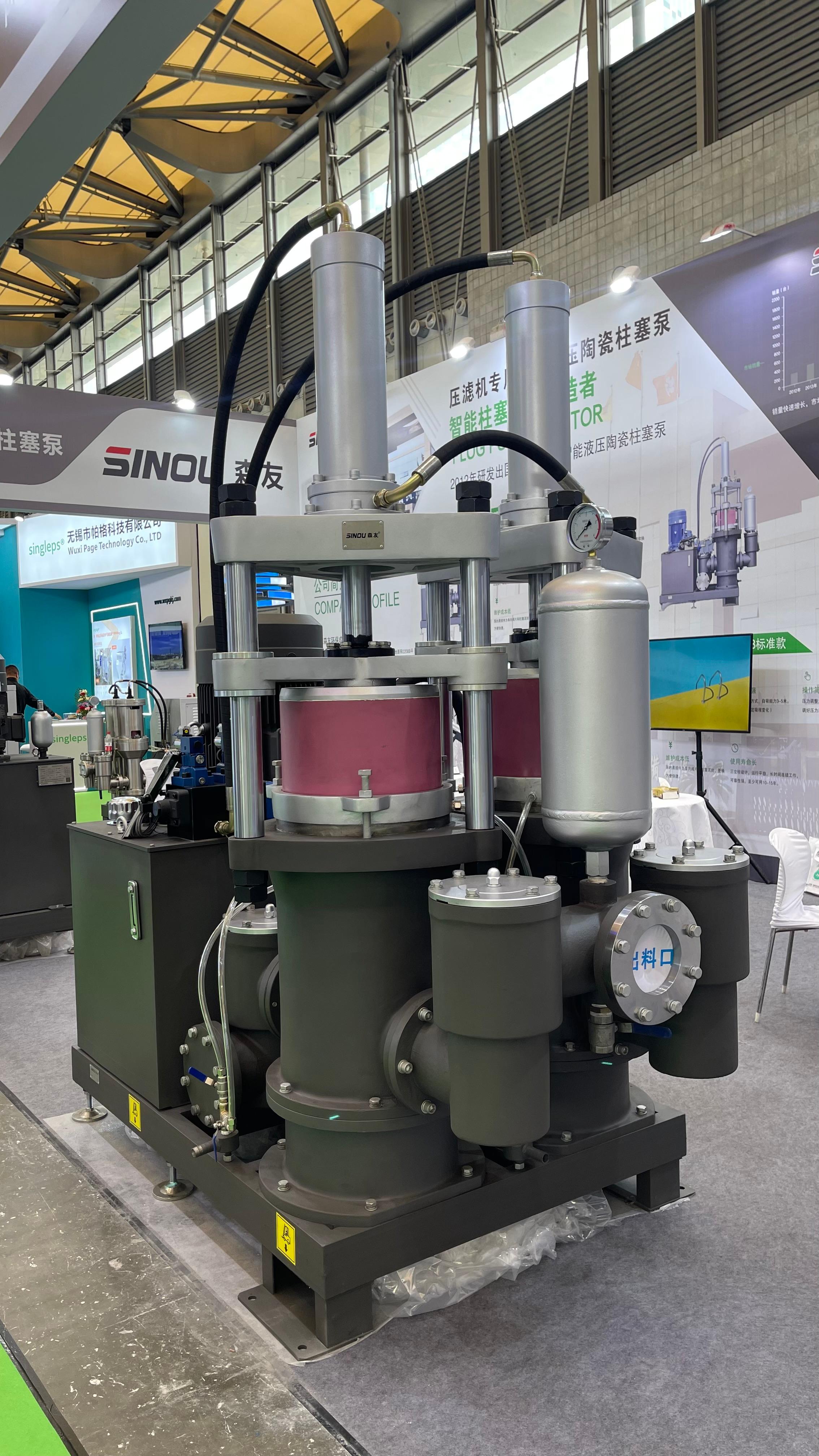
Export-ready pump builds often mean more than just meeting overseas voltage or flange specs. The real payoff for filtration systems is in how the pump is put together to survive longer in tough service. Manufacturers targeting global markets tend to spec corrosion-resistant casings, upgraded mechanical seals, and heavier-duty bearings as standard, not as costly add-ons. Those choices reduce internal wear from abrasive slurries and chemical attack, so the pump doesn't need to be pulled out of the filter skid as often.
There's also a less obvious benefit: export-focused pumps usually go through more demanding factory testing to satisfy multiple international standards. That extra validation catches weak castings, seal leaks, and misalignment before the unit ships. In continuous filtration duty, where downtime is expensive, that pre-screening can mean the difference between a pump that runs quietly for years and one that starts dripping or vibrating within months.
Finally, the modular layout common in export-ready designs makes field service simpler. Quick-access wear plates, replaceable shaft sleeves, and externally adjustable impellers let maintenance crews restore clearances without a full teardown. This practicality encourages routine upkeep, which directly extends the pump's working life in industrial filtration applications.
Matching Piston Pump Pressure to Filter Press Plate Requirements
A piston pump's pressure curve rarely stays flat during a filter press cycle. At the start, the chambers are empty and flow demand is high with almost no back pressure. As cake builds against the plates, resistance climbs, and the pump naturally pushes toward its maximum setting. The real job is to cap that peak below the plate manufacturer's rated limit—usually printed on the plate edge or stamped in the corner. Overshooting by even half a bar can crack polypropylene plates or bow the steel core, especially on older presses where fatigue has already set in.
Instead of relying on a single relief valve, match the pump's control logic to the plate pack. Some operators set the pressure switch just under the plate limit and call it done, but that ignores the pressure spikes from piston pulsation. A better approach is to use a dampener or a small air chamber on the discharge line to smooth out the pulses, then dial the pump speed down as the terminal pressure is approached. This keeps the feed rate high during the fill stage but slows the piston travel once the chambers pack tight, reducing stress on the membrane if one is fitted.
Also check the plate pack's maximum allowable differential pressure, not just the absolute rating. Piston pumps can create uneven pressure distribution if the feed port is partially blinded or if one chamber fills faster than its neighbor. In practice, a mismatch shows up as seepage at the plate joint or a dull thud when the press opens. Matching pressure is less about selecting a bigger pump and more about tuning the stroke length, relief setting, and ramp-down speed so the pump delivers full flow when the press can take it and gentle force when the plates are at their structural limit.
Thermal Management in Hydraulic Pumps Without Water Cooling
Hydraulic pumps inherently generate heat through fluid friction and mechanical losses, and in many mobile or compact installations water cooling is simply not an option. Without a water jacket or external cooler, the pump must rely on smarter internal design choices. One effective approach involves optimizing the case drain flow so that hot oil continuously leaves the pump body, carrying heat away to the reservoir where it can dissipate naturally. This passive strategy reduces hot spots around the cylinder block and valve plate, which are common failure points in closed-loop systems.
Another underused method is to select materials and surface treatments that improve heat rejection from the housing itself. For example, aluminum alloy casings with increased fin area or black anodized finishes can radiate more heat to ambient air than standard cast iron. While this does not replace active cooling, it can lower steady-state temperatures by a noticeable margin, especially in open-frame industrial equipment where airflow is already present. Paying attention to the pump's mounting orientation also matters: positioning the hottest side away from hydraulic lines and toward a cooler air stream can shift the thermal balance enough to prevent viscosity breakdown.
Finally, controlling the pump's operating point through proper sizing prevents unnecessary heat generation in the first place. Oversized pumps running at constant pressure dump excess flow over a relief valve, converting hydraulic energy directly into heat. By selecting a variable displacement pump with load-sensing control, the system only produces the flow demanded by the actuators, reducing both energy waste and thermal load. In many retrofit projects, simply replacing a fixed displacement pump with a pressure-compensated unit eliminates the need for any additional cooling hardware while keeping oil temperatures within safe limits.
Recognizing Abrasion-Resistant Materials in Ceramic Slurry Pumps
Spotting the right abrasion-resistant material in a ceramic slurry pump often comes down to how the surface behaves under real slurry conditions, not just what the datasheet claims. Look beyond hardness numbers: a genuinely tough liner or impeller will show a fine, almost glassy grain structure at the fracture edge, with no visible porosity or micro-cracks after months of handling sharp, angular solids. If the vendor keeps pushing a single ceramic grade for every slurry—regardless of particle size, pH, or velocity—that is a red flag. Good pump builders match alumina, silicon carbide, or zirconia blends to the specific wear mode, whether it is sliding abrasion, impact, or cavitation erosion.
Another quiet signal is the wear pattern itself. In a poor material, you will see deep gouges, localized pitting, or a polished “smeared” surface where the binder has washed out and left hard grains standing like sandpaper. A well-chosen ceramic wears evenly, with a dull matte finish and no sudden loss of thickness at the cutwater or suction liner. Field experience also matters: pumps that survive multiple seasons in mining or dredging without losing hydraulic efficiency usually have liners made from a ceramic that sacrifices a little raw hardness for fracture toughness. Ask for failure photos, not just lab test certificates—real slurry never behaves like a clean ASTM coupon.
Finally, check how the ceramic is bonded to the metal casing. Even the best abrasion-resistant material will crack if thermal expansion is mismatched or if the adhesive layer is too thick. A reliable pump will show a thin, uniform bond line and design features like relief grooves or segmented tiles that let the ceramic move slightly under thermal shock. If the manufacturer cannot explain why they chose a specific ceramic grade for your slurry's particle size distribution and flow velocity, keep looking. The right material is not the one with the highest hardness rating on a brochure—it is the one still holding its shape after 8,000 hours of doing the job nobody else wants to do.
Maintenance Routines That Keep Filter Press Piston Pumps Running Smoothly
Most downtime on filter press piston pumps traces back to neglected hydraulic oil and clogged suction strainers. Instead of relying on a fixed oil change schedule, pull a small sample every two weeks and rub it between your fingers; if you feel any grit, change it immediately and flush the reservoir. Also check the suction strainer mesh for fine particles that the main filter might miss. A quick visual on the oil level while the ram is fully extended will reveal slow internal leaks that don't yet show up as pressure loss.
Seal and rod maintenance is rarely about more lubrication. Over-greasing the piston rod attracts slurry fines, which then get dragged into the wiper seal and score the rod. Use a light, dry film lubricant instead of heavy grease, and wipe the rod clean before every shift. Look for faint vertical scratches on the rod surface using a flashlight at a low angle; these are early signs of abrasive wear. Replacing a wiper seal takes twenty minutes, but ignoring those scratches turns into a full cylinder rebuild.
Pay attention to pressure decay rather than waiting for obvious leaks. Once a month, close the feed valve, bring the pump to normal operating pressure, and stop it. Time how long it takes for pressure to drop by 10%. A rapid drop points to worn piston seals or a leaking check valve, while a slow, steady drop often means a small bypass in the unloading valve. Keep a simple logbook of these decay times, and you'll catch seal wear before a filter cycle fails mid-batch.
FAQ
The air cooled version relies on a fan and finned housing to pull heat away from the oil, so you avoid the extra plumbing, water source, and corrosion risks that come with water cooled systems.
Ceramic resists wear from abrasive slurry and aggressive chemicals far better than chrome or steel, which keeps the piston sealing tight and reduces the need for frequent replacement parts.
Yes, the combination of a heavy duty piston drive and forced air cooling allows it to hold pressure through long press cycles without overheating, even in hot industrial settings.
It works well in mining dewatering, chemical processing, ceramic manufacturing, and wastewater treatment plants where filter presses need consistent high pressure and reliable fluid delivery.
Export orders can be configured for common regional voltages and frequencies, and the pump can be matched to different hydraulic power units or motor starters on request.
Maintenance is mostly limited to checking seals and keeping the hydraulic oil clean and at the right level; the ceramic surface itself does not need lubrication or periodic polishing.
The pump is typically drained, sealed, and packed in a reinforced crate with the air cooler protected separately, so it arrives ready for installation without hidden transport damage.
Depending on the pump model, working pressures usually sit between 20 and 35 MPa, which is enough to build firm filter cakes and process high solids slurry effectively.
Conclusion
Air-cooled hydraulic piston pumps built for ceramic filter press duty solve a recurring problem in industrial filtration: the need for dependable pressure without the plumbing and maintenance burden of water cooling. In ceramic slurry service, abrasive particles quickly wear standard pump internals, so export-ready designs pair hard-faced pistons and cylinder blocks with carefully matched clearances. This mechanical fit, combined with a fan-driven oil cooler and oversized reservoir, keeps fluid temperature stable even during long dewatering cycles. Because thermal stress is one of the main causes of seal failure and oil degradation, removing water from the cooling loop simplifies installation on sites where process water quality is poor or supply is unreliable. This approach shifts the reliability focus from external utilities to the pump's own sealed hydraulic circuit.
Pressure settings must be tuned to the specific filter plate stack rather than run at a generic maximum. Overshooting the plate rating can warp or crack plates, while undershooting slows cake formation and raises cycle costs. On the maintenance side, regular inspection of suction strainers, piston shoes, and valve plates catches early wear before it becomes unscheduled downtime. For ceramic slurry, pumps fitted with ceramic-coated or nitride-hardened wear surfaces last noticeably longer, and a simple routine of checking oil viscosity, cooler fin cleanliness, and drain-line flow keeps an air-cooled unit operating smoothly in remote export markets. Operators who adopt these practices typically see fewer mid-batch interruptions and longer intervals between rebuilds.
Contact Us
Contact Person: HaiYan
Email: [email protected]
Tel/WhatsApp: +86 18957325588
Website: https://www.senyoubeton.com/