

Custom High Temperature Magnets: Engineering Solutions for Demanding Applications
2026-07-31
When standard magnets fail under extreme heat, custom high-temperature magnets become the silent heroes of modern engineering. From deep-earth drilling to aerospace propulsion, these specialized components must defy thermal demagnetization while delivering unwavering performance. At DAWA, we don’t just supply magnets—we engineer magnetic solutions that thrive where others melt. Discover how precision material science and tailored design are pushing the boundaries of what’s possible in demanding applications.
Pushing the Limits: How Custom Magnets Withstand Extreme Heat
When ordinary magnets falter under blistering conditions, custom high-temperature magnets step in to keep critical systems running. These specialized components are engineered from alloys like samarium cobalt or alnico, which retain magnetic stability even when thermometers climb past 350°C. Unlike standard neodymium magnets that lose strength rapidly beyond 80°C, custom designs manipulate grain structure and thermal coefficients to resist demagnetization. This isn’t just about surviving heat—it’s about delivering predictable performance in environments where failure isn’t an option, from jet engines to deep-well drilling sensors.
The secret often lies in tailored metallurgical recipes and precision manufacturing. By adjusting cobalt content or incorporating protective coatings like nickel or ceramic layers, engineers push the thermal envelope while guarding against oxidation and corrosion. Each custom magnet undergoes rigorous thermal shock testing, cycling from freezing cold to extreme heat in minutes to verify structural integrity. These magnets don’t just endure; they maintain consistent flux density in applications like automotive turbochargers or industrial motor brakes, where heat generation is relentless and reliability defines the bottom line.
Beyond material selection, the geometry and magnetization patterns can be optimized to counteract heat-induced losses. Unique shapes, such as segmented arcs or ring-halves, are designed to focus magnetic fields where they’re needed most, reducing the impact of thermal decay. In medical sterilization equipment or aerospace actuators, custom magnets become enablers of innovation—defying the assumption that high temperatures and strong magnetism are incompatible. The result is a component that doesn’t just cope with extreme heat; it thrives in it, unlocking new possibilities across demanding industries.
Beyond Standard Magnets: Tailored Solutions for High-Temperature Environments
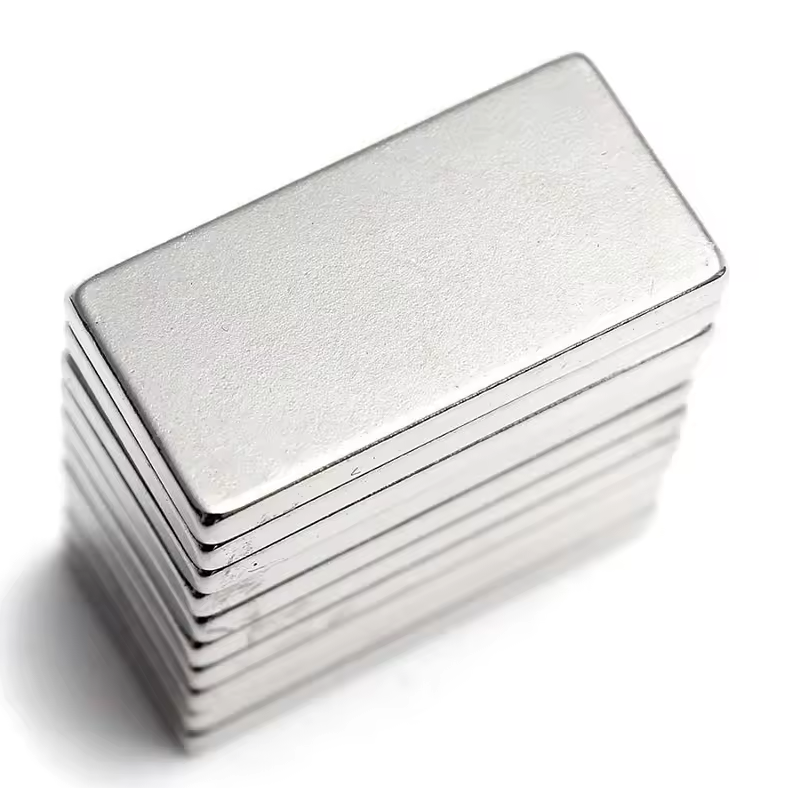
Standard magnetic materials often fall short when temperatures climb beyond their operational limits, suffering irreversible losses in strength or structural integrity. The routine choice of neodymium magnets, for instance, proves inadequate in environments where heat steadily degrades coercivity. Recognizing this, we shift focus to alloys that thrive under thermal stress—samarium cobalt and alnico—each selected not just for higher Curie points, but for predictable stability across fluctuating cycles. It’s a deliberate pivot away from one-size-fits-all approaches, grounded in the physics of heat dissipation and crystal lattice resilience.
Crafting a magnet for extreme heat involves more than material substitution; it demands a rethinking of geometry, coating, and load path. A slim disc might shed heat faster than a bulky block, while a nickel-coated surface holds up where others oxidize. We’ve explored how to nestle magnets within insulated housings that buffer rapid temperature shifts, preserving flux without sacrificing form. Prototyping with finite element analysis allows us to predict hot spots and adjust dimensions before any metal is formed, sidestepping the trial-and-error that often plagues high-temp development.
In practice, these bespoke magnetic assemblies quietly enable machinery that operates where others fail—think of turbine sensors gauging blistering exhaust flows, or coupling drives inside deep-well pumps. One project involved a detection ring for a refinery reactor, exposed to 350°C continuously. Off-the-shelf parts would have weakened within hours; instead, our solution sustained detection accuracy through two maintenance cycles without drift. It’s this marriage of informed material chemistry and attentive mechanical design that moves us beyond catalog limitations, into applications where reliability is simply non-negotiable.
The Science of Thermal Stability in Custom-Engineered Magnets
The thermal stability of a custom-engineered magnet is not a trivial afterthought—it is woven into the material selection and design from day one. Whether the magnet is destined for a high-temperature motor, a cryogenic sensor, or a precision actuator, the interplay between intrinsic magnetic properties and thermal agitation dictates performance. The saturation magnetization, coercivity, and remanence all shift with temperature, and in tailored alloys, the grain structure, phase distribution, and dopant levels are manipulated to flatten these curves across the operating range. For instance, samarium-cobalt grades can be pushed to hold coercivity above 300°C, while certain neodymium-iron-boron formulations sacrifice a bit of room-temperature strength to gain an inflection point that delays irreversible losses.
Custom engineering goes beyond picking a material grade—it means adjusting the microstructure to pin domain walls and resist demagnetization when the thermal energy spikes. Processes like grain-boundary diffusion can infuse heavy rare-earth elements exactly where they are needed, creating a shell that shields the main phase from nucleation of reversed domains. This targeted approach keeps the magnet’s effective anisotropy high while conserving scarce and costly elements. Coupled with finite-element modeling of the magnetic circuit, the thermal profile can be simulated long before a prototype touches a test bench. Engineers then iterate on composition, coating, and geometry until the irreversible loss at peak temperature falls within a fraction of a percent over the projected lifetime.
Yet stability is more than a number on a datasheet—it’s about how the magnet behaves under repeated thermal cycling and mechanical stress. A custom solution might incorporate a tailored nickel-copper-nickel coating that not only wards off corrosion but also acts as a stress buffer, reducing microcrack propagation during rapid temperature swings. In assemblies, differential thermal expansion between the magnet and its housing can be neutralized by selecting compliant adhesives or designing a compliant interlayer. These details, often overlooked in standardized products, are what transform a promising material into a reliable, field-proven component that holds its flux year after year, no matter how harsh the environment becomes.
From Motors to Reactors: Real-World Applications of Heat-Resistant Magnets
Electric motors are the silent workhorses of modern industry, but when they run hot, ordinary magnets lose their grip. In high-speed spindles, traction motors for electric vehicles, and industrial pumps, temperatures can soar well above 150°C. Heat-resistant magnets—crafted from samarium-cobalt or specialized grades of neodymium-iron-boron—maintain their magnetic strength where standard magnets fail. This capability means motors can be designed lighter and smaller without bulky cooling systems, directly boosting efficiency and reliability in demanding environments like mining equipment or aerospace actuators.
Beyond rotation, these magnets play a critical role in nuclear reactors—not in the core, but in the precision instrumentation that monitors safety and performance. In fusion research, such as tokamaks, magnets must tolerate not only extreme heat but also intense radiation. Samarium-cobalt magnets, with their innate resistance to demagnetization at high temperatures, are used in control rod drive mechanisms and coolant pump seals. They ensure fail-safe operation over decades, even when ambient temperatures fluctuate wildly. The same properties make them indispensable in downhole oil and gas tools, where they power sensors and valves deep beneath the Earth’s surface, bathed in scorching geothermal brines.
Emerging applications are pushing the limits even further. In space propulsion, Hall-effect thrusters rely on magnetic fields to accelerate ions, and the magnets must withstand the searing heat of plasma without losing focus. Advanced thermal storage systems for renewable energy use magnetic bearings that float rotors at hundreds of degrees Celsius, eliminating friction. As industries chase higher efficiencies and harsher operating conditions, heat-resistant magnets aren't just components—they're the quiet enablers of the next generation of machinery, from the factory floor to the depths of space.
Material Breakthroughs: Alloys That Defy Magnetic Degradation
Modern magnetic applications demand materials that hold their strength under punishing conditions, from EV motors running at scalding temperatures to offshore wind turbines battered by salt spray. Traditional choice magnets like neodymium-iron-boron (NdFeB) lose coercivity dramatically above 150°C, forcing engineers to overdesign cooling systems or accept performance drop-offs. A new class of engineering alloys, however, is redefining durability by weaving in atomic-level defenses. By diffusing heavy rare earths like dysprosium through grain boundaries rather than bulk-doping the whole magnet matrix, researchers have cut magnetic degradation by half at 180°C while using 70% less of these conflict metals. This grain-boundary engineering creates a thin, robust shell around each crystalline grain, blocking the nucleation of reverse magnetic domains that sap strength. The result is a magnet that barely flinches where its predecessors would rapidly demagnetize.
Beyond incremental tweaks to existing formulas, entirely new alloy families are throwing out the old playbook. High-entropy alloys (HEAs) containing five or more principal elements in near-equal proportions exhibit a cocktail effect that stabilizes magnetic order against thermal agitation. One cobalt-iron-nickel-copper-manganese system retains 95% of its saturation magnetization after 1,000 hours at 400°C—a regime that would wreck standard electrical steels. Meanwhile, iron-based amorphous and nanocrystalline alloys, produced by rapid solidification at a million degrees per second, bypass grain-boundary weakness altogether. Their glassy, disordered atomic architecture resists corrosion and mechanical stress so effectively that a magnetic core made from such material can operate for decades inside a high-vibration industrial sensor without losing micro-Tesla sensitivity. These are not laboratory curiosities; they are already being stamped into high-efficiency transformers and compact EV charger inductors.
What ties these breakthroughs together is a shift from static composition tweaks to dynamic microstructural control. Instead of asking "which elements to add," materials scientists now ask "how to freeze a beneficial non-equilibrium state." Techniques like additive manufacturing with in-situ magnetic fields align magnetic domains during printing, creating grain textures that fight demagnetization tenaciously. Even self-healing concepts are appearing: certain copper-manganese-based alloys can partially repair radiation-induced magnetic damage through controlled annealing cycles, a feature that has caught the attention of satellite propulsion designers. As industries push electric power densities higher, the old trade-off between magnetic performance and longevity is fading—replaced by alloys that treat degradation not as fate, but as a solvable materials puzzle.
Designing for the Edge: Balancing Strength, Size, and Thermal Resilience
When pushing hardware to its limits, every millimeter and every watt counts. The real challenge isn't just making something small or powerful—it's ensuring that the device doesn't buckle under its own thermal output. We've seen too many designs where cramming high-performance components into a tiny chassis leads to throttling, or where ruggedization adds so much bulk that portability is lost. The sweet spot lies in materials that dissipate heat efficiently while maintaining structural integrity, like certain magnesium alloys or vapor chamber layouts that route heat away from sensitive areas without adding weight.
One approach that rarely gets enough attention is treating the enclosure itself as a thermal management system. Instead of relying on bulky heatsinks and fans, you can integrate heat pipes directly into the frame, turning the entire housing into a radiator. This not only saves space but also eliminates multiple failure points. Pair that with a careful selection of components rated for wide temperature ranges, and you end up with a device that survives sudden thermal shocks—whether it's from a desert sunrise or the cold soak of a high-altitude drone flight.
But strength isn't just about surviving drops; it's about enduring constant thermal cycling without microscale cracks forming in solder joints or laminates. That's where your choice of PCB substrate and interconnect technology matters far more than the enclosure material. Using polyimide flex-rigid boards in high-stress areas can prevent the slow death that creeps in when boards expand and contract at different rates. Ultimately, the goal is a design where thermal resilience and mechanical strength reinforce each other, rather than competing for the same cubic centimeters.
FAQ
They are specialized magnetic components engineered to retain their magnetic properties in environments where standard magnets would fail due to excessive heat. Unlike off-the-shelf options, these are tailored to specific thermal, mechanical, and magnetic requirements of an application, often involving unique geometries, coatings, or material blends.
Most common magnets, like neodymium, begin to lose magnetism at relatively low temperatures—sometimes as low as 80°C. In industrial settings where temperatures can soar past 300°C, that drop-off leads to equipment failure. Custom high-temperature magnets are formulated to resist demagnetization and maintain flux output even when things get seriously hot.
Samarium cobalt is a go-to choice because it handles temperatures up to 350°C with excellent corrosion resistance. Alnico alloys can go even higher, beyond 500°C, though they have lower coercivity. In some cases, ceramic or bonded magnets are used if cost is a concern. The selection depends on balancing temperature limits, magnetic strength, and environmental factors.
It’s a multi-physics challenge. They start with the thermal profile—knowing the exact operating and peak temperatures. Then they select a magnetic material that won’t irreversibly lose performance at those levels. Computer modeling simulates magnetic circuits under thermal load, and physical prototypes undergo rigorous soak testing. Sometimes cooling channels or protective cans are integrated into the design.
You’ll find them in aerospace actuators, downhole oil and gas sensors, automotive turbochargers, and industrial motors running in furnaces or steam lines. Medical sterilization equipment and nuclear power instrumentation also rely on magnets that can survive sustained heat without degradation.
Yes, but only if they're properly engineered for the specific cycle profile. Repeated heating and cooling can cause structural stresses, so the magnet may need a stress-relieving coating or a design that accommodates thermal expansion. Proper material selection and testing for thermal fatigue are vital to ensure long-term stability.
Almost every aspect—size, shape, magnetization pattern, coating (like Parylene for harsh chemicals), and even the magnetic circuit assembly. Engineers can specify multi-pole patterns, Halbach arrays, or integrate the magnet with a custom housing. The goal is to deliver a drop-in solution that works seamlessly with existing system constraints.
Start by mapping out the full operating environment—temperature range, exposure to moisture or chemicals, mechanical loads, and space constraints. Then work with a manufacturer to review material grades and test data. Often, the best approach is iterative prototyping: build a sample, subject it to worst-case conditions, and refine the design based on real performance.
Conclusion
Custom high-temperature magnets are redefining what's possible in extreme environments, pushing past the limits of standard materials to deliver reliable performance where heat would typically cause failure. Through advanced alloy development and precision engineering, these magnets maintain structural and magnetic integrity at temperatures exceeding 500°C, thanks to breakthroughs in materials like samarium-cobalt and specialized coatings that resist oxidation and thermal demagnetization. The science behind their thermal stability lies in carefully tuned microstructures and coercivity mechanisms that prevent domain reorientation even under sustained thermal load. This enables engineers to design compact, high-strength magnetic circuits that balance size, power, and resilience—often tailoring geometry and magnetization patterns to specific thermal profiles of motors, generators, or sensors.
In practice, these tailored solutions are vital across industries—from downhole drilling motors and aerospace actuators to nuclear reactor instrumentation—where off-the-shelf magnets simply cannot survive. Each application demands a unique blend of corrosion resistance, mechanical durability, and magnetic output, which custom engineering delivers by marrying material selection with application-specific design. As industries push further into high-temperature frontiers, the ability to defy magnetic degradation through custom approaches ensures that critical systems keep running, even when the heat is on. This fusion of material science and design ingenuity marks a quiet revolution in magnet technology, one where failure is not an option and standard parts are left behind.
Contact Us
Contact Person: Kelvin Lo
Email: [email protected]
Tel/WhatsApp: 0769-88561131
Website: https://dawamagnetic.com/