

Corrugated Box Die Making Creasing Cutting Machine Company: Key Factors to Evaluate Before You Invest
2026-11-16
Choosing a company to supply your corrugated box die making and creasing cutting machine isn't just about comparing spec sheets. It's about predicting whether that machine will still be running smoothly two years from now, whether the supplier will answer your call at 3 a.m., and whether the initial price hides long-term operating costs. Too many packaging businesses learn these lessons the hard way. Before you put down capital, let's look at the key factors that separate a partner like ADEWO from a one-time vendor—and why getting this decision right can be the difference between smooth production and constant downtime.
Before You Pay, Put the Cutting Section Under a Load Test
Rigidity doesn't show up in a brochure photo. Before you hand over any money, clamp a piece of scrap in the vise or on the table and push against the blade, bit, or cutter the same way a heavy cut would. If you can see or feel the cutting head shift sideways, that flex will turn into chatter and a ragged finish on your first real job.
Use a dial indicator against the spindle, arbor, or blade housing while you lean on the feed handle. A few thousandths of movement at light finger pressure is normal on cheap machines, but under a firm, full-depth load it shouldn't stack up beyond what the bearings can tolerate. Also listen for ticks or groans from the column joint or trunnion—those are signs the cutting section isn't locked into the base casting.
If the seller balks at a load test, walk away. Any honest machine will handle a brief push with a piece of wood or aluminum in place. The cutting section is the one part that cannot be cheap or loose, because every other feature depends on it staying put while the teeth or edges do the work.
Why the Anvil Cover Material Changes Your Maintenance Reality
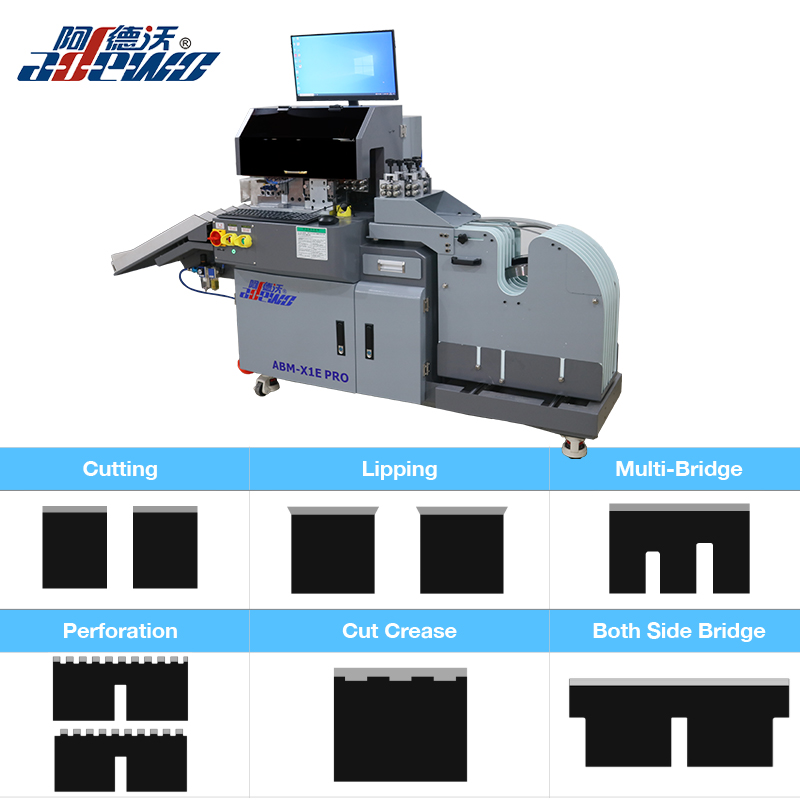
Most people never think about the anvil cover until it starts cracking, peeling, or turning sticky in the middle of a job. But the material isn't just a cosmetic choice—it dictates how often you'll need to replace it, how much dust and debris it traps, and even how your cutting pad behaves under repeated strikes. A cheap PVC cover might look fine on day one, but within weeks it can harden, split along the edges, or leave residue on your workpiece. Switch to a high-density polyurethane or a fiber-reinforced composite, and suddenly the same daily abuse doesn't leave a mark. That difference shows up directly in your maintenance schedule: fewer replacements, less cleaning, and no more mid-project surprises.
There's also the overlooked issue of surface friction. A glossier, harder cover might feel sturdy, but it can cause your material to slip, forcing you to grip tighter or hit harder—and that extra force transfers back into the tool and the anvil itself. Over time, that means more wear on the base, more vibration, and potentially even micro-cracks in the cover. A properly chosen material with the right durometer rating gives just enough grip without grabbing, so your strikes stay accurate and your anvil bed stays flat. When you stop compensating for a slippery or overly soft surface, you also stop generating the kind of uneven wear that demands frequent re-leveling or sanding.
Finally, consider what happens when the cover gets dirty. Porous materials absorb oils, metal shavings, and moisture, which can lead to rust forming underneath or a gradual softening of the cover itself. Non-porous, chemically resistant covers wipe clean in seconds and don't hold onto contaminants. That might sound like a minor convenience, but in a busy workshop it translates to less downtime, fewer abrasive cleaning sessions, and a longer window between full teardowns. Choosing the right anvil cover material isn't about buying the most expensive option—it's about matching the material to your actual work rhythm so that maintenance stops being a recurring headache and becomes something you barely think about.
Service Response Is Not Just a Warranty Line
At 2 a.m. on a Saturday, a stalled production line doesn't care about warranty terms or ticket categories. It needs a person who can think past the script. Service response is the moment a phone call turns into a plan: a temporary workaround, a local part located in a neighboring plant, or a technician redirected before he reaches his next stop. That is not a warranty line; that is someone carrying the problem with you.
Most warranty lines are built to record, not to resolve. They create a case number and a promise to call back. A genuine service response is built on anticipation. It means asking about the batch due tonight, the backup generator that is already running hot, or the operator who knows the machine better than the manual. These details rarely fit into a drop-down menu, but they decide whether a minor fault becomes a full shutdown.
The difference is measured in what the supplier knows by the time the call ends. A warranty line knows your equipment serial number. A response team knows your shift schedule, your last three failures, and which spare parts you keep on the shelf. One waits for the problem to be reported; the other has been watching for it since the last maintenance visit. The number may be the same, but the conversation is not.
The Difference Between Claimed Accuracy and Repeated Accuracy
Claimed accuracy is what a device or method promises on paper — a single-number spec often derived from controlled lab tests, best-case scenarios, or a manufacturer’s internal standard. It looks impressive but doesn't always reflect how the tool behaves when you use it day after day. Repeated accuracy, by contrast, is about whether you can trust the same reading when you measure the same thing multiple times under slightly varying conditions — temperature shifts, operator differences, or just the natural drift of components.
The gap between the two becomes obvious in practice. A scale might claim accuracy to 0.1 grams, but if you place the same object on it five times and get five different numbers, the claimed accuracy means little. Repeated accuracy catches inconsistencies that a single calibration run might miss, especially when small environmental changes pile up. Many users assume they're the same thing, but one is a statement of potential, while the other is a track record of reliability.
To evaluate any measurement tool properly, you need to ask not just "how accurate is it supposed to be?" but "how accurate is it on the tenth, twentieth, or hundredth reading?" Claimed accuracy sets expectations; repeated accuracy tells you whether those expectations survive contact with the real world. Tools with high claimed accuracy but poor repeatability often require frequent recalibration, which costs time and money in the long run.
Ask About the Creasing Matrix Options You Actually Get
When you order creasing matrix, the catalog might show a dozen channel widths and heights, but what lands on your shop floor can be a different story. Some suppliers swap in a generic profile to keep inventory lean, which can leave you fighting cracked folds on heavier stock. Before you commit, ask for the exact matrix dimensions they will pack, not just the ones listed on the line card.
A creasing matrix that works on 18-point board may tear through a lightweight cover stock if the channel is too deep or the shoulder too wide. Conversely, a shallow channel on dense packaging board can cause the fold to spring back or crack at the hinge. Get the supplier to confirm the matrix hardness, the center channel width, and the overall height for each run speed you plan to use. If they hesitate or say "standard," push for a sample strip you can test on your own press.
Don't settle for a vague promise that the matrix will match your die. Ask for a cross-section drawing or a physical sample of the exact matrix profile before the job starts. That way, you can compare it against your past makeready notes and avoid a costly trial-and-error session on the folder-gluer. A five-minute conversation now saves you from re-cutting a stack of blanks later.
What Their Existing Customers Won't Say on the Record
Most existing customers will nod along on quarterly calls and keep the real complaints to themselves. They don't want to jeopardize the relationship or get pulled into a lengthy service review, so they leave the hard feedback in hallway conversations and quick Slack messages.
What they won't say on the record often shows up in quieter ways: slower adoption, shorter contract terms, fewer feature requests, or sudden interest in a competitor's pricing page. These are not loyalty problems you can fix with a survey.
The customers who stay are often the ones holding back the most useful truths. If you want the unfiltered picture, pay attention to what they do when they think no one is watching, not what they sign off on in the annual health check.
FAQ
Look at the types of box plants they have supplied and whether any of those customers run similar board grades or box styles to yours. A builder with machines still running after five or more years in demanding shops is usually a safer bet than one with only short demo videos.
Accuracy decides whether your boxes fold square and close properly. Even a 0.3 mm error in crease position can raise reject rates on high-speed converting lines, so ask for trial cutting on your actual board and measure the sample before signing anything.
One unplanned shutdown can wipe out the saving from a cheaper machine within days. You need to confirm how fast a technician can reach your plant, whether common spare parts are stocked locally, and if remote diagnostics are available for quick troubleshooting.
Not if you run a mix of flute types and board thicknesses. Corrugated stock is abrasive and varies in caliper, so a purpose-built creasing cutting machine with adjustable pressure control and hardened tooling will hold tolerance longer and reduce blade changes.
Ask which wear parts are kept in stock, what the typical delivery time is for non-stocked items, whether you can buy compatible parts from third-party suppliers, and how many years the manufacturer commits to supplying spares after the model is discontinued.
Check the physical layout of light curtains, two-hand controls, and emergency stop buttons from the operator's normal working position. Also confirm the machine carries CE or an equivalent safety certification for your region, and ask about lockout-tagout procedures during die changes.
Installation, operator training, die adapters, energy consumption, and future software or mechanical upgrades often get left out of initial quotes. Get a written breakdown of these items and clarify whether freight, rigging, and first-year calibration are included.
Yes, it is one of the most useful steps you can take. Watching the machine run on real production orders shows you actual speed, noise level, edge quality, and how easily operators handle setup, which no polished trade show demo can match.
Conclusion
Before committing to a corrugated box die making creasing cutting machine supplier, look beyond glossy claims. The most telling test is to run the cutting section under real production load before any payment changes hands. Suppliers often show machines idle or with thin samples, but you need sustained runs with your own board grades. Anvil cover material is another early indicator; polyurethane compounds differ widely in wear rate and cut quality. What looks like a minor consumable controls your downtime and blade life. Ask exactly which cover grade you are buying and how often nearby converters replace it. Service response should also be judged by field visits and spare parts lead times, not by the length of a warranty paragraph. The strongest promise is a local technician who arrives with common parts within a day or two.
Claimed accuracy often comes from a single fresh setup under ideal conditions. Repeated accuracy across shifts, with tool changes and varying flute profiles, tells you more. Request a series of ten consecutive cuts and measure deviation range, not just average. Creasing matrix options are another point sellers blur; confirm which channel widths, heights and material types are actually included versus quoted as extras. Finally, talk directly to current users off the record. Most references will stay polite on paper, but a phone call often reveals real issues with board crush, slotting drift or crease cracking. Weigh these practical facts together and the right investment becomes clearer than any brochure claim.
Contact Us
Contact Person: KAELYN LEE
Email: [email protected]
Tel/WhatsApp: +86 15012673758
Website: https://www.china-adewo.com