

China Speaker Magnet Supply Chain and Quality Control Insights
2026-08-25
Behind every crisp, powerful speaker lies a component often overlooked: the magnet. Yet in China’s intricate supply chain, the quest for consistent, high-quality speaker magnets is far from straightforward. From raw material sourcing to precision machining and rigorous QC, each step holds hidden risks—and untapped opportunities. As a leading manufacturer, DAWA has navigated these challenges firsthand. In this post, we pull back the curtain on China’s speaker magnet supply chain and share the quality control insights that separate reliable partners from costly mistakes.
Rare Earth Sourcing Realities in China's Magnet Clusters
Rare earth magnet production in China is not a single supply chain but a patchwork of industrial zones, each with its own quirks. In Ningbo, hundreds of small workshops buy separated oxides from brokers who often cannot fully trace the ore back to a specific mine. Downstream buyers assume a uniform "China price," yet actual costs inside these clusters swing sharply depending on local electricity rates, acid availability, and which provincial environmental inspector happens to be visiting that month.
The ore itself moves through a tiered system that rarely appears in official trade data. Mines in Ganzhou and Baotou sell to state-backed separators, who then allocate oxides to magnet plants under annual quotas. When export restrictions tighten, those quotas shrink faster than actual production, pushing smaller fabricators toward semi-legal ore swaps and recycled magnet scrap. This shadow market keeps many small plants alive but also creates a hidden quality gap: identical grade labels can hide widely different impurity levels depending on whether the feed came from compliant mines or from unregulated tailings reprocessing.
For international buyers, the practical consequence is that sourcing "from China" means very little without knowing which cluster and which tier of supplier you are dealing with. A quote from a Ningbo trader may be based on fresh Baotou oxide, while a nearly identical quote from a Ganzhou broker might rely on reprocessed sludge. Price differences of five to ten percent often reflect not just margins but the underlying risk of inconsistent magnetic performance or delayed customs clearance when raw material origins are questioned.
Tolerance Claims vs. What Arrives in the Crate
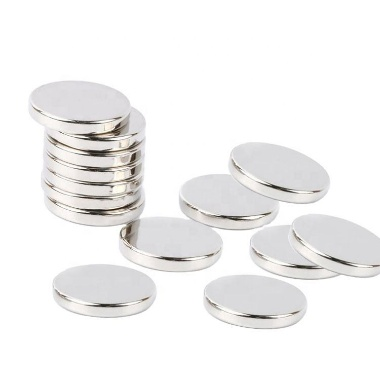
Every datasheet loves a tight tolerance. ±0.005 inches sounds precise, until you measure the actual parts and find a spread that makes a mockery of the spec sheet. The crate never lies: hardware either fits the fixture on the first try, or you spend the afternoon with a file and a growing sense of betrayal.
Somewhere between the CAD model and the shipping dock, the numbers drift. A claimed parallelism of 0.002 inches per foot arrives looking more like a gentle ski slope. Surface finish promises Ra 32, but your fingernail catches on grooves deep enough to hold a business card. The gap between tolerance claims and delivered reality is where project timelines go to die.
Smart buyers stop trusting the PDF and start trusting the caliper. They request first-article inspection reports, then spot-check a handful of parts themselves. Because when the crate lands on the floor, the only tolerance that matters is the one you can measure with your own hands.
Plating and Coating Weak Points That Shorten Speaker Life
Even a microscopic gap in a speaker's plating invites trouble. Moisture creeps under the nickel or zinc layer and starts galvanic corrosion, particularly where dissimilar metals meet, such as steel baskets joined to copper voice coil leads. Once the coating lifts or flakes around the spider landing or surround mounting lip, the exposed base metal rusts quietly until the frame weakens or the adhesive bond gives way.
Thin or uneven coverage on terminal tabs and quick-connect lugs often goes unnoticed until intermittent dropouts appear. Repeated insertion cycles scrape off the protective finish, leaving bare brass or steel that oxidizes and raises contact resistance. Chrome-plated pole pieces face a similar risk: a small scratch from assembly tooling becomes a corrosion site, eventually shedding rust particles into the magnetic gap, causing voice coil rub and early failure.
Why ISO Paperwork Doesn't Guarantee Consistent Batches
An ISO certificate tells you a facility has documented procedures, not that every batch coming off the line matches the last one. The standard focuses on repeatable processes—how equipment is cleaned, how records are kept, how deviations are logged. But a paper trail can coexist with raw material swaps, rushed production schedules, and operators who cut corners when no auditor is watching. Batch-to-batch drift often happens silently: a supplier changes the particle size of an ingredient, a mixer runs ten minutes longer than specified, or a drying room sits a few degrees above target. None of that has to violate the written SOP to alter the final product.
The gap widens when you consider how rarely most sites face a full surveillance audit. A certificate might be renewed based on a two-day visit once a year, or even less frequently if the registrar trusts the internal audit reports. Between those visits, a factory can switch to a cheaper excipient, hire untrained temporary staff, or let calibration schedules slip—all while the ISO binder on the shelf stays perfectly updated. Consistency in manufacturing is an operational habit, not an administrative one. If management treats the quality manual as a marketing asset rather than a daily checklist, the paperwork will look cleaner than the actual batches.
That’s why buyers who rely on ISO alone often discover variation only after a shipment arrives: color slightly off, dissolution slower, blend uniformity failing a spot test. What they actually need is batch-level data—certificates of analysis for each lot, retained samples, and real-time process control charts. A clean audit report doesn't catch the subtle drift that accumulates over months. It just proves someone knew how to write down what should have happened.
Field-Tested Inspection Shortcuts for Incoming Magnets
When a shipment of magnets lands on the dock, the last thing you want is to discover a polarity mix-up after they’ve been baked into an assembly. Start by snapping a quick photo of the label next to each carton, then use a handheld gauss meter to spot-check three pieces from every layer—not just the top. Pallet corners and center rows tend to hide scratched coatings or chipped edges that a casual glance misses, so run a fingertip along those zones while the magnets are still wrapped. This takes about ninety seconds per pallet and catches most cosmetic rejections before they reach the line.
For dimensional checks, skip the calipers on every single part. Instead, grab one magnet from each cavity or batch code, stack ten on a flat granite surface, and measure the total height with a digital indicator. Divide by ten and compare against the print tolerance. If the stack rocks or leaves a light gap under a straightedge, you’ve already found a warpage or burr problem without burning half a shift. Magnets with chamfered edges hide uneven grinding well, so run a nylon probe along the chamfer—it will chatter on a bad finish that looks fine to the eye.
Finally, use a pull-test fixture with a known steel plate and a calibrated force gauge, but don’t test every magnet. Mark the weakest spot on the first article, then verify every fiftieth piece from the same lot at that identical position. If the reading drops more than five percent, open a full audit. Keep a small reference magnet from a previously accepted lot in a plastic case on the bench; comparing its pull against today’s incoming parts often reveals coating thickness shifts or material grade substitutions faster than a certificate review ever will.
FAQ
N35 to N52 are typical, with N42 and N48 showing up frequently in compact drivers where flux density has to stay high without adding much weight. Some tweeter designs push toward N50 or N52, but the cost jump is steep, so manufacturers often reserve those for premium or ultra-slim models.
Inline Gauss meters sample the surface field after magnetization, often on automated lines. Batches that fall outside a tight tolerance, often within 2-3 percent of the target, get pulled and re-magnetized or reworked before they reach packaging. Some plants also run periodic Helmholtz coil checks to catch drift in the magnetizing fixture itself.
Dysprosium is added to neodymium magnets to improve coercivity at higher temperatures, which matters in car audio and pro audio drivers that run hot. Chinese suppliers have been reducing dysprosium content through grain boundary diffusion to control costs, since dysprosium prices can swing sharply.
Salt spray testing and cross-section microscopy are common. A batch may go through 24 to 48 hours of neutral salt spray; signs of red rust or blistering mean the nickel-copper-nickel coating hasn't sealed properly. Some factories also do a simple bend or thermal shock test to check adhesion on plated edges.
Baotou in Inner Mongolia remains the main source of light rare earths, while Jiangxi and Guangdong handle a large share of separation and metal production. Ganzhou, in particular, is known for heavy rare earths, though environmental inspections there have periodically tightened supply.
Ferrite is far from obsolete. It holds up well in large woofers and PA drivers where size is less of a constraint, and its raw material cost stays far below neodymium. Many Chinese factories run both ferrite and neodymium lines to serve different price segments.
Export controls on rare earth processing technology, sudden environmental audits in provinces like Jiangxi, and price spikes in praseodymium-neodymium alloy can all delay shipments. Some buyers now ask for buffer stock or dual sourcing from factories in different provinces to reduce that exposure.
Conclusion
Sourcing neodymium magnets from China’s speaker supply hubs means navigating a landscape where published specs often drift from what shows up on the dock. In the major rare earth clusters around Ningbo and Ganzhou, raw material pricing and availability shift fast, pushing some factories to quietly substitute lower-grade alloys or recycled feedstock. The result is a gap between the tolerance claims on a datasheet—tight dimensional and flux readings—and the actual magnets pulled from a shipping crate. Buyers who skip incoming inspection frequently discover that a batch marketed as N52 performs closer to N48, or that chamfer angles and flatness vary enough to cause voice coil rub.
Plating and coating failures are another silent killer. Nickel and epoxy layers applied over cheap substrates tend to blister or peel in humid conditions, letting corrosion creep into the magnet body and eventually degrading speaker output. Even when ISO paperwork looks complete, batch-to-batch consistency remains a gamble because many audits are paper-deep and don't reflect daily production reality. Field-tested shortcuts make a difference: use a handheld Gauss meter on every pallet, check plating adhesion with a simple tape pull and salt spray sample, and weigh a random subset to catch density cheating. These habits beat trusting certificates and keep your line from being surprised mid-run.
Contact Us
Contact Person: Kelvin Lo
Email: [email protected]
Tel/WhatsApp: 0769-88561131
Website: https://dawamagnetic.com/