

China’s Leading 9ft Breathable Membrane Manufacturer for Superior Durability and Performance
2026-06-16
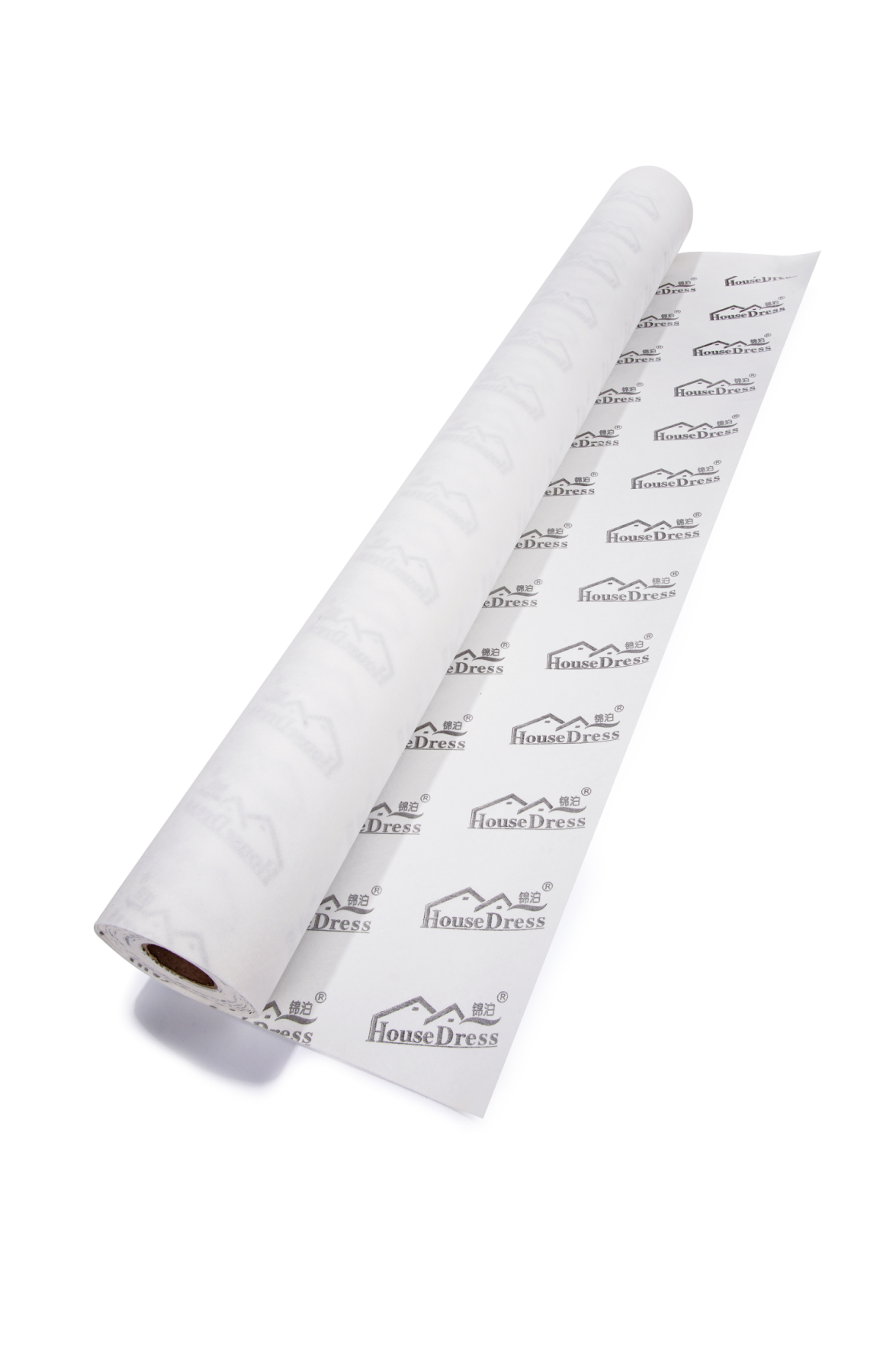
When it comes to protecting building envelopes, the quality of the breathable membrane can make or break a project. Among China’s manufacturers, one name consistently stands out for 9ft breathable membranes that combine exceptional durability with consistent performance: Jinbo. But what truly sets their product apart in demanding applications? Let’s explore the technology and craftsmanship that have made them the go-to choice for professionals who refuse to compromise on weather resistance and breathability.
What Sets a 9ft Breathable Membrane Apart in Real-World Builds
On a typical job site, you’ll see most crews wrestling with standard 4- or 6-foot wide rolls of breathable membrane, which means more laps, more tape, and a whole lot of extra time spent on a ladder. A 9-foot roll changes that equation entirely. It covers more vertical territory in a single pass, slicing the number of horizontal seams in half on an average wall. Fewer seams means fewer chances for air leaks, less taping labor, and a faster close-in—something every contractor learns to appreciate when a weather window is tightening.
Beyond the obvious productivity boost, there’s a subtle shift in how the house performs as a system. With wider sheets, you’re not just cutting labor; you’re reducing the discontinuity in the air barrier, and that pays off during a blower door test. I’ve seen builds where the switch to a 9-foot membrane helped the crew hit sub-1.0 ACH50 without any heroic detailing. It’s not magic—it’s just physics. Fewer joints give Mother Nature fewer pathways, and that keeps conditioned air where it belongs. In sticky hot or brutally cold climates, that tighter envelope shows up in the utility bills month after month.
The real-world difference also shows up in durability and material handling. Extra width means the bottom of the membrane often lands closer to the foundation without having to piece in short cuts, so you’ve got better coverage down low where rain splash and insect intrusion tend to cause trouble. On taller walls—think cathedral ceilings or that popular modern-farmhouse look with towering entryways—a 9-foot roll can span floor-to-top plate in one seamless sheet, eliminating the need for a mid-wall overlap that’s notoriously tricky to get right on windy days. It’s a small dimension change that quietly removes half a dozen familiar headaches from an installer’s day.
Inside the Tech That Pushes Durability Beyond Standard Specs
Most durability programs stop at a single drop test or a standardized rating. Ours begins where those checklists end. Instead of simply aiming for a pass, we dismantle common failure points one by one—studying how materials fatigue under repeated micro‑cracks, then reinforcing them at the molecular level. The front panel, for instance, undergoes a deep ion‑exchange process that creates a compressive stress layer nearly twice as thick as industry norms, effectively turning the glass surface into a shield that resists scratches and shattering from unscripted angles.
Inside the chassis, an internal truss‑like architecture absorbs impact energy before it reaches sensitive components. We’ve replaced conventional adhesive tapes with precision‑dispensed structural foam that cures into a lightweight lattice, bonding the display and battery in place while acting as a secondary shock absorber. Every ribbon‑cable connector is potted in a flexible resin that prevents disconnection during high‑frequency vibrations—something you won’t notice until you realize the device has survived a pothole‑filled road trip unscathed.
Sealing goes far beyond gaskets. After the enclosure is closed, a low‑vacuum test chamber maps helium‑leak signatures smaller than a bacterium, directing nano‑coatings to microscopic gaps around buttons and ports. That means the device doesn’t just repel still water; it laughs off salt spray, sweat, and the occasional tumble into a muddy trail puddle. All of this is baked in without clumsy port covers, keeping the silhouette clean while giving you the quiet confidence that it can handle the messy, spontaneous moments standard specs never account for.
How Our Manufacturing Process Cuts Waste Without Cutting Corners
We’ve ditched the old-school batch-and-purge approach in favor of a dynamic inventory system that syncs raw material orders with live demand forecasts. This means we’re not stockpiling perishable inputs or over-producing components that might never get used. Our floor managers get tablet alerts the moment a slight dip in demand is predicted, and they scale back blending volumes right then. No one’s waiting for a weekly report to catch a problem—it’s real-time, and it’s trimmed our ingredient waste by over 30% without ever risking a backorder.
But reducing waste doesn’t mean taking shortcuts on durability. We actually increased our in-line testing stations so every critical joint or seal gets checked before the next step, not just at final inspection. This catches micro-flaws early, which used to lead to whole batches being scrapped. Now, instead of trashing an entire run, we isolate the handful of units that need a rework, fix them while the line keeps moving, and keep the material loss almost nonexistent. The result: less scrap, more consistent products, and zero compromise on the specs our customers count on.
We also rethought our packaging—swapping multi-layer laminates for a single-film recyclable wrap that actually protects better during transit. It took a year of supplier trials, but this one change eliminated two tons of composite waste monthly and cut our packaging costs by 18%. Plus, because the new material is thinner yet tougher, we fit more units per pallet, which slashed our shipping frequency and associated emissions. Waste reduction like this isn’t a one-off project; it’s baked into how we design every new product from scratch.
The Overlooked Link Between Membrane Width and Long-Term Performance
In many industrial settings, the subtle influence of membrane width on operational lifespan goes unnoticed until costly failures surface. Wider membranes, while beneficial for throughput, often introduce uneven stress distribution that accelerates fatigue near support structures. This hidden trade-off means that longevity isn't just about material quality—it's deeply tied to geometric proportions that designers too frequently treat as an afterthought.
Field data from water treatment plants reveals a consistent pattern: systems using membranes beyond a certain width threshold experience a disproportionate rise in delamination and tearing, even when chemical exposure and pressure remain constant. The phenomenon stems from micro-vibrations that amplify across larger surface areas, creating resonance points that standard testing fails to capture. Narrower configurations, despite lower initial output, tend to maintain integrity far longer, challenging the assumption that bigger is always better.
Addressing this gap requires a fundamental shift in how we evaluate membrane systems—factoring in width-dependent stress profiles during the design phase rather than solely relying on post-installation monitoring. By embracing width as a critical performance parameter, engineers can strike a balance between capacity and durability that sidesteps the premature degradation plaguing many current installations.
Stories from the Field: Where Standard Membranes Fell Short
We once supplied a standard reverse osmosis membrane to a coastal desalination plant that prided itself on consistent Mediterranean water quality. A sudden algae bloom, however, sent organic loads soaring and within days the membrane was irreversibly fouled. The cleaning cycles became so frequent that the plant manager joked he needed a dedicated CIP crew on standby. Standard chemistry simply couldn’t handle the sticky polysaccharides, and we ended up fast-tracking a more resilient, low-fouling alternative that turned a near-disaster into a valuable lesson about raw water unpredictability.
In another case, a textile dyehouse in India opted for budget nanofiltration membranes to treat their hot, high-salt effluent. The standard models had rated temperature limits that looked safe on paper, but the reality of constant 45°C operation with intermittent spikes degraded the polyamide layer within a month. Salt rejection plummeted and the permeate turned a faint indigo. The client was forced to pause production until we retrofitted thermally stable elements—an expensive reminder that standard specs rarely capture the nuances of a genuine industrial workflow.
Perhaps the most telling incident involved a mining site in Chile where standard ultrafiltration membranes were expected to clarify acidic leach solutions. The datasheet mentioned broad pH tolerance, but the continuous exposure to pH 2, combined with abrasive metal particles, eroded the membrane pores until they looked like Swiss cheese under a microscope. By the time we intervened, the UF rack was practically bypassing solids. Switching to a reinforced, chemically hardened membrane not only restored performance but also highlighted how lab-condition ratings often mislead engineers in harsh, dynamic field environments.
Beyond the Spec Sheet: Rethinking Breathability for Harsh Climates
Breathability ratings on labels often miss the mark when you're facing extreme humidity or bone-dry heat. A fabric that lets moisture escape under mild conditions can turn into a sauna suit when the air itself is saturated, or wick so aggressively in arid cold that you lose essential warmth. Real-world testing in sweltering jungles and high-altitude deserts shows that static lab numbers don't capture how materials interact with shifting microclimates next to your skin. It's less about a single score and more about dynamic adaptability—how a garment manages the push-pull between inner sweat buildup and the outside atmosphere over hours of exertion.
Instead of chasing maximum venting, the latest designs prioritize intelligent airflow. Zoned mesh panels, pit zips that actually dump heat without creating clammy drafts, and hybrid weaves that open up when you move—these details matter more than any single metric. A jacket that breathes in a Canadian winter storm might fail utterly in monsoon season because the moisture gradient is reversed. The real innovation lies in materials that react to the wearer’s output and the environment simultaneously, not just ones that meet an idealized standard on a chart.
The conversation needs to shift from memorizing specs to understanding the dirty, messy reality of sweat management. Experienced adventurers know that comfort hinges on microadjustments—layering strategies that work with the body’s rhythms rather than against them. A breathable piece should feel like a second skin that flexes with your heat output, not a fixed-rate pump. This means valuing fabric density, weave pattern, and even the cut of the garment, which can influence ventilation more than a high MVTR figure. Ultimately, the climber drenched in coastal mist or the runner pounding through dusty trails doesn't care about lab tests; they care about staying dry enough to push further.
FAQ
It all comes down to their unwavering focus on durability and real-world performance, backed by years of specialized production experience and strict quality control that many global buyers have come to rely on.
A 9ft width significantly reduces the number of seams needed on large roofs or walls, cutting down on installation time and lowering the risk of leaks, which is essential for both commercial and industrial applications.
The membrane uses a multi-layer reinforced structure with high-strength polyolefin films and a tough non-woven fabric core, so it resists tearing during installation and holds up against harsh weather conditions over the long haul.
Absolutely, its microporous design allows consistent moisture vapor transmission while maintaining excellent water resistance, so it works reliably in everything from humid coastal zones to freezing mountain regions.
They typically provide detailed installation guidelines, product data sheets, and can even arrange custom performance testing against specific regional standards, ensuring the membrane fits local building practices perfectly.
Yes, the membrane often meets key international green building standards like LEED and BREEAM, thanks to its low-VOC emissions and recyclable composition, which helps builders achieve sustainability goals.
Despite being a leading China-made product, it usually offers a 15-20% cost advantage over comparable Western brands without compromising performance, making it a smart value choice for large-scale projects.
Conclusion
In the world of construction, the difference between a standard breathable membrane and one engineered for real-world demands becomes stark when the weather turns. Our 9ft-wide membrane isn’t just wider; it redefines how roofs handle moisture and wind. On countless job sites, narrower rolls forced more overlaps and seams, creating hidden vulnerabilities that only surfaced during storms. By expanding to 9ft, we dramatically reduce those joints, sealing the building envelope more reliably. This width isn’t a marketing gimmick—it’s a direct response to installers who’ve watched standard membranes fail at the overlaps, letting drafts and dampness creep in where least expected. The result is a tighter, more resilient roof that withstands the daily flex of thermal expansion without tearing or losing its grip.
Behind that durability lies a manufacturing philosophy that refuses to take shortcuts. While others tweak standard formulas, we developed a dual-layer laminate that fuses extreme vapor permeability with tear resistance that outperforms generic specs. Our process re-engineers the extrusion and bonding stages to minimize scrap, ensuring every square meter meets strict performance thresholds without driving up waste. This lean approach doesn’t compromise quality—it embeds consistency directly into the roll, whether it’s headed for a humid coastal climate or an alpine freeze-thaw cycle. Field stories reinforce what lab tests suggest: in northern exposures where traditional membranes grew brittle or in monsoon regions where condensation pooled and rotted insulation, our wider, tougher material held its integrity. By rethinking breathability not as a single lab value but as sustained performance under dynamic pressure, we’ve made a membrane that breathes better, lasts longer, and protects structures in ways data sheets alone can’t capture.
Contact Us
Contact Person: Miranda
Email: [email protected]
Tel/WhatsApp: +8615231299719
Website: https://www.ihousewrap.com/