

China HFV9400XLC Refrigerated Trailer Complete Guide and Key Features
2026-11-16
When it comes to moving temperature-sensitive cargo across long distances, the China HFV9400XLC refrigerated trailer has earned a reputation for doing the job without fuss—and doing it well. But before you dive into the full spec sheet and performance breakdowns, it’s worth asking: what makes this particular reefer stand out from a crowded field? From its reinforced chassis to smart insulation choices, every detail seems tailored for operators who can’t afford downtime. And while the HFV9400XLC speaks for itself, working with a supplier like KANGMU TRUCK can make the difference between a good purchase and a genuinely profitable one. In this guide, we’ll unpack the key features that set this trailer apart, and why so many fleets are paying close attention.
The Thermal Build on This Trailer Actually Keeps Cold Air Where It Belongs
Most trailers treat insulation as an afterthought, a thin fiberglass layer that barely slows down the outside chill. This one goes a different route. The walls, floor, and ceiling use a continuous thermal barrier that seals off the metal framing, so cold air can't sneak through the studs and turn the interior into a walk-in cooler. You notice the difference the moment you step inside on a frosty morning: the floor isn't ice-cold, and the heat doesn't have to fight a losing battle against every square inch of exposed aluminum.
The real trick is how the build handles airflow at the edges. Instead of leaving gaps where drafts can curl up around the door seals and wheel wells, the shell wraps those weak points with dense but flexible insulation that moves with the trailer. That means the thermal break stays intact even when the rig flexes on rough roads, and the cold air stays on the outside where it belongs.
Practical details like double-layer window covers and insulated hatch seals extend the same idea to the places people usually forget. The result is a space that holds heat in winter and keeps the summer swelter out without relying on an oversized furnace or air conditioner. For anyone who has woken up shivering in a conventional camper, the difference feels less like a feature and more like a quiet kind of comfort.
How the Axle and Suspension Setup Survives Rough Rural Roads
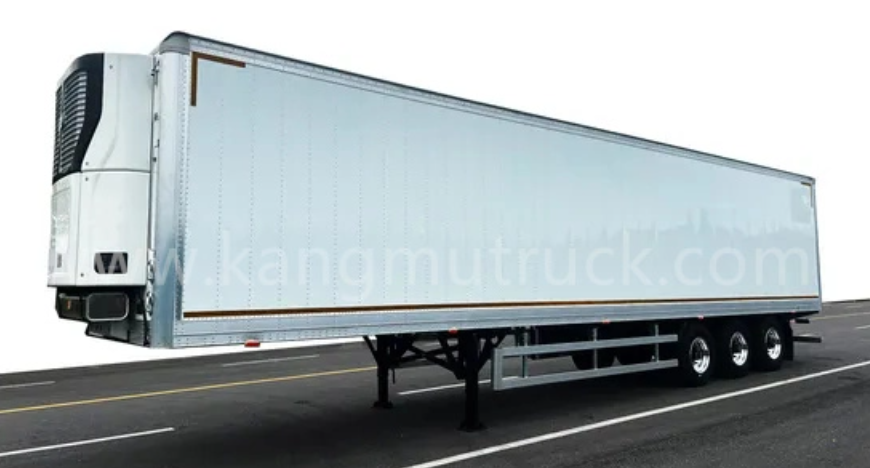
Thick-wall steel tubing, fully welded seams, and reinforced spring perches do the heavy lifting here. The axle housing shrugs off hits from exposed rock ledges and dried-out ruts that would dent thinner factory housings. Suspension links mount through double-shear tabs instead of single brackets, so lateral loads from sliding into a washed-out ditch don't twist the brackets or crack the frame mounts. Leaf packs use a progressive rate and are paired with gas-charged dampers, keeping the tires pressed into loose gravel, mud, and washboard without hammering the cab.
Solid rear axle gives up some on-road polish, but it survives what independent setups often cannot: repeated rock strikes without torn CV boots or knocked-out alignment. Urethane bushings at the frame pivots resist grit and water better than stock rubber while still taking the edge off sharp impacts. No rear stabilizer bar means the axle can articulate far enough to climb through deep potholes one wheel at a time, avoiding the see-saw motion that overloads the opposite side and snaps suspension components on rough rural tracks.
Choosing a Refrigeration Unit That Matches Your Freight, Not Just the Price
A low sticker price rarely tells the whole story when it comes to refrigeration units. What matters more is how well the unit handles the specific temperature range, humidity sensitivity, and airflow needs of your cargo. Fresh produce, frozen seafood, and pharmaceuticals each demand different cooling behaviors, and a unit that works perfectly for one might ruin another. Look beyond the upfront cost and examine the compressor type, defrost cycles, and insulation thickness — these details determine whether your freight arrives in sellable condition or becomes a costly loss.
Load characteristics also play a bigger role than price tags suggest. Dense pallet loads restrict air circulation, requiring a unit with higher static pressure capability, while lightweight or mixed cargo may need gentle, even cooling to avoid cold spots. Door openings during multi-stop deliveries put extra strain on the evaporator and compressor; a cheaper unit without a strong recovery rate will struggle to pull temperature back down between stops. Matching these operational realities to the unit's engineering saves money over time, even if the initial purchase costs a bit more.
Finally, consider your typical route profile and ambient conditions. A unit that performs well in mild climates may fail under desert heat or in high-humidity coastal areas. Fuel efficiency, maintenance accessibility, and parts availability in your region should outweigh a discount that disappears after the first breakdown. The smart choice isn't the cheapest unit on the lot — it's the one whose cooling capacity, airflow design, and durability align with what you actually haul, day after day.
What the HFV9400XLC Really Carries After Tare Weight
Strip away the tare weight and the HFV9400XLC stops being a spec sheet number. What remains is the payload margin that actually decides whether a refrigerated run makes money or burns it. At roughly 34,000 kg of cargo capacity after the empty trailer is accounted for, this reefer is built for dense, palletized loads—think frozen meat blocks, bagged ice, or shrink-wrapped produce bins—where every extra kilogram of legal payload translates directly into lower per-unit freight cost. Operators who ignore this figure end up hauling air, and air doesn't pay the diesel bill.
The real payload story isn't just about the total, though. It's about how that weight sits. With a tri-axle layout and a reinforced chassis, the HFV9400XLC handles uneven frozen loads without the rear-end sag that eats into axle compliance. A full load of hanging beef quarters shifts differently than stacked dairy crates, and the trailer's balance point means you can load to the back doors without triggering a roadside overweight on the drive axle. That's the difference between a smooth scale ticket and a fine that wipes out three trips of profit.
In cold-chain fleets where dispatch assumes every reefer is the same, this trailer's actual carrying ability after tare becomes a quiet competitive edge. It lets a smaller fleet quote rates a few cents lower per kilogram and still clear more margin than a competitor running heavier, older equipment. When the load is frozen, dense, and time-critical, what the HFV9400XLC really carries is not just product—it carries the route's profitability from first mile to final delivery.
Rust, Wear, and the Maintenance Points Fleet Owners Complain About
Ask any fleet owner what keeps them up at night and you'll hear the same chorus: rust creeping into door sills, suspension bolts that refuse to budge, and brake lines wearing thin before the next inspection. It's not the glamorous breakdowns that drain budgets—it's the quiet corrosion around brackets, the pitted wheel arches that spread like a rash, and the constant battle to keep underbody components from turning to dust. These aren't hypotheticals; they're the daily reality logged in maintenance sheets across every depot.
The real frustration comes from parts that should last longer but don't. Exhaust hangers snap after two winters. Leaf spring shackles rust through while the springs themselves still have life. Even simple items like battery trays and fuel tank straps become annual replacements because the original coating fails at the weld points. Fleet managers have learned to expect it, but that doesn't make the line item any less painful when a dozen trucks need the same rusted clamp swapped out in the same month.
What most outsiders miss is how these small failures cascade. A rusty brake backing plate lets dust and moisture reach the shoes, cutting pad life by a third. A corroded electrical ground behind the cab causes intermittent sensor faults that take hours to trace. None of it shows up in the owner's manual, and none of it gets better with cheap aftermarket coatings. The fleet owners who complain the loudest aren't asking for miracle materials—they just want a part that doesn't need a torch and a prayer to remove six months after installation.
Why This Trailer Makes Sense Outside the Big Logistics Hubs
Big hubs rely on predictable dock heights, wide aprons, and container yards. Step outside those zones and conditions change fast: older loading docks, uneven ground, tighter yard layouts. This trailer's design doesn't assume you'll always have a level concrete pad or a standard dock. The rear threshold sits low enough to work with a hand pallet truck, and the side access points let you unload where a forklift can't get around.
In secondary markets, routes often include mixed deliveries: one pallet to a hardware store, two to a restaurant, maybe a stop at a rural workshop. A pure line-haul trailer wastes that flexibility. This one carries mixed freight without extra load bars or complex securing; the tie-down points are placed for real-world stacking, not just full-load pallet grids. That saves time when you're doing five stops before noon.
Maintenance matters more when the nearest service center is three hours away. The axle, brakes, and hub components are standard enough that a local shop can source parts. No proprietary wiring harness or unusual wheel pattern to strand you. That reliability keeps smaller carriers and owner-operators from being tethered to hub-based service networks.
FAQ
It is built for temperature-sensitive freight like frozen food, fresh produce, pharmaceuticals, and dairy. The insulated body and reliable cooling setup help keep goods within the required temperature band throughout long-haul trips.
Common configurations run around 13.6 meters in overall length with a 2.55-meter width and close to 4 meters in height, giving roughly 80 to 85 cubic meters of cargo space. Exact dimensions can vary by order and axle setup.
Most units pair a diesel-powered or electric standby refrigeration unit with dense polyurethane foam panels. The compressor runs as needed to hold the set point, while the insulation slows heat exchange with the outside air even when the door is opened briefly.
Buyers often choose from established brands like Thermo King or Carrier, depending on budget and route needs. The trailer is usually pre-wired and braced so the unit can be swapped or upgraded without major bodywork.
The trailer typically uses a heavy-duty tandem axle setup with air ride or mechanical suspension. Air ride is popular for delicate cargo because it reduces road vibration and helps prevent spoilage from shaking.
The body panels normally have a polyurethane foam core sandwiched between fiberglass or metal skins, often 80 to 100 mm thick. This gives strong thermal resistance and also adds structural rigidity without excessive weight.
Regular checks of door seals, drain plugs, and refrigeration unit filters go a long way. Washing the interior after each load, inspecting for panel damage, and testing the temperature recorder before departure help avoid breakdowns and rejected cargo.
Many units are built to meet ATP or similar cold-chain standards, and the materials are usually food-grade. Buyers should confirm the specific certificate for their target market, as requirements can differ between regions.
Conclusion
The HFV9400XLC earns its keep through insulation that actually holds a temperature band rather than just advertising panel thickness. The thermal build focuses on door gaskets, floor joints, and drain seals—places where cold air typically escapes on long hauls. Combined with an axle and suspension setup designed for rough rural roads, including reinforced spring hangers and a balanced leaf arrangement, the trailer avoids the cracked welds and misalignment that plague cheaper units on unpaved routes. Choosing a refrigeration unit for this trailer means matching compressor capacity and airflow to the specific freight, not simply grabbing the lowest-cost reefer. Dense frozen cargo, frequent door openings, and high-humidity produce each require different cooling curves, and the best setups dial in defrost intervals and return air temperature rather than chasing raw BTUs.
After tare weight, the real payload still leaves enough room for tightly packed chilled goods, making it useful for regional distribution instead of just long-haul trunking. However, fleet owners often point to rust along the lower side rails and floor edges, plus hinge wear from repeated dock contact, as the main maintenance headaches—these can be managed with routine washing and targeted anti-corrosion touch-ups. What makes the HFV9400XLC stand out outside big logistics hubs is its tolerance for imperfect infrastructure. It does not require a dense dealer network or pristine highways to stay profitable; simpler mechanical components and widely available spare parts keep downtime short in smaller cities and agricultural regions, where cold chain reliability matters more than flashy telematics.
Contact Us
Contact Person: Shen Zhikang
Email: [email protected]
Tel/WhatsApp: 8613908668969
Website: https://www.kangmutruck.com/