

Bogie Hearth Furnace: A Practical Guide to Importing and Installation
2026-08-24
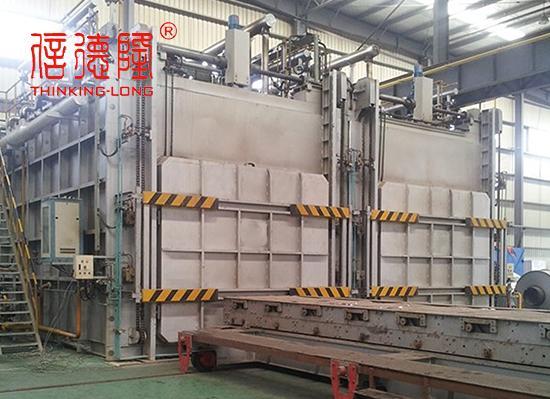
Importing a bogie hearth furnace is rarely as straightforward as the brochure makes it seem. One missed customs document or an undersized foundation, and your new equipment sits idle for weeks. This guide strips away the guesswork, walking you through supplier vetting, shipping logistics, site preparation, and final installation—without the fluff. You'll also discover why companies involved in serious furnace projects keep THINKING-LONG on their short list.
What Your Freight Forwarder Won't Tell You About Bogie Hearth Furnace Deliveries
Most freight forwarders will happily take your booking for a bogie hearth furnace and promise a smooth ride from factory floor to final installation. What they rarely mention is how many of these massive units arrive with subtle damage that never shows up on the delivery paperwork. The furnace car rails can shift by a few millimeters inside the crate, or the refractory lining may develop hairline cracks from vibration that nobody notices until the first heat-up cycle. That's the kind of detail that turns a routine delivery into a six-week delay while you argue over liability with the carrier.
Another thing they won't volunteer: the actual route your furnace travels might be much rougher than the one on the quote. A bogie hearth furnace isn't a standard container load. It's an oversize, overweight piece of industrial equipment that often gets transferred between multiple trucks, railcars, or even barges depending on the destination. Every transfer point is another chance for improper lifting, bad blocking, or a forklift operator who's never handled a 40-ton heat treatment system. Your forwarder knows this, but they also know that telling you the truth might push you to a competitor who's willing to gloss over the risks.
Perhaps the most uncomfortable truth is about the final mile. The furnace might arrive at your facility gate looking fine, but getting it onto its foundation is where the real damage can happen. Cranes with insufficient capacity, rigging teams without furnace experience, or even just a slight misalignment when lowering the bogie onto its rails can compromise the entire system. A good freight forwarder should be coordinating this with your installation crew days in advance, but many simply drop the crate at the curb and consider the job done. By the time you discover the problem, the delivery receipt has already been signed and the liability window has closed.
Unpacking the Crate Without Voiding the Warranty
Before you even reach for a pry bar, take a slow walk around the crate and look for anything that seems off—dents, punctures, or tape that's been re-sealed. If the outer packaging took a hit in transit, the warranty claim gets a lot easier when you have timestamped photos from multiple angles. Don't rush this part; a quick note on the delivery receipt can make the difference between a covered replacement and a denied claim.
Use the right tools for the fasteners you actually see. If the crate is screwed together, grab a cordless driver with the correct bit and back each screw out rather than forcing the lid. For nailed crates, a flat pry bar with a wide blade works better than a claw hammer because it spreads the force and leaves less splintering. Never cut along the top seam with a utility knife—you might slice into the product or its power cord, and that kind of damage is rarely covered.
Once the lid is off, lift it straight up and set it aside instead of sliding it off to one side. Keep all packing materials, foam blocks, and plastic wraps until you've inspected the item completely and verified it powers on or fits as expected. If you spot a problem, leave everything exactly as you found it and contact the manufacturer before moving forward. A few extra minutes of care here keeps your warranty intact and saves you from arguing with a claims department later.
Leveling a Bogie Hearth Furnace on a Less-Than-Perfect Floor
Getting a bogie hearth furnace perfectly level on an uneven floor is rarely a one-and-done job. The first thing to accept is that the floor itself will shift, settle, or have been poured with a slight crown or dip that no shim pack can fully erase. Instead of chasing a bubble level across the entire rail length, focus on the critical zones: the door seal faces, the hearth car rail seats, and the areas where the furnace base plates bolt down. Mark these spots with a straightedge and feeler gauges to map the actual deviation, then work from the worst hump outward rather than trying to lift every corner at once.
When you start leveling, use paired steel shims or purpose-made leveling plates at each anchor point, not random scraps. Insert them in a predictable sequence—front to back on the operator side, then cross-check the drive side—so you don’t twist the furnace frame. A bogie hearth is long, so a one-millimeter error at the middle anchor can translate to a three-millimeter gap at the door. Once the base is within tolerance, run the hearth car in and out empty a few times, watching how it tracks. If it rocks or drags on one rail, the floor isn’t the only culprit; the car wheels may need shimming as well.
For stubborn dips, avoid the temptation to grout everything solid. A flexible leveling compound under the rail supports can absorb minor floor movement without cracking, but only after the furnace shell has been bolted down and thermally cycled once. Check the levels again after the first low-temperature run, not just cold. The floor will react to the heat load, and what looked flat at room temperature may bow slightly near the hearth opening. Adjust the shim stacks in small increments, lock them with a tack weld or a jam nut, and document each point so the next re-leveling doesn’t start from scratch.
Connecting Power and Gas When the Manual Assumes Local Standards
Before you even unpack the fittings, check the nameplate against what actually comes out of your wall and gas line. A manual written for one market might list 120 V / 60 Hz or 13 A, while your supply is 230 V / 50 Hz with a different plug shape. The same goes for gas: natural gas at 7 inches water column in one country behaves differently from propane at 11 inches elsewhere, and the orifice sizes in the unit may not match. Don’t assume the factory preset is safe just because the connector threads fit.
Local standards also change which parts you can legally use. A flexible gas connector approved in one jurisdiction might not be permitted in another, even if it seals fine on a test. For electrical work, the manual may show a hardwired connection, but your local code may require a dedicated circuit, a specific residual-current device, or a different grounding method. When the manual and the local rules disagree, the local rule wins—but you need to know which one actually applies before scheduling the hookup.
Before startup, confirm conversion requirements. Some appliances ship with multiple gas jets or a reversible regulator spring, but not all include the right parts in the box. If a conversion kit is missing, order it by the exact model and fuel type rather than improvising with drill bits or adjustable regulators. For electrical differences, an adapter may solve the plug shape but not the voltage or frequency mismatch. A licensed local installer can often spot these conflicts in minutes and save you from a failed inspection or a damaged appliance.
The First Heat-Up: What to Watch Before You Load Real Parts
Before you even think about putting a real part in there, let the machine reach its target temperature and then give it extra time to soak. A thermocouple reading can hit the setpoint while the internal mass is still climbing. Watch the controller’s rate of change—if it’s still swinging more than a couple degrees, the first layer or first shot won’t behave like it should.
Check the nozzle, bed, barrel, or platen for cold spots. Run a dry cycle with no material if possible. Listen for relays clicking too often, and watch the power draw. If the heater is fighting to hold temperature, you have an airflow problem or a failing element, not a settings issue.
Use an infrared thermometer or a probe to confirm surface temps at three points. Write down the warm-up curve once and keep it next to the controller. Later, if a real part comes out warped or short, you’ll know whether the machine ever reached true thermal equilibrium before you loaded it.
Post-Installation Checks That Catch Problems Before Production Starts
When you finish deploying a new version, the temptation to declare victory and move on is strong. But the gap between "installed" and "ready for real traffic" is where most silent failures hide. Instead of waiting for users to stumble over broken endpoints or missing assets, take fifteen minutes to run through a set of post-install checks that simulate actual production conditions. For example, after a recent backend update, our team caught a misconfigured environment variable that only manifested when the service tried to open more than ten database connections at once. A quick load test against the staging-like environment would have never caught it, but a targeted post-deploy script did.
Start with the basics that often get skipped: verify that every expected process is actually running and listening on the correct ports, not just that the install command returned exit code 0. Then check log files for entries written after the install timestamp—look for stack traces, timeout warnings, or repeated retries. One of the most common issues I've seen is a missing or stale cache directory that causes the application to fall back to disk writes, which only fails under concurrent access. Run a few real API calls or user journeys against the new deployment, including edge cases like malformed input or slow network conditions. Finally, confirm that scheduled tasks, cron jobs, or queue workers were restarted with the new code; a forgotten worker process can keep processing with old business logic for days.
It's worth writing these checks down as a small script or checklist that evolves with each incident. After every production problem, ask what could have been detected during installation. Add that check to the list. Some teams integrate these steps directly into their CI/CD pipeline as a post-deploy smoke test stage, blocking automatic promotion if any assertion fails. But even without full automation, a shared document with the five most recent failure modes and how to check for them takes less than ten minutes to run through manually. The goal isn't to prevent every possible issue, but to catch the class of problems that only appear after the real environment is touched—before your customers do the debugging for you.
FAQ
Look beyond the quotation. Ask for detailed drawings of the bogie drive system, hearth sealing design, and combustion controls. Request references from customers who imported to a similar climate and power supply. Verify the supplier's experience with export packaging and their willingness to provide a field service engineer for installation.
Coordinate with the supplier to get accurate anchor bolt layouts and load distribution data. Pour the concrete foundation at least four weeks before shipment to allow full curing. Check the flatness tolerance across the furnace footprint, and arrange cable trenches or pipe sleeves for power, gas, and control signals so they match the furnace's connection points.
Use a crane or heavy-duty rollers with capacity well above the furnace's wet weight. Remove shipping braces only after the furnace is near its final location. When placing the main body, align the bogie rails with the furnace chamber and use shims or levelling bolts to achieve the manufacturer's specified levelness. Then roll the bogie in and out manually to check for binding before anchoring.
Have a licensed electrician connect the main power supply according to the wiring diagram, and test the emergency stop circuits before energising the control cabinet. Gas lines must be pressure-tested for leaks and fitted with shut-off valves and pressure switches. Check the exhaust flue connection for proper draft and install a combustible gas detector near the furnace if natural gas or LPG is used.
For a standard medium-sized bogie hearth furnace, expect one to two weeks for mechanical installation and utility hookup if the foundation and services are ready. Commissioning usually adds another three to five days, including dry runs, burner tuning, and a full heating cycle. Complex automated loading systems or high-temperature refractory dry-out can extend this by a week or more.
Ask for the complete installation manual, electrical schematics, PLC programme backup, burner data sheets, and a detailed refractory dry-out curve. You should also receive a list of critical spare parts, torque specifications for anchor bolts, and a signed pre-commissioning checklist. Keep a hard copy of these on site since some service engineers may need them during troubleshooting.
After the furnace is placed, measure the rail gauge and level across the full travel length with a laser or precision spirit level. Check that the bogie wheels sit evenly on both rails with no visible gap. Run the bogie at low speed and listen for scraping or uneven motor load. If misalignment is found, adjust the rail shims and re-tighten the anchor bolts in the sequence shown in the manual.
Do not rush the refractory dry-out; firing too fast can crack the lining and shorten furnace life. Avoid connecting the furnace to a shared flue system without verifying back-pressure limits. Never skip the initial thermal expansion test, which checks that the hearth seals and door clamps move freely. Also, make sure the control panel is not placed too close to the furnace door, where heat radiation can damage sensitive electronics.
Conclusion
Importing a bogie hearth furnace rarely goes as smoothly as the sales documents suggest. What your freight forwarder won't tell you is that these units are top-heavy and prone to shifting during transit unless the bogie is mechanically locked and the furnace body is braced against the container walls. You may also face surprise charges at the port for liftgate service or a crane truck because the crate is too long for a standard dock-height trailer. Once it arrives, resist the urge to pry open the crate with whatever bar is nearby. Use the original fasteners and keep every piece of packaging until the warranty period ends; a scratched hearth rail or dented control panel from improper unpacking is often enough for the manufacturer to reject a claim. When the floor is less than perfect, do not rely on cranking down the anchor bolts to pull the frame straight. Instead, place steel shims under the low corners, check the bogie rails with a machinist's level in both axes, and then grout the base to lock the alignment before any utility connections are made.
Connecting power and gas is where the manual often assumes local standards that do not match your site. A furnace built for 380 V, 50 Hz will not behave the same on 480 V, 60 Hz, and gas pressure regulators set for European supply may need different springs or pilot orifices. Before the first heat-up, run the controls in manual mode with the gas train isolated to confirm all safety interlocks respond, then light the burners and hold a low temperature soak to dry out the refractory. Do not load real parts on the first cycle; trapped moisture can crack the lining and warp the hearth. After cool-down, check the door seal compression, the bogie drive chain tension, and the flame rod signal strength, and record those baseline readings. A furnace that passes these post-installation checks will still surprise you later if you skip them, but at least the surprises will be scheduled maintenance rather than midnight breakdowns.
Contact Us
Contact Person: Qian Xijun
Email: [email protected]
Tel/WhatsApp: 8613961736750
Website: https://www.thinkinglong.com/