

Best Box-type Transformer Solutions for Efficient Power Management
2026-09-07
Power distribution rarely gets a second thought until a single overloaded transformer halts an entire facility. For operations where space, safety, and energy efficiency are non-negotiable, box-type transformers have quietly become the backbone of modern power management. Yet not all units are built alike—cooling design, insulation, and load adaptability separate a costly liability from a long-term asset. Chang Song approaches these compact power hubs with an engineering-first mindset, turning the humble box-type transformer into a smarter, leaner piece of your electrical infrastructure. Here’s what to look for before you invest.
Compact Enclosures That Fit More Power Into Less Footprint
Traditional power supplies often sacrificed output to keep dimensions small, but that era is over. Clever chassis designs now place high-frequency switching stages in vertical stacks, using the enclosure's own metalwork as a heat spreader. This lets a unit barely larger than a shoebox deliver several kilowatts without resorting to noisy forced-air cooling.
Another key move is replacing heavy wire harnesses with laminated busbars that run along the inner walls. The shorter current paths reduce losses and free up the center of the enclosure for dense capacitor banks and planar transformers. As a result, the same footprint that once held a 1 kW converter can now support 3 kW or more, all while staying serviceable from the front.
Field installers notice the difference immediately. Rows of these compact units fit into cramped control cabinets and retrofit projects where every millimeter counts. Shared side-mounted cooling channels allow adjacent enclosures to work together, pulling heat away from the row instead of blanketing the room. The outcome is higher total power per rack and less wasted floor space, without any compromise on reliability or ease of access.
Thermal Sensors and Load Forecasting That Prevent Outages Before They Start
Most grid failures don't happen all at once. They start as heat building up inside a connector, a transformer running a few degrees warmer than it should, or a feeder line quietly carrying more load than it was designed for. Thermal sensors placed directly on critical assets catch these early signatures, turning slow deterioration into visible data long before a fault trips a breaker.
Load forecasting adds the second layer. Instead of reacting to demand spikes, operators use short-term consumption patterns, weather shifts, and historical stress points to predict where the next hot spot is likely to appear. That means a substation nearing its thermal limit can be rerouted or shed in a controlled way, rather than failing under pressure.
Together, these tools shift maintenance from calendar-based routines to condition-based decisions. A sensor reading that trends upward over three nights, combined with a forecast showing higher load tomorrow afternoon, is enough to justify a targeted inspection or temporary derating. The outage never occurs because the warning signs were seen and acted on in time.
Grain-Oriented Steel Cores That Trim Standby Energy Waste
Grain-oriented electrical steel has a crystallographic texture that aligns most grains along the rolling direction, which dramatically lowers core loss when magnetization flips back and forth. In standby mode, transformers and inductors still see a small alternating flux, and even a few watts of continuous loss per device adds up across a building. By using grain-oriented cores in low-power standby circuits, designers can cut that idle dissipation without increasing copper cross-section or adding complex control circuitry.
The payoff shows up most clearly in appliance power supplies, smart-home sensors, and always-on chargers. A grain-oriented core pushes the knee of the B-H loop farther out, so the same standby flux swing produces less hysteresis heating. This means a wall adapter that used to bleed 0.8 W in no-load can drop to 0.3 W or lower, keeping it within tight standby regulations while the actual load path remains unchanged.
Manufacturing also benefits because the thinner, domain-refined grades of grain-oriented steel keep eddy-current losses down without requiring exotic amorphous alloys. The material costs more than non-oriented steel, but for small cores that run 24/7, the energy savings recover that premium in the first year. Engineers often pair it with a slightly lower standby switching frequency to get an extra efficiency margin without audible noise or thermal drift.
Plug-In Busbar Modules That Make Capacity Upgrades a Same-Day Job
A capacity expansion used to mean tearing out cable trays, fabricating custom bus sections, and scheduling downtime that could stretch for days. Plug-in busbar modules change that math. They arrive pre-assembled with standardized connectors, so a crew can mount the housing, slide in a new tap-off unit, and torque a few bolts. No field cutting, no crimping, no guesswork.
Because the modules clip into an existing run, you add power where it's needed without disturbing the rest of the distribution. One common approach is to pre-install brackets and conduit during normal operation, then use a short planned window—often just a lunch break or after-shift period—to plug in the new section. For a busy facility, that's the difference between a weekend shutdown and a routine service call.
The same-day promise also holds up under load. Spring-loaded contacts and insulated housings keep connections tight and safe, while modular lengths let you phase growth instead of overbuilding. When a production line or server rack suddenly needs more amps, the upgrade conversation shifts from "how long will we be down?" to "who's available this afternoon?"
Weatherproof Coatings and IP Ratings That Outlast Seasonal Extremes
A coating that flakes after one winter isn't weatherproof—it's a liability. The real test comes when ice, UV, salt spray, and sudden temperature swings hit the same surface year after year. We focus on formulations that hold their bond and flexibility even when the thermometer drops below freezing overnight and climbs into the 90s by afternoon. That means selecting resins and curing agents with proven elongation and adhesion on substrates that expand and contract constantly. Rather than chasing a single “all-weather” magic bullet, we match the coating chemistry to the specific stress pattern of each environment, whether it's coastal humidity, desert dust, or freeze-thaw cycles.
IP ratings are useful shorthand, but they don't tell the whole story. A housing rated IP67 might survive a temporary dunk in the lab, yet fail after six months of driving rain followed by frost heave. We look beyond the first two digits to how seals age, how gaskets compress over time, and whether internal condensation gets trapped. Our approach pairs high-solids coatings with mechanical designs that shed water before it pools, and we test under accelerated thermal cycling that mimics real seasonal extremes—not just a single steady-state soak. The goal isn't a pass on paper; it's a coating that still beads water and protects the circuit board after three winters outside.
Longevity comes from disagreeing with the idea that one coat lasts forever. We specify recoating intervals based on actual field data, not marketing claims. For steel structures near saltwater, that might mean a zinc-rich primer under a urethane topcoat reapplied every seven years. For outdoor electrical enclosures, we often forgo thick films in favor of thinner, tougher layers that resist cracking when the plastic housing flexes. The common thread is honest material selection: no filler-heavy products masquerading as premium protection, no skipping adhesion promoters just to cut cost. When the seasons get brutal, the coating should be the last thing you think about—and the first thing that quietly keeps working.
Harmonic Filtering Built Into the Transformer, Not Bolted On Later
External harmonic filters bolted onto a transformer after installation eat up floor space, demand extra wiring, and add new failure points. Integrating the filtering function directly into the transformer's windings and magnetic circuit attacks harmonics at the source, so separate equipment never enters the picture.
Built-in filtering also cuts installation and maintenance costs. Filtering components share the transformer's cooling and insulation systems, which makes thermal management and dielectric coordination straightforward. This avoids the overheating and insulation breakdown that often plague externally mounted filters.
In practice, the unified design works well in space-constrained or power-quality-critical settings like data centers, hospitals, and precision-manufacturing plants. Instead of being just a voltage converter, the transformer becomes a compact unit that actively manages power quality.
FAQ
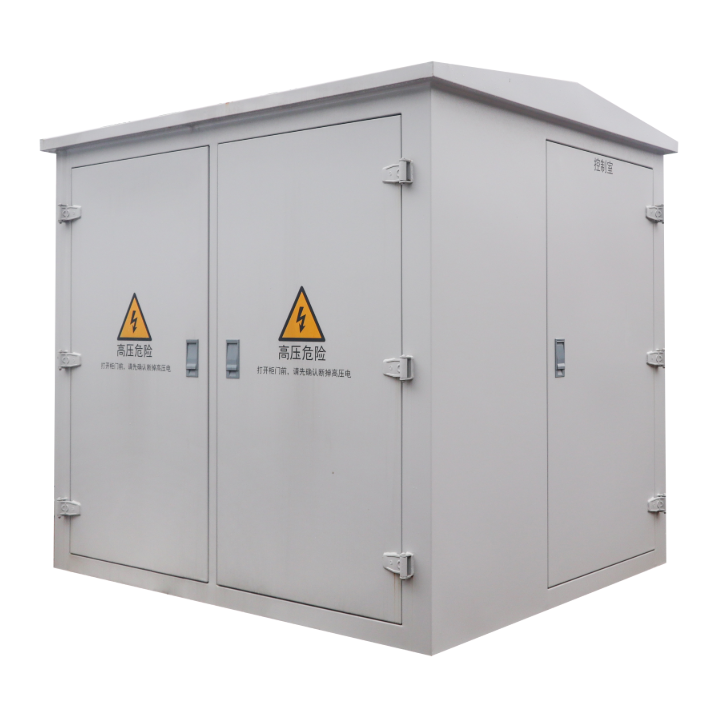
A box-type transformer packages the transformer, high and low voltage switchgear, and protection equipment into a single weatherproof enclosure. Unlike traditional substations that need a dedicated building and extensive on-site assembly, these units arrive pre-wired and tested, which shortens installation time and reduces the footprint.
They work well in urban distribution networks, industrial parks, mining sites, renewable energy projects, and temporary power needs. Because they can be placed outdoors without a separate structure, they are especially useful where space is limited or where rapid deployment matters.
Efficiency gains come from reduced transmission losses when voltage is stepped down closer to the load, better load balancing through integrated monitoring, and lower standby losses thanks to modern core materials. Many designs also include smart metering and remote monitoring, allowing operators to adjust settings without site visits.
Key factors include rated capacity, voltage ratio, impedance, cooling method, enclosure protection rating, and the local climate. You also need to confirm whether the unit will be installed in a corrosive or dusty environment, because that affects paint, gaskets, and ventilation filters. Short-circuit withstand and overload expectations should match the connected load profile.
Maintenance is generally simpler because major components are enclosed and protected. Typical tasks include checking door seals, cleaning ventilation openings, verifying the condition of silica gel breathers, inspecting cable terminations, and testing protection relays. The interval depends on the environment, but many operators perform a thorough inspection once or twice a year.
Look for interlocked doors that prevent opening while energized, clear labeling of live parts, pressure relief devices, proper grounding connections, and arc-fault containment where required. Fire-resistant barriers between compartments and automatic temperature or gas monitoring also add a useful layer of protection.
Yes. These units are often used to step up voltage from solar farms, wind turbines, or battery storage systems before feeding the grid. The compact design fits well at the edge of a solar array or next to a wind tower, and the integrated switchgear simplifies connection and protection.
The enclosure must resist rain, snow, dust, and UV exposure. Welded seams, sloped roofs, and proper drainage prevent water ingress, while ventilation with filters keeps internal temperatures stable. In coastal or industrial areas, a corrosion-resistant coating and stainless-steel hardware significantly extend service life.
Conclusion
Modern box-type transformers have moved well beyond simple step-down boxes. The latest designs squeeze more kVA into dramatically smaller cabinets without sacrificing cooling or access, a change that reshapes cramped substations and rooftop plant rooms. Inside, thermal sensors paired with load forecasting quietly watch temperature trends and demand curves, flagging trouble before a winding overheats or a breaker trips. The core itself has changed too: grain-oriented steel cuts hysteresis and eddy losses to a fraction of older designs, so the transformer wastes less energy just sitting there on standby.
When capacity needs jump, plug-in busbar modules turn what used to be a multi-day outage into a same-day upgrade. You swap or add modules without rewiring the whole unit, which matters in hospitals, data centers, or any site that hates downtime. Outdoors, weatherproof coatings and properly matched IP ratings keep moisture, salt spray, and seasonal temperature swings from corroding contacts or degrading insulation. And instead of adding external filters as an afterthought, these transformers build harmonic filtering into the core design, so dirty loads don't feed distortion back into the facility's power. Together, those choices make the box-type transformer not just a component but a real partner in efficient power management.
Contact Us
Contact Person: Tonglun Chen
Email: [email protected]
Tel/WhatsApp: 8618906642555
Website: https://www.cncsele.com